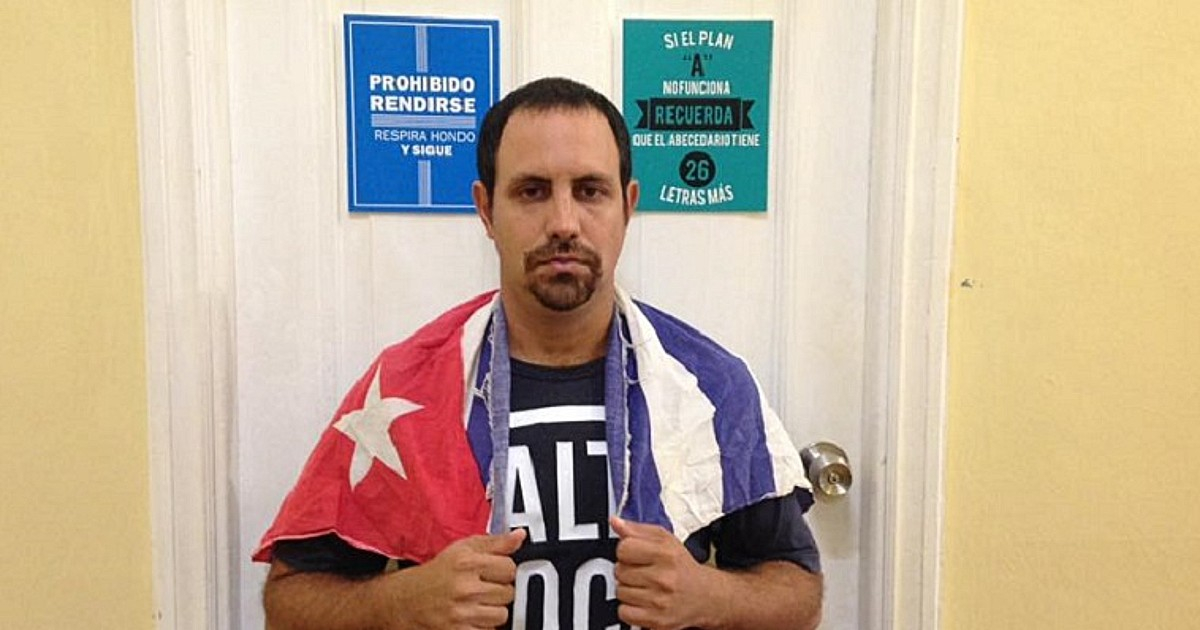
Oscar Casanella is a Cuban activist and biochemist by profession, born in Havana, Cuba, on February 22, 1979.
Casanella, who worked as a professor at the University of Havana and an associate researcher at the National Institute of Oncology and Radiology (INOR), began to be coerced in 2013 to sever his ties of friendship with political opponents, or else his labor rights would be restricted, and he was even threatened with expulsion from INOR. This expulsion eventually took place in June 2016 under the pretext of workplace misconduct. That same year, he was also expelled from the Faculty of Biology at the University of Havana, where he served as an adjunct professor, and he did so without receiving a salary.
Since then, the young scientist, who has unsuccessfully appealed to the Labor Justice Body (OJL) of the company MEDICUBA regarding the unjust nature of his dismissal, has dedicated himself to denouncing the abuses and sanctions he has faced from the State Security Organs and the deputy director of INOR, Lorenzo Anasagasti.
"Many Cubans find themselves in a significant ethical and personal conflict due to the dictatorship, which forces them to choose between their profession and their personal life and beliefs," said Casanella in relation to the controversial friendship he shares with Ciro Javier Díaz Penedo, Gorki Luis Aguila Carrasco, Lia Villares, Ariel Urquiola, among others.
In August 2019, along with other professors and university students, he joined a letter addressed to the Government, urging it to comply with the law and put an end to discriminatory and punitive measures in the country following a controversial statement by the First Deputy Minister of the Ministry of Higher Education (MES), Martha del Carmen Mesa Valenciano, who claimed that "the Cuban university professor must be a defender of our political convictions."
Casanella, through social media, highlights the food scarcity faced by the Cuban people by posting images of the long lines that Cubans endure to obtain food, as well as other events that reflect the pulse of deterioration, unsanitary conditions, and the precariousness of a suffocating society that demands changes in government management.
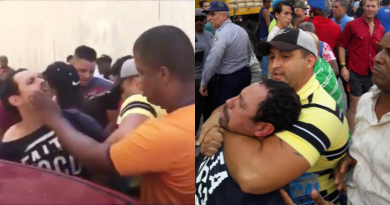
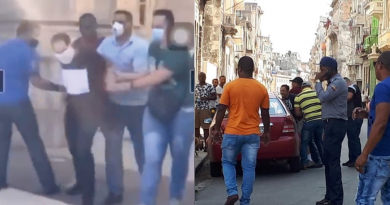
Like other Cuban activists fighting for change in Cuba, he has personally experienced the repressive violence of Cuban agents. In 2019, while participating in the independent march against homophobia, he was struck in the chest and abdomen by four officers, resulting in multiple injuries that required stitches and hospital care. He was subsequently detained.
In December 2019, when he was set to accompany the mother of Cuban biologist and activist Ariel Urquiola, he was detained by Cuban police to prevent him from going to the airport.