
Related videos:
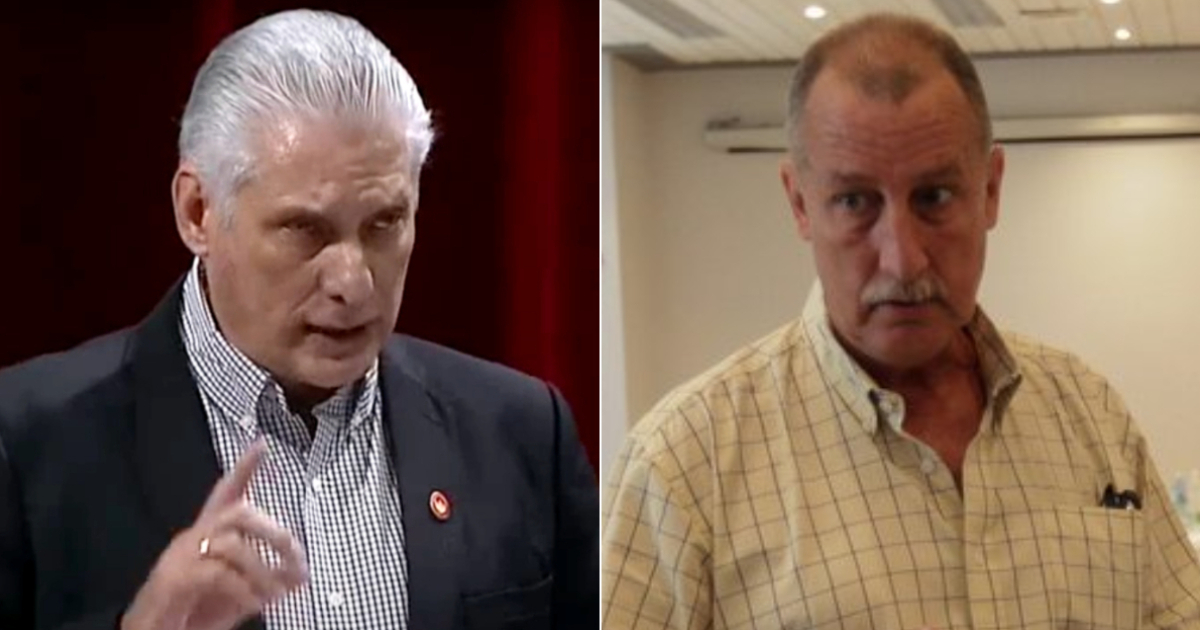
The Cuban economist, Juan Triana Cordoví, a professor at the government-affiliated Center for Cuban Economic Studies at the University of Havana, criticized the economic measures taken by the government of Miguel Díaz-Canel and deemed it “regrettable” that he did not acknowledge his “responsibility” for their failure.
This was expressed in a text published on the blog of the singer-songwriter Silvio Rodríguez (Segunda Cita), in which the theorist associated with the regime's officialdom and a close figure to the Ministry of Interior (MININT) criticized the speech of the ruler during the third ordinary session of the X Legislature of the National Assembly of People's Power (ANPP).
"The president describing the disaster is something he has been doing for a long time, at least twice a year. However, I believe he needed to delve deeper into the causes, and in my opinion, that is regrettable," argued Triana Cordoví in a blog post by Silvio titled “Opinions of economists by mail.”
Firstly, the economist emphasized that “for eight years, the Cuban government has concentrated investment in hotels (35% of the total) and has neglected investment in agriculture, fishing, the sugar cane industry, and the food industry, as well as in energy.”
“It is very unfortunate that the president does not acknowledge his personal responsibility and that of the government in that decision,” stated Triana Cordoví.
His critique went further, pointing out that "we have been saying for 9 years that foreign investment should be eased, yet today the same problems persist. All the 'obstacles' have been identified, and the proposed measures (a working group was created for this and they were indeed mentioned in a speech by Rodrigo [Malmierca], when he was the Minister of Foreign Trade) but nothing was done."
"The proposals to flexibilize the state-owned enterprise may fill drawers with paperwork, but our state enterprise is worse off today," observed the economist, who also had arguments to criticize the failure of Cuban exports "due to the high degree of centralization and the disincentive for the enterprise and its workers."
In that regard, he cited the example of Cuban coffee exports. “Three years ago, among the 63 measures [economic policies for the development of the agricultural sector], one was to select 100 coffee producers to export directly. Yet today, that is still just ink on paper.”
“In my personal opinion, it would be a mistake (and I believe tragic) to return to a process of greater centralization because it is already quite high. In Cuba, no company decides where to invest on its own, except for GAESA. All investment decisions and the allocation of real resources for operations are made at the highest levels of government, starting with foreign currency,” noted Triana Cordoví.
Regarding the price caps imposed on products imported and sold by micro, small, and medium-sized enterprises (Mipymes), as well as the campaign announced by the Cuban regime to "regulate" this sector through increased pressure, impositions, control, and sanctions on the "new economic actors", the economist also expressed his concerns.
"I believe it is also a serious mistake to divide instead of unite and to turn into enemies those who have chosen to stake their future in Cuba, even if it wasn’t for exceedingly altruistic reasons," he said.
Supported by the words of the Silvio Rodríguez platform and praised by other economists and historical leaders of the regime such as Humberto Pérez González (president of the Central Planning Board from 1976 to June 1985, among other positions), Triana Cordoví dealt further substantive blows to the Díaz-Canel government.
“For me, it is a shame that, year after year, the president and his ministers go to the Assembly to recount the disasters caused by their misguided policies and ask the people for more sacrifices. But it is even more shameful that the Deputies of the People (because they are our representatives) continue to accept this situation,” he stated.
His in-depth analysis targeted the Cuban economic model which, as he pointed out while citing Fidel Castro, “no longer works even for us” and has led to the greatest economic and human loss in Cuba's history, particularly marked by the massive exodus of recent years.
"I say this with great pain, which I believe is a pain shared by many, because I have seen how my classrooms empty of students and the teaching departments of our universities lose teachers, how hospitals are left without doctors trained thanks to the sacrifices of the people (not the State or its leaders), how our fields are left without farmers while there are fewer and fewer foods and more agricultural leaders with 'yipetas,' and because, like all Cubans, every day we learn of the birth of another family shattered by emigration."
Reaffirming his adherence to old revolutionary ideals and confessing his "pain and anger," Triana Cordoví concluded: "A country without people is merely a piece of land. A nation is not just the sum of houses and roads. If we want to be socialists, we must first have a nation; it is not the other way around."
Filed under: