
Related videos:
The Cuban government announced on January 14, 2025, a "gradual" release of 553 individuals sentenced for various crimes, as part of an agreement with the Vatican. However, according to the NGO Prisoners Defenders, 198 political prisoners have been released under a semi-liberty regime, and 94% of them were already entitled to an open regime, parole, or immediate freedom more than a year ago. Other organizations like Justicia 11J reference 180 releases.
According to Prisoners Defenders, the releases took place between January 15 and 20, with one case recorded on January 30. However, those released have not been granted full freedom but are subject to strict restrictions. These include a prohibition on leaving their cities of residence, limitations on expressing themselves on social media or in front of the press, and the obligation to regularly report to judicial authorities.
Prisoners Defenders denounces that these measures represent a fraud, as the majority of those released should have received penitentiary benefits earlier. The organization also questions the transparency of the process, pointing out that the regime has mixed political prisoners with common criminals to inflate the numbers of those released.
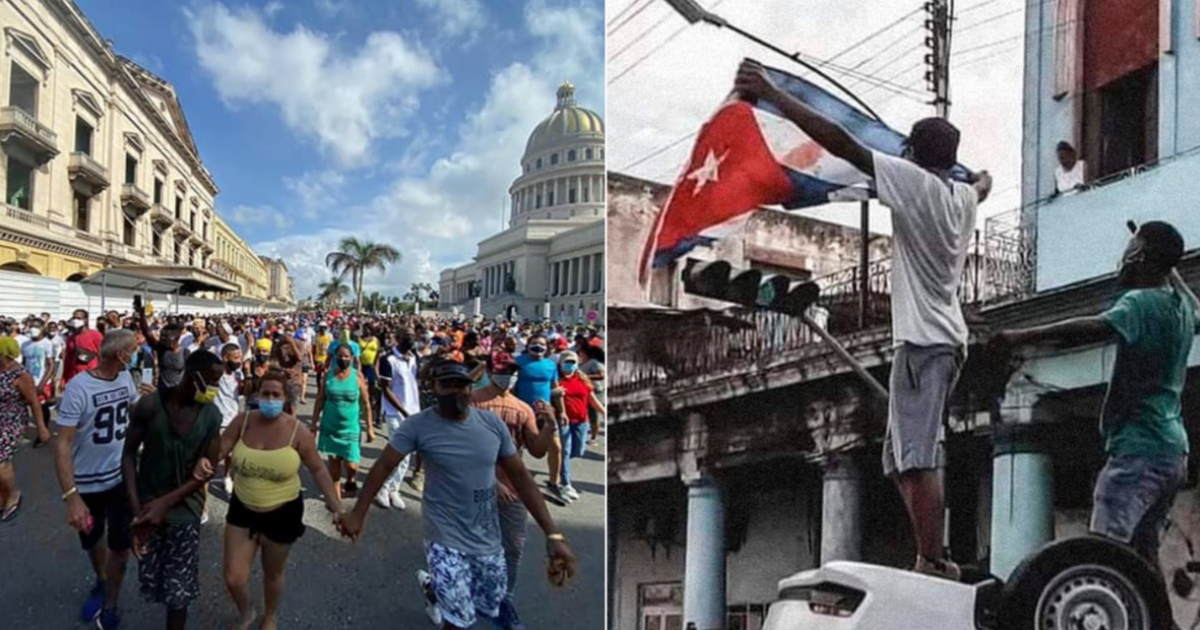
The analysis by the NGO clarifies that the figure of 553 political prisoners, provided by the Cuban regime following its agreement with the Vatican, aligns with the audits of peaceful protesters imprisoned solely as a result of the demonstrations on July 11 and 12, 2021, and the immediate events thereafter. They excluded from the count another 378 prisoners of conscience who also remain in penitentiaries.
From Prisoners Defenders, they are questioning whether the regime has already completed the releases and whether it has done so by freeing common prisoners, as this would be termed "a theatrical farce," insisting in reference to the agreement with the Vatican supposedly in connection with the Jubilee 2025.
The report also highlights that the health situation of many of the released individuals is critical, with cases of severe malnutrition, asthma conditions, and mental disorders without proper treatment. The average age of those released is 37 years, and 86.36% are men. Additionally, 98% of the released individuals have been in prison since the protests of 11J.
Despite these releases, the total number of political prisoners in Cuba remains high, with 1,158 individuals still under severe restrictions of freedom, including 442 who are now under house arrest.
It is important to remember that the start of the political prisoners' releases in Cuba coincided with the Biden administration's announcement of removing Cuba from the list of state sponsors of terrorism, and its halt coincided with Trump's inauguration, on the same day he took office, when he signed the revocation of that Democratic order. However, Prisoners Defenders points out that the regime halted the releases at least one day before Trump took office, likely having "scheduled the releases" only hours before the inauguration of the new Republican president.
El preso político más importante released after the pact con el Vaticano fue José Daniel Ferrer, in an interview granted to CiberCuba aclaró que es consciente de que en cualquier momento puede volver a la cárcel. Él ya había cumplido su condena cuando fue puesto en libertad bajo vigilancia y severas restricciones.In fact, he has already been summoned to appear before the police, and he has rejected the summons.
Filed under: