
Related videos:
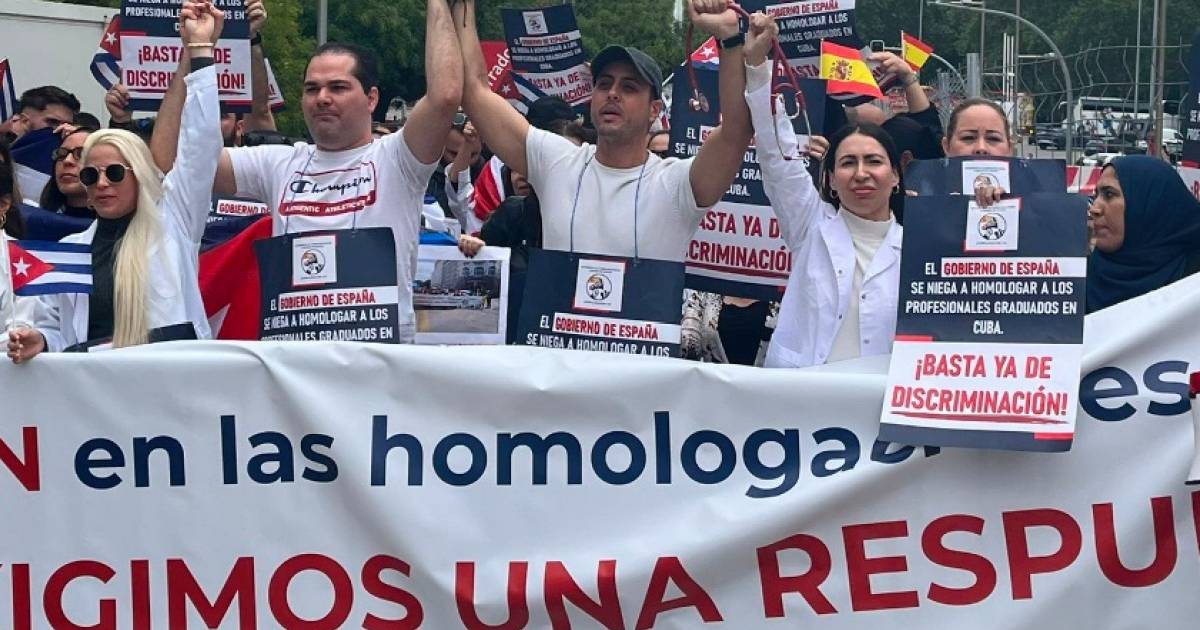
Cuban doctors have reported that the regime in Havana systematically denies the certificates of "no disqualification" and "work history" to professionals who have emigrated, preventing them from registering and practicing their profession in countries like Spain, where there is currently a serious shortage of healthcare personnel.
The measure, denounced by professionals and medical associations, has been seen by those affected as "a direct punishment" from Miguel Díaz-Canel's regime for those who have left the state health system without authorization.
For over a year, the Ministry of Public Health of Cuba (MINSAP) has refused to issue essential documents for professional accreditation, especially the "not disqualified" certificate, which is crucial for doctors to register with the professional associations in Spain, according to a report on the subject in the media The Objective.
"It is a form of pressure to prevent doctors from leaving the country," denounces Guillermo Ponce, president of the Association of Cuban Doctors in Spain (AMCUBE). "Healthcare professionals are the third most important source of income for the Cuban government, after remittances and tourism."
In practice, the documentation blockade condemns hundreds of certified Cuban doctors to unemployment or precarious jobs, as they are unable to legally practice their profession.
Cases like that of Dr. Gaylor Márquez, a pediatric intensivist, and a psychiatrist with 34 years of experience, demonstrate that even professionals with no prior history or internal sanctions are denied their work records for emigrating without permission.
“We do not have the right to choose our destiny,” says Márquez, who is regarded by the regime as a “deserter of the health system” after leaving Cuba at the end of a medical mission in Equatorial Guinea. He now resides in Spain, but is unable to practice.
The case of Axiel, a doctor who arrived in Madrid in 2021 after a complex migration journey, explains that despite having completed all the procedures for recognition in Spain, the process has turned into a "horror movie."
"My vocation turned into a nightmare due to the lack of resources in the hospitals. I was sanctioned for telling the truth to the patients," he recounts. In Cuba, he was pursuing a specialization in Surgery, but he was on the MININT's red list as regulated. He could only leave the country after paying for a "temporary deregulation" to obtain his passport.
Today, he cleans tourist apartments to get by while waiting for his degree to be validated. Like him, more than 300 Cuban doctors are waiting for the certificate that will allow them to practice, reported the independent media Periodismo de Barrio.
The case of the anonymous psychiatrist who has been in Spain for a year after 34 years of service in Cuba illustrates the human cost of this repression. “I have never had problems with the system. I felt betrayed by a country to which I dedicated my professional life,” she declares.
She is now studying to become a social healthcare assistant and care for the elderly in nursing homes. Like her, many Cuban doctors continue to be one, even if they cannot practice, while they wait for some bureaucrat, in Cuba or Spain, to recognize that they are trained professionals, capable and entitled to work with dignity.
After a long struggle of several years, only a few have managed to have their degrees recognized. One of the cases was that of a Cuban last January, and this Saturday it was reported that another young doctor received notification that his Medical degree was finally recognized in Spain, after more than three years of waiting.
Frequently asked questions about the situation of emigrated Cuban doctors
Why does the Cuban regime deny documentation to emigrated doctors?
The Cuban regime systematically denies the necessary certificates to emigrated doctors as a form of punishment and pressure to prevent health professionals from leaving the country without authorization. This measure prevents doctors from validating their degrees and practicing in other countries. According to Guillermo Ponce, president of the Association of Cuban Doctors in Spain, healthcare professionals are one of the main sources of income for the Cuban government, which explains the regime's reluctance to facilitate their emigration.
What consequences does the lack of documentation have for Cuban doctors abroad?
The lack of documentation, such as the "non-disqualification" certificate, condemns many Cuban doctors abroad to unemployment or precarious jobs. These certificates are essential for the validation of their degrees and registration with professional associations, such as in Spain, allowing them to legally practice their profession. Without this documentation, doctors are forced to work in jobs unrelated to their training or remain in an indefinite waiting situation.
Are there cases of Cuban doctors who have been able to validate their degrees in Spain?
Yes, although the process is long and complicated, some Cuban doctors have managed to validate their degrees in Spain. For instance, there is the case of Sam Sabater, who, after more than three years of waiting, received the validation of his Medical degree. This process, which should legally take six months, can extend for years due to bureaucracy and administrative complications. Success stories serve as a source of inspiration and hope for other doctors who are still in the process.
What impact does the policy of the Cuban regime have on emigrated doctors in the Cuban healthcare system?
The restrictive policies of the Cuban regime contribute to the crisis of the healthcare system on the island, as many doctors choose to emigrate due to precarious conditions and a lack of resources in Cuba. This mass emigration leaves the healthcare system understaffed, directly impacting the quality of medical care. Furthermore, the regime prioritizes the export of doctors as a source of income, neglecting the internal needs of the country.
Filed under: