
Related videos:
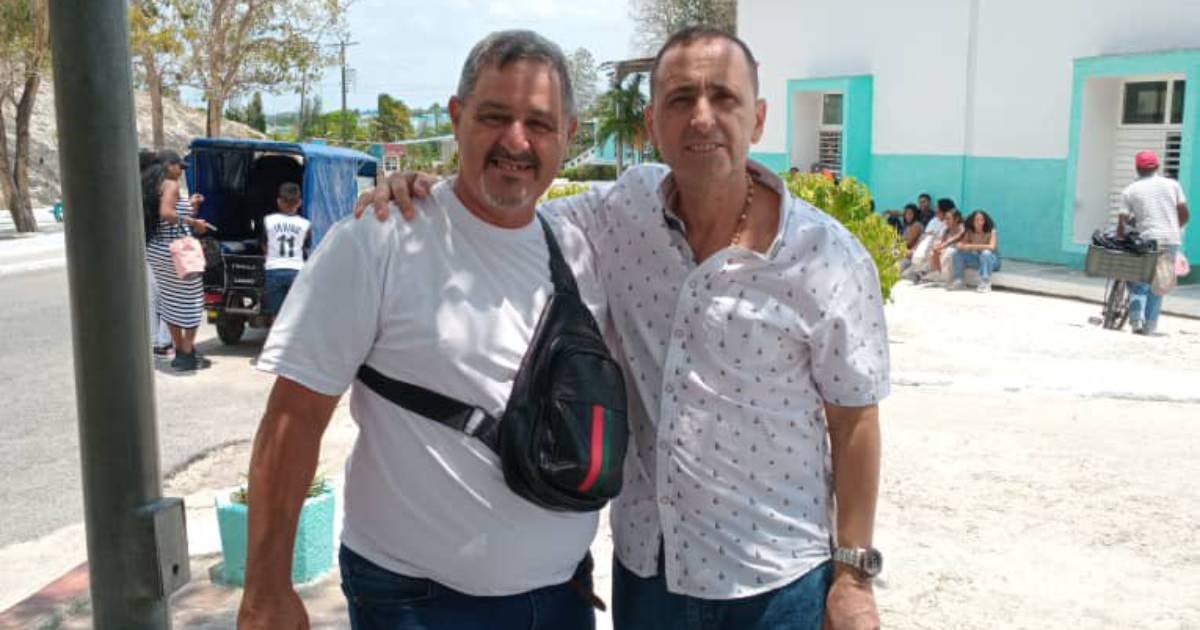
Ernesto Borges Pérez, one of the most emblematic political prisoners in Cuba in recent decades, was released this Thursday, April 24, after serving a 28-year sentence at the Combinado del Este, the most severe prison in Cuba.
In a conversation with Martí Noticias, a media outlet that has closely followed his case, Borges shared his initial feelings after regaining his freedom. “I feel very emotional, I feel happy and also I feel a bit strange being at home after so many years. Today I feel like this, a mix of happiness with euphoria; it's strange.”
The political prisoner, 59 years old, deeply thanked those who supported him during his lengthy confinement. He acknowledged the role of the Catholic Church in Cuba, the Vatican, and particularly the work of journalist Amado Gil and the team at Radio Martí, who continued to report on his situation despite censorship and interference. “Thank you for not forgetting us”, he said.
Borges took advantage of the interview to send a message of gratitude to the Cubans both on the island and abroad who have shown solidarity with political prisoners. “My eternal gratitude to the Cubans who are aware of the reality, who do not turn away from it, and who face it with courage and dignity,” he expressed.
Arrested on July 17, 1998, at the age of 32, while holding the rank of captain and serving as an analyst for the Counterintelligence Directorate of the Ministry of the Interior (MININT), Borges was accused of attempting to deliver secret information to the United States. He was tried for attempted espionage and sentenced to 30 years in prison, a sentence he himself deemed “excessive.”
"In reality, my crime was attempted espionage, and I was sentenced to 30 years as if they had given me a death penalty and then commuted it," he stated.
For nearly three decades in prison, his case was highlighted by human rights organizations, family members, and activists, who raised awareness about inhumane conditions, lack of medical attention, and systematic violations of his rights as a prisoner. Despite appearing on multiple lists of political prisoners, he was never included in the regime's release processes.
When asked about the message he would send to the Cuban regime, Borges was clear. "I wish they would listen to the Cuban population, to the people of Cuba. I hope they understand that it is necessary to engage in dialogue with those who think differently, both inside and outside of Cuba (...) To be honest, I find it a bit difficult," he noted to Radio Martí.
Moved, he concluded with a reflection on the future of the country. “I am a man who believes in God, a man who loves Cuba, and it seems to me that those who honestly love Cuba should prioritize, above their personal and group interests, the welfare of a whole people who are suffering so much. I would like God to touch their hearts and I wish for a transition process that is as least traumatic as possible.”
The release of Ernesto Borges represents a new chapter in the fight for human rights in Cuba, and his voice, finally free, resonates as a testament of resilience and hope.
Frequently Asked Questions About the Release of Ernesto Borges and the Situation of Political Prisoners in Cuba
Who is Ernesto Borges and why was he imprisoned?
Ernesto Borges Pérez is a former Cuban intelligence officer who was imprisoned in 1998 for attempting to deliver secret information to the United States. He was charged with attempted espionage and sentenced to 30 years in prison. During his time in prison, he became one of the most emblematic political prisoners of the Cuban regime.
How was Ernesto Borges released?
Ernesto Borges was released on April 24, 2025, after serving a 28-year sentence. His release was part of a process of freeing political prisoners in Cuba, which has been criticized by human rights organizations due to the restrictive conditions imposed on those released. Borges' release marks a new chapter in the struggle for human rights in Cuba.
What was the role of the Catholic Church and the Vatican in the release of political prisoners in Cuba?
The Catholic Church and the Vatican have played a mediating role in negotiations between the Cuban regime and the United States, facilitating the release of political prisoners on the island. These negotiations have led to the release of several prisoners, including Ernesto Borges, albeit under special conditions that restrict their full freedom.
What message has Ernesto Borges sent after his release?
In his first statements after regaining his freedom, Ernesto Borges expressed gratitude for the support he received during his imprisonment and sent a message of thanks to Cubans both on and off the island. He also called on the Cuban regime to listen to the people and engage in dialogue with those who think differently, acknowledging that it is a difficult task in the current context of Cuba.
Filed under: