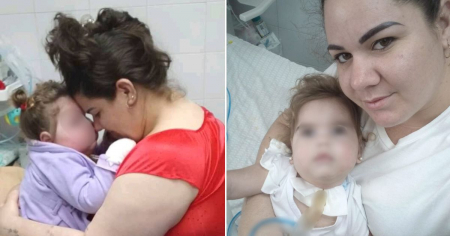
A Cuban mother living in the United States shared a heartfelt video on the social network TikTok, where she tearfully expresses the anguish she feels over not being able to reunite with her 10-year-old daughter, who remains in Cuba, despite her family reunification application having already been approved by U.S. immigration authorities.
“I have my 10-year-old daughter in Cuba. Three years ago, I set my course toward the borders. Thank God I am a resident of the best country in the world, the United States,” began the woman identified as Lianet Llanes. “But today I feel pain in my chest, I feel anxious, I feel disappointed,” she expressed with a trembling voice.
In her testimony, Llanes lamented that, as a resident and not a U.S. citizen, her daughter is not considered an immediate relative, which delays family reunification. “What kind of logic is it that a child is not an immediate relative simply because of a parent's legal status?” she questioned.
The mother also acknowledged that she had previously supported former president Donald Trump politically, but confessed to being regretful: “I argued with my friends. My friendship was ruined over the Trump issue. I regret it, because it has truly harmed my relationship with my daughter.”
She explained that her daughter's claim was approved in just seven months, an unusually quick time, but since she doesn't have citizenship, she will have to wait at least another two years to bring her. “My daughter started studying English very seriously... and for almost two days now, she hasn't wanted to speak to anyone since we had to tell her what happened,” she shared, visibly moved.
"We're not doing anything wrong. I am a mother with no record; I don't even have a ticket," she emphasized while urging authorities to review these immigration policies. "So my daughter, as the child of a resident, is not a priority. I don't understand. What are children then?" she questioned.
The video, posted on her TikTok account, has sparked a wave of supportive reactions and highlights an issue that affects thousands of immigrant families in the U.S.
Frequently Asked Questions about Family Reunification for Cubans in the United States
Why is family reunification such a complicated process for Cubans in the United States?
Family reunification for Cubans in the United States is becoming complicated due to restrictive immigration policies that do not consider the children of residents as immediate family members, thereby delaying the process. Furthermore, the recent Presidential Proclamation by Donald Trump has suspended reunification processes for Cubans petitioned by legal permanent residents, impacting thousands of families.
What impact do the United States' immigration policies have on the lives of Cubans seeking to reunite with their families?
The immigration policies of the United States have a significant impact on Cubans, as many face long periods of separation from their families due to restrictions that delay the reunification process. These policies not only emotionally affect families but also create a migratory limbo that revives past traumas and generates uncertainty about the future.
How does family separation affect Cuban children who are waiting to reunite with their parents in the United States?
Family separation profoundly affects Cuban children, generating feelings of sadness, anxiety, and lack of motivation. Children who await reunification with their parents in the United States often experience changes in their behavior, as evidenced by the case of Lianet Llanes' daughter, who stopped studying English and communicating with others after receiving the news that her reunification would be delayed.
What options do Cubans have to overcome immigration barriers in the United States?
Cubans facing immigration barriers in the United States can seek legal advice to explore options such as applying for formal extensions, verifying the validity of their visas, and considering naturalization to obtain U.S. citizenship, thereby facilitating family reunification. Additionally, staying informed about current policies and keeping connected with support communities can be crucial in overcoming immigration challenges.
Filed under: