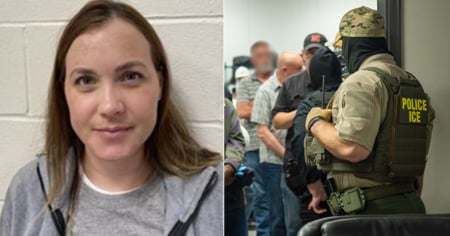
A 51-year-old Cuban identified as Irene Rodríguez Rosell has expressed her regret after self-deporting from the U.S. to Cuba, amid a personal crisis and hoping to receive a financial aid from the U.S. government that has not yet come to fruition.
Rodríguez Rosell, who had entered the United States through the southern border in November 2024 using an appointment scheduled through the CBP One app, was residing in Miami-Dade County when he made the decision to voluntarily return to the island.
“I was alone, sick. I spent three months working in a home, I felt so frustrated that I decided to go back,” she recounted in recent statements to Univision from Cuba, where she says she is in a precarious situation.
However, it was not the blackouts or shortages on the island that the returning migrant cited as the cause of her discontent, but rather the promised bonus of one thousand dollars that she has not received.
The Cuban decided to return, apparently not so much out of fear of deportation—which she did not mention in the published interview excerpt—but motivated by the promise that those who self-deported would receive the return ticket payment and a bonus of one thousand dollars.
"I really needed that money; I was counting on it. I'm sick and I'm here [in Cuba], you know, with one hand in front and the other behind," she lamented.
The worst mistake
His departure from the U.S. was managed through a new application from the U.S. government, CBP Home, launched by the Donald Trump administration to facilitate voluntary return processes.
Rodríguez Rosell registered, notified his departure, and flew to Cuba from Miami International Airport on June 12.
However, weeks later, she claims to have received neither the ticket refund nor the promised financial bonus.
One of the key mistakes, as explained to the aforementioned media by lawyer Armando Olmedo, was that upon arriving in Cuba, Rodríguez Rosell deleted the CBP Home application from his phone, which would have interrupted the communication channel with U.S. immigration authorities.
“To receive the instructions, it is important to have the application because the government will communicate with the person through that channel”, warned the lawyer, who cautioned about the risks of making immigration decisions without proper legal advice.
Furthermore, the case reveals an unresolved legal gap: It is unclear how a Cuban citizen can receive funds sent by the U.S. government from the island, given the complexity of bilateral relations and existing financial restrictions.
"It was a mistake to go out," concluded Irene Rodríguez, acknowledging that desperation and a lack of information led her to make a decision she deeply regrets today.
Filed under: