
Related videos:
The Trump Administration is preparing for a regulatory change that would cut or eliminate Supplemental Security Income (SSI) for nearly 400,000 people in the United States.
The affected individuals will primarily be low-income seniors, people with severe disabilities—including children—and blind individuals, who rely on that monthly payment to cover their most basic needs: rent, food, clothing, or medicine.
“Almost 400,000 SSI beneficiaries living with family or friends who are facing their own financial difficulties are likely to see their benefits reduced—typically by hundreds of dollars a month—or lose their eligibility altogether,” revealed a recent report from the Center on Budget and Policy Priorities (CBPP).
The origin of the controversy
SSI is a federal program that provides monthly payments to those who meet strict income and resource criteria.
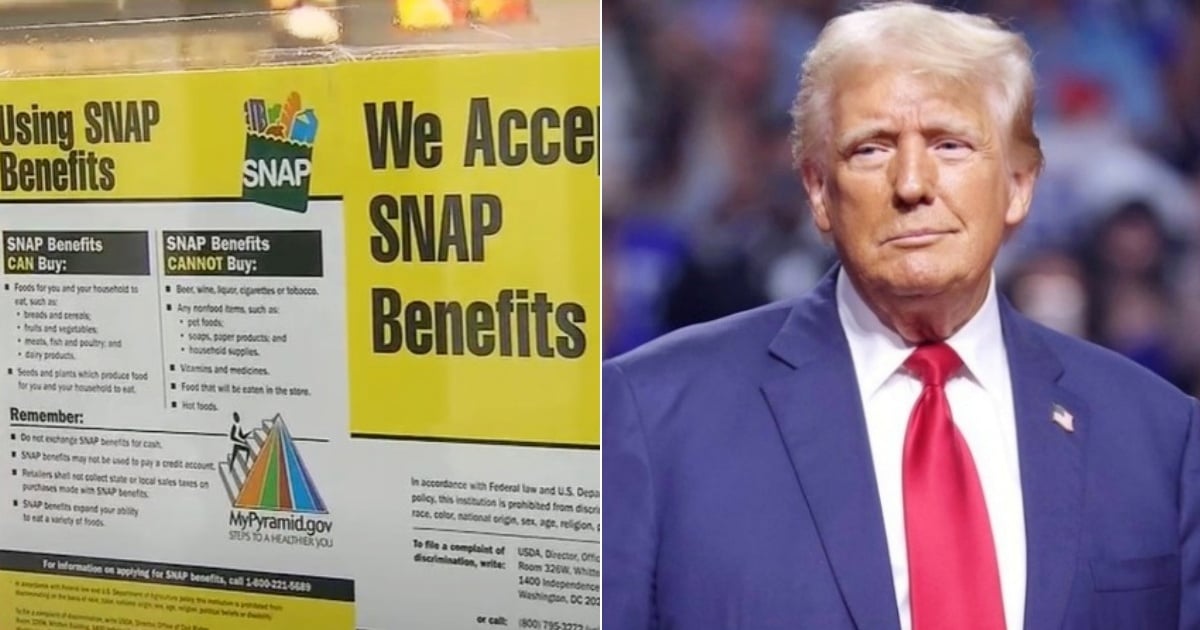
Starting in October 2024, the Social Security Administration (SSA) considers a household receiving SNAP—the Supplemental Nutrition Assistance Program, commonly known as "food stamps"—to be a public assistance household.
That change was introduced to prevent the poorest families from being penalized for "in-kind support and maintenance" (In-kind Support and Maintenance, ISM).
This penalty deducts from the monthly check the value of the assistance received by the beneficiary for living with other people, such as a room in a relative's house, even if that relative is also of low income.
"This allows more people to qualify for SSI and, in some cases, to receive a higher SSI payment," warns the CCBP.
Before the 2024 update, SNAP was not included in the list of programs considered as public assistance for SSI, leaving many families vulnerable to reductions in their benefits despite living in poverty.
What is the Trump Administration proposing now?
The new proposal aims to remove SNAP from that list, reverting the program to criteria established over 40 years ago.
In practice, it would mean that sharing a home with family or friends would be reinterpreted as financial support that reduces the monthly check, even if the entire household lives below the poverty line.
The Center on Budget and Policy Priorities warns that this change “would ignore the reality that families receiving SNAP have very low incomes.”
According to their analysis, a typical household with multiple people that receives SNAP and has at least one member accessing SSI has an annual income of about $17,000, significantly below the poverty line.
Who would be the most affected?
The cuts would particularly affect:
Elderly people who cannot afford their own housing and live with children, grandchildren, or siblings to share expenses.
Adults with physical or intellectual disabilities who depend on daily care from their family.
-Children under 18 years old with disabilities whose parents receive SNAP and whose income would be partially counted to reduce the child's check.
According to the CBPP, more than 275,000 people would lose part of their check and about 100,000 would lose it entirely if the regulation is approved.
"The proposal by the Trump administration to change the rules will affect hundreds of thousands of the lowest-income people in the country," states the CBPP.
The specific impact in Florida
In Florida, where housing costs are high and participation in SNAP is extensive, approximately 30,800 SSI beneficiaries would be affected.
In many cases, these are individuals who already live in multigenerational households to cope with high rents and living expenses.
The CBPP provides an example that reflects what would happen in thousands of Florida households:
An adult with Down syndrome who lives with her low-income parents and receives SNAP funds is currently receiving $967 a month, the full federal amount.
Since your home qualifies as public assistance, the ISM penalty does not apply to you.
If SNAP is removed from the definition, the estimated value of living at her parents' house would be deducted, and her check would drop by a third, leaving her with less than $700 a month.
In a state like Florida, where the average rental price exceeds the income of many beneficiaries, that reduction could mean having to choose between paying for housing, food, or medicine.
Consequences beyond the economic cuts
The CBPP warns that the change would also mean more bureaucracy and a higher risk of errors. Beneficiaries would have to constantly report their housing situation, detail who pays each expense, and notify any changes in family circumstances.
This process would overload a SSA with already reduced staff and would result in both overpayments and underpayments.
Furthermore, it could discourage families from providing housing or care for their relatives out of fear of affecting their benefits, which would increase the risk of institutionalization.
A threat to the stability of the most vulnerable
In total, the projected change would affect nearly 400,000 people in the country, many of whom are among the most vulnerable.
In Florida, the 30,800 people who could lose part or all of their SSI depend on that income to avoid falling into poverty.
The cut would not only reduce their financial resources but would also increase the risk of eviction, hunger, and isolation.
According to CBPP, the measure would revert SSI to an "obsolete" standard that does not reflect the reality of the past four decades, leaving those with the least and the families that care for them unprotected.
Filed under: