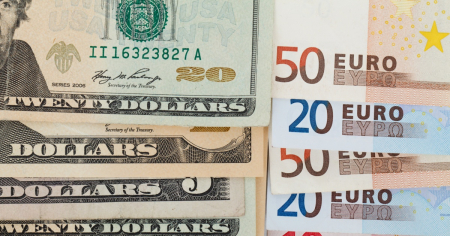
UNSTOPPABLE, this is how the price of the euro in the Cuban informal market is shaping up at dawn this Friday, rising from 486 to 490 CUP, four pesos more compared to the previous day.
The European currency thus sets a new record in trading, dangerously approaching the imposing threshold of 500 pesos, which many are wondering if it will eventually surpass—a value that would signify the absolute collapse of the Cuban peso in an increasingly bleak landscape of the national economy.
The dollar, on its part, retains the 430 CUP that it reached on Thursday, maintaining a difference of 60 pesos compared to its European counterpart.
In the case of the Convertible Currency (MLC), whose decline and volatility have been its main characteristics in recent months, it maintains the 210 CUP selling price that it reached the previous day.
Exchange Rate Evolution
Exchange rate today 09/26/2025 - 7:15 a.m. in Cuba:
Exchange rate of the dollar USD to CUP according to elTOQUE: 430 CUP.
Exchange rate of the euro EUR to CUP according to elTOQUE: 490 CUP.
Exchange rate of MLC to CUP according to elTOQUE: 210 CUP.
The euro leads the surges in the informal market in Cuba during 2025
The euro has been the currency that has appreciated the most in the informal Cuban market throughout 2025, becoming the reference currency for thousands of Cubans who seek to protect their savings against the constant deterioration of the Cuban peso (CUP).
On January 1, 2025, the European currency was sold at 310 CUP; nearly nine months later, that figure has increased by 180 CUP, reaching the aforementioned 490 CUP, a jump that illustrates the magnitude of the peso's depreciation.
Factors that would be driving the increase
The rise of the euro is due to several interconnected factors. On one hand, there is a high demand for strong currencies in a context of uncontrolled inflation and salaries that lose value day by day. The euro has become a safe haven not only for those receiving remittances from Europe but also for those who need to travel or carry out transactions related to that continent.
The scarcity of supply also plays a decisive role. Compared to the dollar, which circulates more freely due to remittances from the United States, the euros available on the street are fewer, which further pressures the price.
This is compounded by the widespread mistrust of the CUP and the speculative nature of the market, where many buy in anticipation of further increases, which accelerates the so-called "price hikes."
Impact on daily life
The rise in the value of the euro directly impacts the wallets of Cubans. Salaries and pensions in pesos are losing value at an accelerated rate, while prices for goods and services indexed to foreign currencies—from technology to medicines and airline tickets—continue to skyrocket.
Those who depend on income in CUP see their purchasing power drastically reduced, while those receiving remittances in euros find that the value of each transfer multiplies, creating an increasing social gap.
Comparison with the dollar and the MLC
Although the dollar has also risen, its advance has been more moderate than that of the euro.
Over several days, while the greenback remained stable or decreased slightly, the euro continued to rise. The Freely Convertible Currency (MLC) has displayed a more volatile behavior, with intermittent drops, reinforcing the preference for the European currency.
In this scenario, the euro has become the main gauge of the informal economy, partially displacing the dollar as the price reference in certain transactions.
The trend suggests that the euro will maintain high levels or even could set new records before the year ends.
As long as there are no effective monetary reforms or greater availability of foreign currency through official channels, the European currency will continue to be a safe asset against the collapse of the CUP.
For now, everything indicates that the euro will continue to lead the surges in the informal Cuban market, reflecting the magnitude of the currency crisis and the irreversible deterioration of the peso as a legal tender.
Equivalence of United States Dollar (USD) to Cuban Peso (CUP), according to the exchange rates on September 26:
1 USD = 430 CUP.
5 USD = 2,150 CUP.
10 USD = 4,300 CUP.
20 USD = 8,600 CUP.
50 USD = 21,500 CUP.
100 USD = 43,000 CUP.
Currency equivalence of Euro bills (EUR) to Cuban Peso (CUP):
1 EUR = 490 CUP.
5 EUR = 2,450 CUP.
10 EUR = 4,900 CUP.
20 EUR = 9,800 CUP.
50 EUR = 24,500 CUP.
100 EUR = 49,000 CUP.
200 EUR = 98,000 CUP.
500 EUR = 245,000 CUP.
In July, Manuel Marrero announced transformations in Cuba's official exchange market, changes that - as he indicated - are scheduled to be implemented in the second half of the year. However, there are currently no updates on the matter.
In early September, the Cuban regime announced that the average monthly salary in the country rose to 6,649 pesos during the first half of 2025, representing a 16.4% increase compared to the same period the previous year.
The data, released by the National Office of Statistics and Information (ONEI) and shared by Cubadebate, was presented as a positive indicator of the official economic policy.
However, far from being a relief for the population, this increase translates into little or nothing in light of the deep inflationary crisis and the ongoing depreciation of the Cuban peso.
The numbers clash with the reality of everyday life: the informal market rate indicates that the dollar remains at 410 CUP, meaning that this new average salary barely amounts to about 16.22 dollars per month. In other words, what a worker earns in a month is not enough to cover even a minimal portion of their needs.
Frequently Asked Questions about the Informal Currency Market in Cuba
Why is the price of the euro rising so much in the Cuban informal market?
The price of the euro in the Cuban informal market is rising due to the high demand for strong currencies in a context of rampant inflation, supply shortages, and distrust of the Cuban peso. Additionally, the euro has become a safe haven currency for those receiving remittances from Europe or needing to conduct transactions related to that continent. Speculation in the market also contributes to these increases.
What is the current situation of the dollar in the informal market compared to the euro?
The dollar has shown a more stable behavior compared to the euro, yet it has still experienced an increase in value. While the euro continues to rise, the dollar maintains a difference of about 60 pesos less than the euro, according to recent rates. Despite its relative stability, the dollar remains a key reference for everyday transactions.
What impact does the rise in the price of the euro have on the daily lives of Cubans?
The increase in the price of the euro directly impacts the purchasing power of Cubans, as salaries in Cuban pesos lose value rapidly. This raises the cost of products and services indexed to foreign currencies, such as technology, medications, and airline tickets. The social gap widens, benefiting those who receive remittances in euros while harming those who rely on income in Cuban pesos.
How does the freely convertible currency (MLC) compare to the euro and the dollar in the informal market?
The Freely Convertible Currency (MLC) has shown more volatile behavior, trending downward compared to the euro and the dollar. Despite some rebounds, the MLC remains less favored in the informal market due to its limited use and state control, further reinforcing the preference for more stable currencies like the euro and the dollar.
Filed under: