
Related videos:
Residents in the city of Matanzas report that several stores selling goods in freely convertible currency (MLC) are out of stock, while others have switched to operating solely in US dollars, an indication of the silent yet rapid pace of dollarization in the western city.
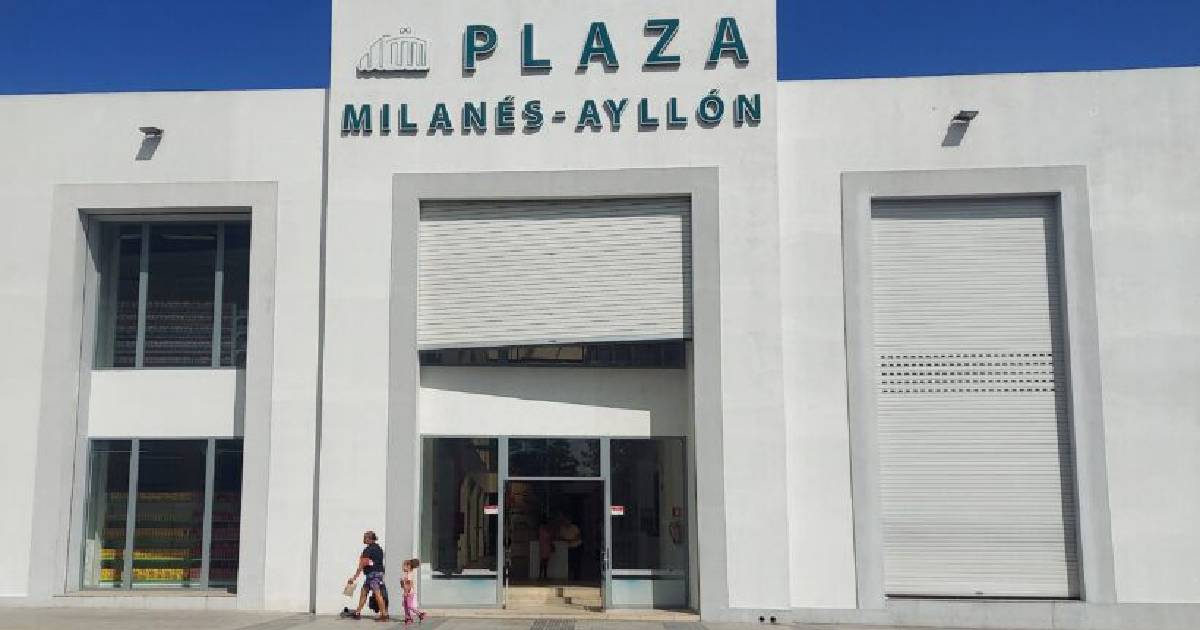
A resident of the La Playa neighborhood described his experience while trying to shop at the Plaza Milanés y Ayllón shopping center, managed by the company Cimex, where he found the establishment nearly empty and the staff unmotivated.
During his visit to nine other shops, he noted that six were already operating exclusively in US dollars, he described in a letter to the section Apartado 1433 of the official newspaper Girón.
The described contrast is very revealing: in the MLC stores, there were no bags or receipts, so the alternative was to write down the products on loose sheets of paper.
However, the establishments in USD did provide bags and tickets, which raised concerns about the handling of cards and internal control regulations.
In this regard, he emphasized that among the visited stores, El Fuego, dedicated to the sale of paints, stands out for the professionalism and kindness of its employees, a situation he did not observe in other establishments.
The consumer criticized the lack of official information regarding these differences and the proliferation of stores accepting USD, in addition to pointing out that the relevant authorities do not adequately communicate the changes.
In this regard, he asked: How is it possible for there to be so many stores in USD and for the relevant organizations not to inform the public? What should I do with the MLC on my card? Will the Bank transfer them to the Classic card, or should I spend them on unnecessary products to avoid losing them due to uncertainty? Do the stores in USD and MLC have differences in their internal control regulations and customer service?
The shortage of supplies and the rising dollarization reflect the concerns of the people in Matanzas regarding the lack of clarity on how and where to use their cards in a context of economic transition and unequal access to basic products.
The proliferation of these exclusive foreign currency stores, which by the end of August had already exceeded 85 nationwide, has been presented by the authorities as a mechanism to finance the industry.
However, for millions of Cubans, it represents a daily condemnation with salaries that are insufficient, food that is out of reach, and an economic model that normalizes exclusion.
Weeks ago, Cuba's Minister of Food Industry, Alberto López Díaz, defended the sale of products in dollars as a way to sustain food production, asserting that it “brings benefits to the population.”
"Companies have to defend their foreign currency income. It's not what we want, but it has been proven that with this income, raw materials are purchased and food is produced for the population," stated López Díaz.
The minister's words contrast with the complaints from citizens who, on social media, highlight the impossibility of accessing basic products in a country where the average salary barely hovers around 20 dollars in the informal market.
Just weeks ago, a Cuban in Guantánamo showcased on TikTok that a piece of beef could cost over 70 dollars, a price that is "unaffordable" for most families.
"This is something that a Cuban cannot afford," she said indignantly, while recording empty shelves and basic necessities at international prices.
Additionally, citizen reports indicate that in hotels of Gaesa -the conglomerate of the Cuban military elite-, CUP and MLC cards are no longer accepted, only dollars or Visa cards, which creates discomfort and exclusion among customers.
In March, the government announced the reopening of the store at 5th and 96 in Havana as "good news", also in dollars, and in August it unveiled a supermarket in the lower floors of the Focsa, managed by GAESA, where payments are only accepted in green bills.
In all cases, access is restricted to those who receive remittances or handle foreign currencies, while the markets in Cuban pesos remain undersupplied.
Economists like Pedro Monreal have warned that this model does not resolve the production crisis nor guarantee stability, and instead, it deepens the social inequality between those who have access to dollars and those who depend solely on the devalued Cuban peso.
Frequently Asked Questions about Dollarization and Shortages in Cuba
Why are the MLC stores in Matanzas out of stock?
The MLC stores are running low on supplies due to the advancement of dollarization in Cuba, where an increasing number of establishments operate exclusively in dollars. This reflects a shift in the government's economic strategy that prioritizes the use of hard currencies such as the US dollar.
What does dollarization in Cuba mean for its citizens?
Dollarization in Cuba implies economic exclusion for those who do not have access to dollars. Stores that operate exclusively in dollars offer products that are inaccessible to most Cubans, whose average salary does not allow them to acquire foreign currency.
What is happening with the freely convertible currency (MLC) in Cuba?
The MLC is declining in Cuba, with a value that continues to drop in the informal market. Many establishments that previously accepted MLC now only accept dollars, leading to concern and uncertainty about the future of this currency.
How does dollarization affect access to basic goods in Cuba?
Dollarization limits access to basic products in Cuba, as many Cubans do not have access to dollars, preventing them from shopping in stores that operate exclusively in this currency. This exacerbates social and economic inequality in the country.
Filed under: