
Related videos:
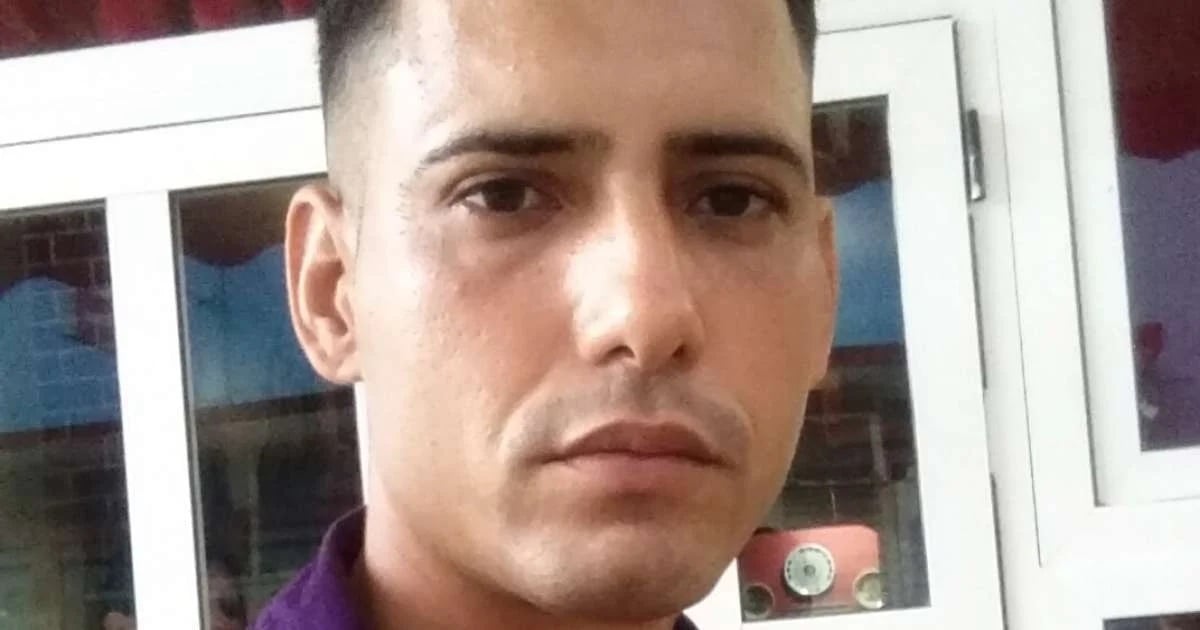
After more than twenty days on a hunger strike, the name of the political prisoner from Holguín Yosvani Rosell García Caso once again shocks a community that has witnessed him endure beatings, punishment cells, isolation, and repeated punishments within the prisons of the Cuban regime. Today, those who know him fear that his body can take no more.
The activist Edesio García, a neighbor of the young man and one of the first to report his detention after the 11J, broke the silence this weekend with a desperate message on Facebook.
"I think of his daughters and Mailin, his wife," he wrote, after confirming that Yosvani has now been on hunger strike for over twenty days. "He could die tomorrow," he warned, recalling that he is a person of integrity, someone of worth, who has never yielded to pressure and has led hunger strikes, symbolic acts, and protests within the prison.
García revealed that when State Security forced him to leave the country due to his political beliefs, he set a condition: the release of Lázaro Yuri Valle Roca and Yosvani himself. “Only then would I leave Cuba,” he stated. Today, he says he is willing to arrange a meeting with U.S. diplomats if Yosvani's family gives their consent.
A political prisoner on the brink of physical collapse
Yosvani's case is considered the most critical within the hunger strike that now involves nine political prisoners in prisons in Holguín, Matanzas, and Havana.
The Cuban Observatory of Human Rights warned that the young man, sentenced to 15 years for sedition, is in a state of extreme weakness and his life is in danger "with every passing minute."
His wife, Mailin Sánchez, has been a constant voice in the outcry. In January 2022, during another hunger strike, she desperately recounted how Yosvani rejected essential medications for his heart condition, medical care, and any attempts at pressure from the State Security. Today, the story is repeating itself, but his physical condition is much worse.
Organizations and activists report that the strikers are being isolated, cut off from communication, and subjected to pressure against their families to break their protest. In Yosvani's case, only a brief and exceptional visit from his wife was allowed in an attempt to persuade him to withdraw.
A journey marked by resilience and punishment
Yosvani, a blacksmith by trade and the father of three minors, was one of the demonstrators from July 11th with the highest prosecution request in the country: 30 years in prison, which were later reduced first to 20 and finally to 15.
Since his incarceration, he has been a victim of beatings and punishment cells. In July 2022, he was severely beaten for wearing white on the anniversary of 11J; on that occasion, he once again responded with a hunger strike.
His history is filled with letters, audios, and messages where he reaffirms that he does not regret going out into the streets. “I am Homeland and Life; there is no physical or psychological torture that can change that,” he wrote in a letter sent in 2021 from the provisional prison in Holguín.
In another letter addressed to Díaz-Canel, he denounced that for every political prisoner incarcerated, "there will be a family rising up against you."
Pressure is growing from the exile community
In the midst of the extreme deterioration of the strikers, opposition leader José Daniel Ferrer, who was exiled last October after two years of arbitrary imprisonment, called on Sunday for a demonstration in Miami to demand urgent attention for the political prisoners on hunger strike and to highlight what he described as “a prison system comparable to a concentration camp.”
Ferrer called on Cubans and exiles to gather at the American Museum of the Cuban Diaspora to send a message of support to those who today risk their lives behind bars.
Filed under: