
Related videos:
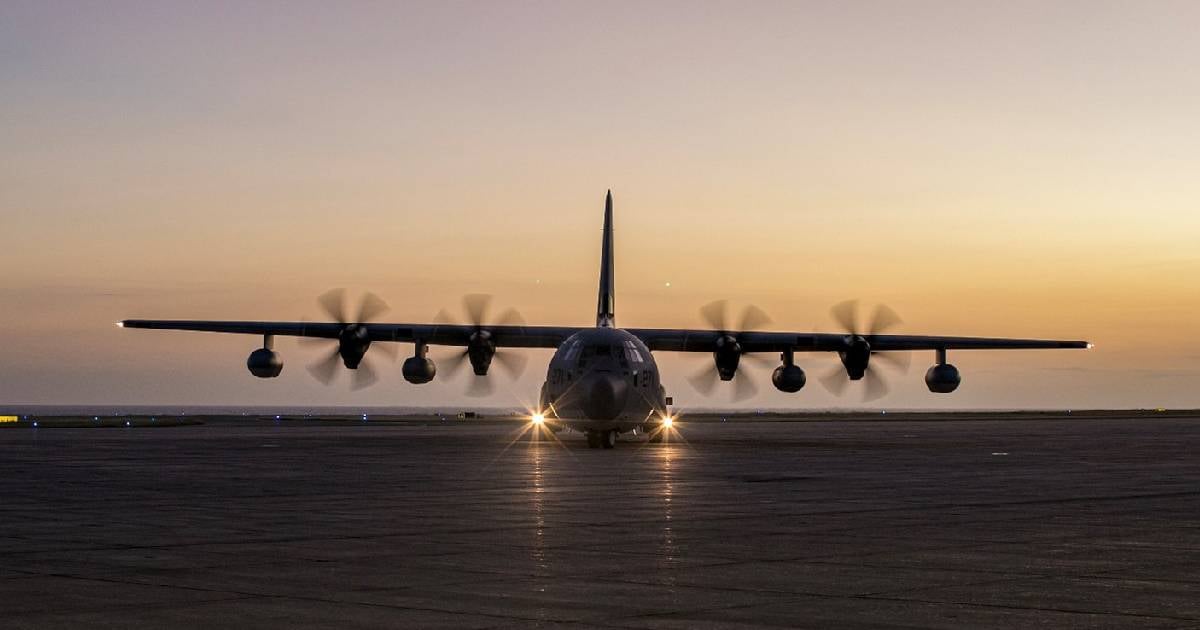
A contingent of U.S. Marines has arrived at the Guantánamo Naval Base in Cuba amid preparations by the administration of President Donald Trump to use the facility as a detention center for migrants, according to official sources.
"U.S. Marines arrived at Guantanamo Bay to support the Department of Defense and Homeland Security in the expansion of the Migrant Operation Center, thereby advancing President Trump's mission to protect Americans and secure our nation,” stated a White House announcement.
During an interview on "Meet the Press" from NBC News on Sunday, Homeland Security Secretary Kristi Noem asserted that "due process will be followed, and having facilities at Guantanamo Bay will be an advantage for us."
Noem's statements come amid the expectation generated by the Trump administration's announcement to use Guantánamo as a detention center for individuals apprehended in its campaign against illegal immigration.
The executive order signed by President instructs the Department of Defense and the Department of Homeland Security to prepare up to 30,000 beds at the facility to accommodate detained migrants.
According to Politico, to date, the military has carried out eight flights to deport migrants, including four to Guatemala, three to Honduras, and one to Ecuador. However, this is the first time that migrants would be sent to the base in Cuba, which presents unique legal and logistical challenges.
"Remember that the Guantánamo Bay... clearly, the President has said that there will be the worst of the worst there, and we will go after those bad actors. Last week I was in New York City. We were going to pursue individuals who had arrest warrants for murders and rapes, assaults, gun purchases, and drug trafficking," Noem stated in the aforementioned interview, reiterating that the migrants considered most dangerous will go to the base located on Cuban territory.
Tom Homan, Trump's border czar, indicated that Immigration and Customs Enforcement (ICE) will be in charge of the expanded facility in Guantanamo, although the details are still unclear. Traditionally, the military has assisted in the custody of individuals housed on the base, but not at this scale.
The Guantanamo military prison was inaugurated in January 2002 at the U.S. naval base located on the southeast coast of Cuba, a territory that Havana leased under the Platt Amendment dating back to 1903.
The detention center was established after the September 11, 2001 attacks, during the presidency of George W. Bush, to accommodate prisoners labeled as "enemy combatants," who were denied many of the rights typically granted to detainees on U.S. soil.
The democratic leaders Barack Obama and Joe Biden attempted to close the facility, but faced opposition from Congress, so it remains open.
The Guantánamo base has already been used by the United States to detain migrants intercepted at sea, but in a separate area from that used to house those accused of terrorism.
A relatively small number of immigrants have been sent to those facilities; reports indicate that only 37 were detained there from 2020 to 2023, but this figure may rise following Trump's announcement.
Frequently Asked Questions about the Use of Guantánamo for Migrants
Why did the Donald Trump administration decide to use the Guantanamo Naval Base for migrants?
The Donald Trump administration plans to use the base to house up to 30,000 migrants, aiming to relieve pressure on detention centers in the U.S. and focusing on those migrants accused of crimes. This measure is part of its policy to control illegal immigration.
What reactions have been sparked by the use of Guantánamo for the detention of migrants in Cuba?
The Cuban government has rejected the measure, describing it as "brutality" and warning of "serious consequences." Cuba considers the base as illegally occupied territory and criticizes the U.S. decision to use it to confine migrants near centers of torture and indefinite detention.
What is the capacity of the Guantánamo Naval Base to receive migrants, and how will it be managed?
The facility has a planned capacity to accommodate up to 30,000 migrants, according to Trump's executive order. The ICE will be in charge of managing these facilities, although the role of the military in this new scale has not yet been fully defined.
How has this decision affected relations between the United States and Cuba?
The decision has increased diplomatic tensions between both countries. Cuba has reiterated that it considers the base as illegally occupied territory and accuses the U.S. of violating International Law and human rights with this measure.
Filed under: