
Related videos:
The National Tsunami Warning Center of the United States (NWS) canceled all tsunami alerts that were activated for various regions of the Caribbean following a magnitude 7.6 earthquake north of Honduras on Saturday.
"Without warning, notice, surveillance, or tsunami threat," announces the agency on its website.
After the earthquake, a tsunami alert was issued for more than a dozen countries in the region, including the Cayman Islands, Jamaica, Cuba, Mexico, Honduras, the Bahamas, San Andrés and Providencia, Belize, Haiti, Costa Rica, Panama, Nicaragua, and Guatemala.
Hours later, the center confirmed on its Twitter account that there are no threats.
"With the latest models and information, the tsunami threat has passed. There are no alerts issued for the United States or for international partners. The tsunami threat has passed," he pointed out.
However, the message warns that unusual currents may be observed in some areas.
"Take the usual precautions," he noted.
Cuba, Honduras, and the Cayman Islands were the countries where the alert lasted the longest.
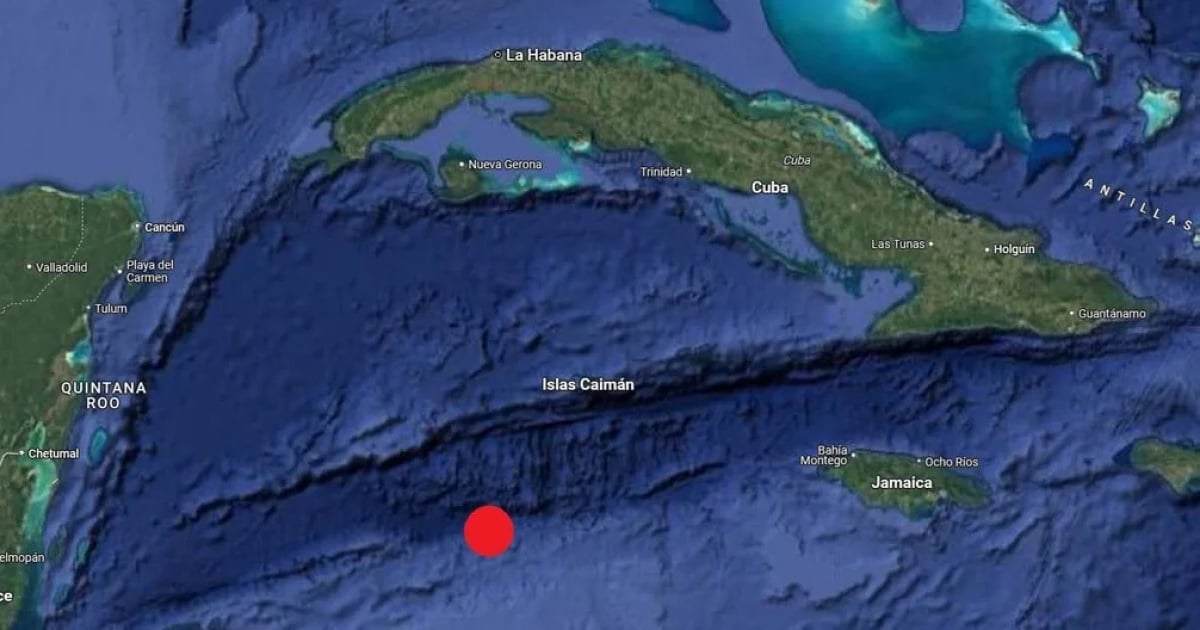
The strong earthquake occurred at 6:26 PM (Cuba time). Its epicenter was located near the Cayman Islands, about 202 kilometers southwest of Georgetown, at a depth of 33 kilometers.
The National Seismological Service of Cuba reported perceptibility. Users on social media stated they felt the tremor in Pinar del Río, Isla de la Juventud, Havana, Matanzas, and Cienfuegos.
Hours later, the Chief of the National Seismological Service of Cuba, Enrique Diego Arango, stated that there was no evidence of a tsunami occurring in the Caribbean after the earthquake and that no disturbances were recorded in the sea in the affected areas.
"Initially, this earthquake was reported as having a magnitude of 8.0, but later a lower magnitude has been calculated as records from various stations have reached all the seismological agencies," it detailed on its Facebook.
"This type of fault generally does not generate a tsunami. There are no historical records of tsunamis associated with earthquakes occurring on this fault. Tsunami protocols are automatically activated, but that does not necessarily mean one will occur," he added.
Frequently Asked Questions about the Tsunami Alert in the Caribbean
Why was the tsunami alert canceled in the Caribbean?
The tsunami alert in the Caribbean has been canceled because the latest models and received information indicated that the threat of a tsunami had passed. No significant disturbances of the sea were reported in the affected areas.
Which countries were under tsunami alert after the earthquake near Honduras?
The tsunami alert was issued for more than a dozen countries in the Caribbean, including the Cayman Islands, Jamaica, Cuba, Mexico, Honduras, the Bahamas, San Andrés and Providencia, Belize, Haiti, Costa Rica, Panama, Nicaragua, and Guatemala, following the 7.6 magnitude earthquake near Honduras.
What precautionary measures were recommended in response to the tsunami threat?
It was advised to stay away from the beaches and seek higher ground. Authorities indicated to remain calm and follow official updates while monitoring the situation to issue new recommendations if necessary.
How did the earthquake affect Cuba?
The earthquake was felt in several regions of Cuba, such as Pinar del Río, Isla de la Juventud, La Habana, Matanzas, and Cienfuegos. However, no significant disturbances of the sea were recorded nor was there any real threat of a tsunami on the island.
Filed under: