
Related videos:
In a new example of the growing bet on dollarization, the Cuban government opened in Havana a facility that operates exclusively in dollars, despite the complaints about the worsening economic gap on the island.
The establishment, reopened in a location that previously belonged to a store in Freely Convertible Currency (MLC), is located in La Quincallera, part of the Tiendas Caribe chain, situated on Avenue 51, in the municipality of Marianao.
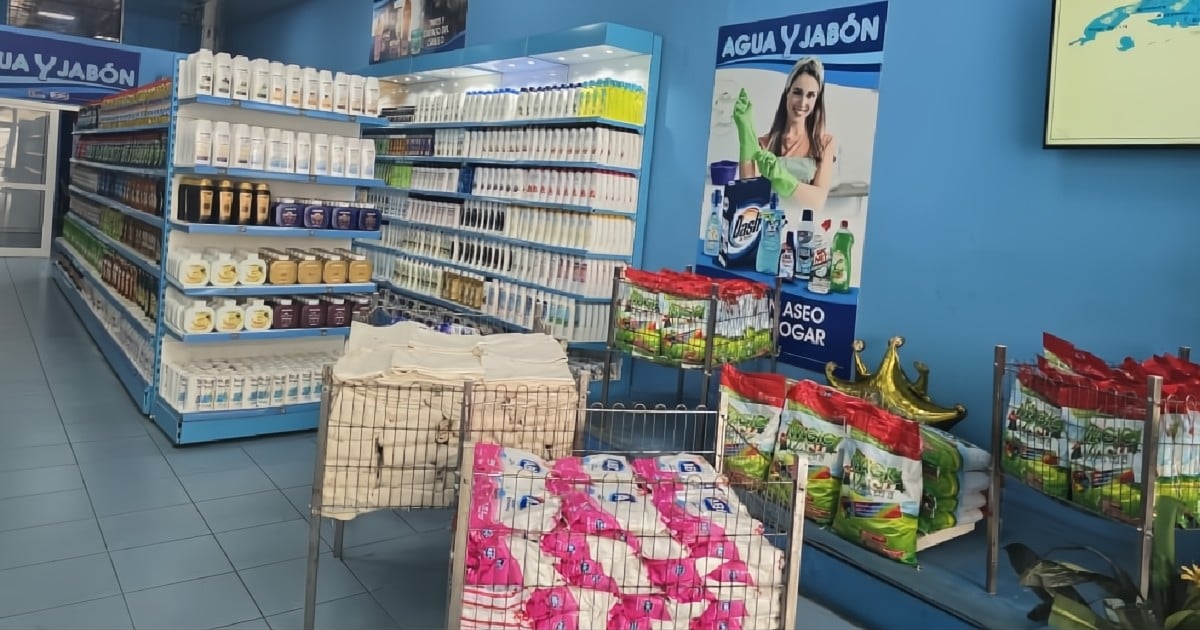
This point of sale, which is part of the "Water and Soap" project, offers essential products for personal hygiene and home cleaning, accepting various international and local cards with special incentives, reported the Havana West Division on its profile.
The images inside the establishment show a well-stocked store, with shelves filled with products such as liquid and powdered detergents, fabric softeners, soaps, shampoos, and personal hygiene items.
This opening occurs in a context where the transformation of Cuban commerce is evident, as access to quality goods and services increasingly depends on the ability to handle dollars.
Recently, Ernesto Martínez, the first vice president of Corporación Cimex S.A., stated in the official program Mesa Redonda that the expansion of dollar stores is a gradual effort to increase the presence of such businesses, especially in small markets that are easy to supply.
In this context, the regime has assured that the accounts in MLC will remain in the banks on the island, while defending the presence of the dollar in the economy.
After the inauguration of the Supermercado de 3ra y 70, located in Miramar, Havana, which was presented as an "accessible" space "for the general population," despite the high prices in dollars rendering it unattainable for a large portion of Cubans, the opening of other establishments of this kind has followed.
The most recent was the store “Las Maravillas,” located on Frexes Street between Maceo and Mártires, in the city of Holguín.
Previously operated in MLC, it was inaugurated on Tuesday, February 18, and sells hygiene products, perfumes, cleaning supplies, household items, and baby products.
Unlike what happened in dollar stores inaugurated in other provinces, the one in Holguín did not receive any publicity.
"It needs to be done discreetly; we know this causes inconvenience to the population," commented a worker.
Frequently Asked Questions about Dollarization and Dollar Stores in Cuba
Why is the Cuban government opening stores that only accept dollars?
The Cuban government is opening stores that only accept dollars as part of a partial dollarization process of the economy, in an attempt to attract foreign currency. This measure aims to counteract the economic crisis and the shortage of products on the island, but it has garnered criticism for increasing social inequality, as a significant portion of the population does not have access to dollars.
What products can be found in exclusive dollar stores?
Dollar stores are usually well-stocked with domestic and imported products, including cured meats, meats, beverages, personal care items, cleaning products, household supplies, and appliances. However, prices are high, making these products unaffordable for many Cubans who receive their salary in national currency.
How does dollarization affect the Cuban population?
Dollarization exacerbates economic inequalities in Cuba, as only those with access to dollars, typically through remittances or connections abroad, can purchase products in these stores. This leaves a large segment of the population without access to basic goods, increasing frustration and social discontent.
What criticisms has the Cuban government received regarding the opening of these dollar stores?
The Cuban government has faced criticism for increasing social inequality through these dollar stores, as many people do not have access to this currency and continue to receive their salaries in national currency. Furthermore, it is accused of using these stores to conceal structural economic problems and of creating a parallel market that marginalizes those who cannot pay in dollars.
What alternatives does the Cuban population have to access basic products if they do not have dollars?
The Cuban population is facing significant difficulties in accessing basic products without dollars. The alternatives include relying on stores that operate in Freely Convertible Currency (MLC), which are also lacking supplies, or turning to the informal currency market, where the dollar is often priced at high rates. This exacerbates the economic situation for those who do not receive remittances or lack access to foreign currencies.
Filed under: