
Related videos:
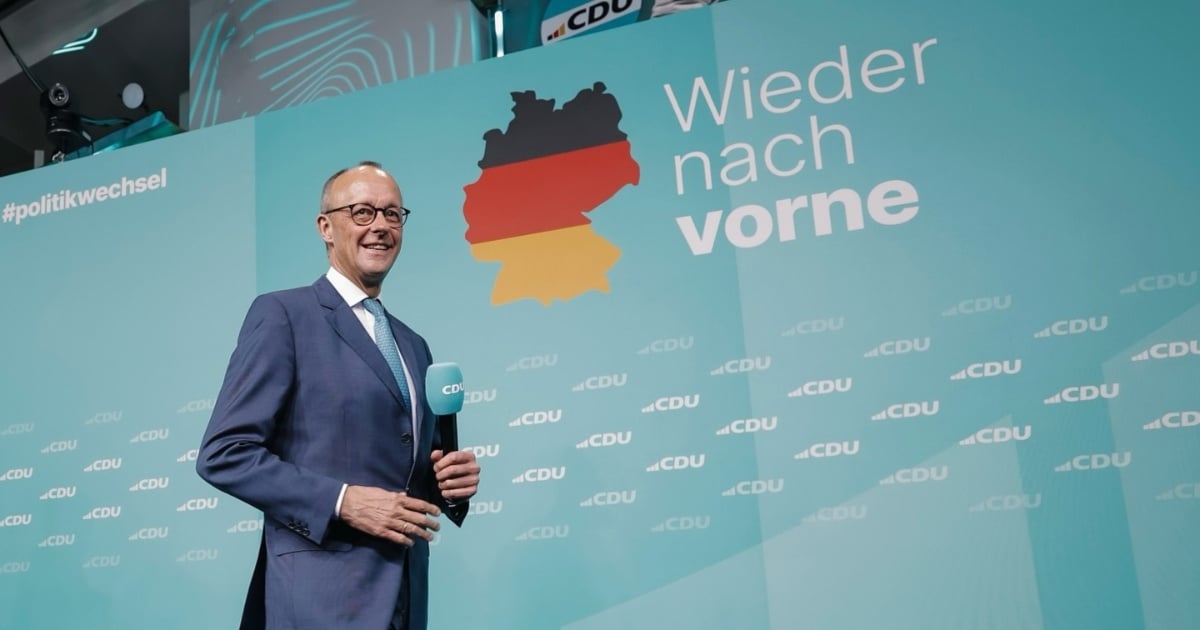
The leader of the German conservative opposition, Friedrich Merz, achieved victory in the national elections this Sunday, while the right-wing party Alternative for Germany (AfD) doubled its support, according to a report by AP.
The Christian Democratic Union (CDU) of the center-right declared victory after exit polls and initial results suggested that the party received the largest share of votes in the national elections.
The elections were held seven months earlier than expected, following the collapse of the social democratic coalition of Olaf Scholz, who acknowledged the defeat after what he termed a "bitter electoral outcome."
The conservative alliance led by Merz received about 29% of the votes, but, as reported by the agency Reuters, it has little chance of forming a government without the social democrats of Olaf Scholz's SPD.
However, Merz said he hopes to form a coalition government before Easter.
"I am aware of the responsibility," said Merz. "I am also conscious of the magnitude of the task that lies ahead of us. I approach it with the utmost respect, and I know it will not be easy."
The AfD, for its part, received 20.7% of the votes, roughly double its result from 2021.
With this result, the party has become the second political force in Germany just twelve years after its foundation.
In eastern Germany, it has even become the strongest political force.
The main candidate of the AfD, Alice Weidel, insisted that they are willing to form a coalition with the center-right bloc of the Christian Democratic Union and the Christian Social Union (CDU/CSU).
However, Merz rejected the idea that voters wanted a coalition with the far-right party. "We have fundamentally different viewpoints, for example, in foreign policy, security policy, in many other areas, regarding Europe, the euro, NATO," he stated.
Friedrich Merz, the new chancellor
Friedrich Merz, president of the conservative Christian Democratic Union (CDU), had been leading the polls for a long time, with 30% of the votes, and was recognized as the main rival of Olaf Scholz from the center-left Social Democratic Party (SPD).
His victory in this weekend's elections marks the completion of Merz's comeback, as he did not return to the Bundestag until 2021 after a 12-year hiatus from politics.
The 69-year-old man will be the oldest chancellor since Konrad Adenauer, the first of the new Federal Republic of Germany, who took office in 1949 at the age of 73.
Frequently Asked Questions about the German Elections and Their Political Implications
Who won the elections in Germany in 2025?
The leader of the German conservative opposition, Friedrich Merz, and his party, the Christian Democratic Union (CDU), achieved victory in the national elections of 2025. Merz declared himself the winner after receiving about 29% of the votes, according to initial results and exit polls.
What role did the Alternative for Germany (AfD) party play in the elections?
The right-wing party Alternative for Germany (AfD) made significant progress by securing 20.7% of the votes, doubling its support compared to the 2021 elections. This result positioned it as the second political force in Germany.
Is it likely that Friedrich Merz will succeed in forming a government?
Although Friedrich Merz and his party, the CDU, won the elections, they have little chance of forming a government without allying with the Social Democrats of the SPD. Merz has expressed his desire to form a coalition government before Easter.
Why did Merz reject a coalition with the AfD?
Friedrich Merz rejected the idea of forming a coalition with the far-right party AfD due to fundamentally different views on key issues such as foreign policy, security, Europe, the euro, and NATO.
Filed under: