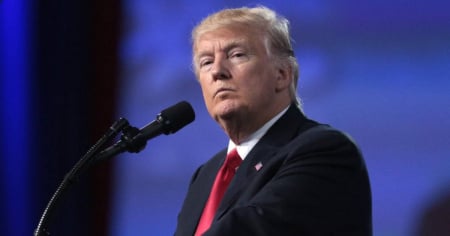
The President of the United States, Donald Trump, confirmed this Wednesday that his administration will impose a 25% tariff on imports from the European Union (EU).
During the first meeting of his Cabinet, the leader justified this measure by claiming that Europe has maintained an unfair trade relationship with his country, and accused the community bloc of having "exploited" the United States for years.
"I love the countries of Europe, but the EU was created to annoy the U.S., let's be honest. And they have done a good job, but now I am the president.", Trump stated in his statement to the media.
According to the president, the EU imposes trade restrictions on American products while his country maintains a policy of openness to European imports.
"They don't accept our cars, our agricultural products, and we accept everything from them," he added.
The president also noted that the trade deficit of the United States with the EU amounts to 300 billion dollars, which, in his opinion, justifies the imposition of the new tariffs.
Although he has not specified an exact date for it to come into effect, he assured that the official announcement will be made soon.
Immediate effect on the economy and trade tensions
Trump's announcement has raised concerns among European partners, who fear an escalation in the trade war between the two blocks.
The automotive sector is one of the most affected, as the U.S. president specifically mentioned that the tariffs will apply to the import of vehicles.
Since the confirmation of the measure, the euro has experienced a slight decline against the dollar in the financial markets.
The EU, for its part, is considering possible trade reprisals in response to this decision.
In previous administrations, Europe has responded with its own tariffs on American products in retaliation for similar decisions made by Washington.
Mexico and Canada secure an extension on the imposition of tariffs
In the same appearance, Trump announced that his government has decided to postpone the imposition of tariffs on Mexico and Canada until April 2.
The original deadline, which was set to expire on March 4th, has been extended after the governments of both countries offered concessions regarding border security and the fight against fentanyl trafficking.
The United States Secretary of Commerce, Howard Lutnick, explained that if Mexico and Canada can demonstrate significant progress on these issues, they might avoid the imposition of tariffs for another season.
However, Trump was emphatic that the decision is not final and that his administration remains firm in its stance to impose trade restrictions on its neighbors if it believes they are not meeting his demands.
"We are not going to stop the tariffs, because the United States has been a victim of years of mistreatment by these countries," the president stated.
Escalation of trade and geopolitical tensions
Since his return to the White House, Donald Trump has frequently resorted to the threat of tariffs as a tool of pressure in his trade negotiations.
The measure against the EU adds to a series of protectionist decisions driven by his administration, which include seeking reciprocity in tariffs imposed by other countries on American products.
In this regard, the Department of Commerce and the United States Trade Representative are evaluating the imposition of tariffs on various trading partners under a "reciprocal tariff" scheme.
Trump's decision to impose a 25% tariff on European products intensifies the tension in an already strained relationship between Washington and Brussels.
Analysts believe that this measure could initiate a new transatlantic trade war with unpredictable economic consequences, as the EU assesses potential reprisals.
Frequently Asked Questions about Trump's New Tariffs on the European Union
Why has Donald Trump decided to impose a 25% tariff on the European Union?
Donald Trump has decided to impose a 25% tariff on the European Union because he believes the bloc has maintained an unfair trade deal with the United States. According to Trump, the EU has "taken advantage" of his country for years, imposing trade restrictions on American products while the U.S. maintains an open policy towards European imports.
What are the sectors most affected by Trump's new tariffs on the EU?
The automotive sector is one of the most affected by Trump's new tariffs on the European Union. The U.S. president has specifically mentioned that the duties will apply to the importation of vehicles, which has raised concerns among European car manufacturers.
How has the European Union reacted to Trump's decision to impose tariffs?
The European Union is evaluating possible trade retaliations in response to Trump's new tariffs. In the past, the EU has responded with its own tariffs on American products following similar decisions from Washington, and is currently seeking measures that could mitigate the economic effects of this decision.
What economic impact could these tariffs have on the relationship between the U.S. and the EU?
Trump's tariffs could trigger a new transatlantic trade war with unpredictable economic consequences. Analysts believe that the decision to impose a 25% tax on European products heightens tensions in an already strained relationship between Washington and Brussels, which could impact global trade and the economy.
Filed under: