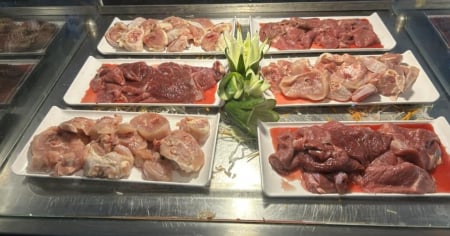
The government of the Isle of Youth will begin selling croquette dough and chorizo dough through the supply booklet, a meager remedy in light of the shortages being experienced by the population in that region, according to Vice Mayor Vianiuska Puebla Pérez.
In an appearance on the official station Radio Caribe, the leader emphasized that each household will be able to purchase a package of 10 croquettes and half a kilogram of sausage meat at selected stores.
The croquette dough will cost 120 pesos if it is fish and 150 pesos if it is MDM (meat dough of different types), while half a kilogram of chorizo dough will cost 250 pesos.
Puebla explained that the distribution of these products is part of a strategy to prevent hoarding and resale, as well as to bring sales closer to the population.
However, he clarified that these products are not part of the regulated family basket, but will be sold in a controlled manner.
The sale will begin in specific warehouses, starting with the Micro and Abel units, where consumers will be able to purchase for two days. However, if demand requires it, a third day of sales will be made available.
Starting Thursday, the warehouses of Chacón and Mayarí will be incorporated, thereby covering other communities on the Isle of Youth.
The local government justified the prices by stating that the raw materials, such as flour and other supplies, were purchased from non-state economic actors, which increased production costs.
Additionally, it was decided to group sales in certain warehouses due to the lack of refrigeration infrastructure in all units.
Puebla also reported that, at the same time, the rice for February is already in the process of being transported to the Island, highlighting the regime's inability to secure this food as there are only a few days left in the month. He emphasized that in the coming days, the seven pounds per capita assigned to each consumer will be distributed.
The authorities emphasized that this sales modality aims to prevent long lines and hoarding, and assured that the distribution will continue gradually in the other stores in the area based on product availability.
The regime's problems in ensuring the food supply for the population have become increasingly frequent in recent months, highlighting the government's inability.
However, the Ministry of Domestic Trade of Cuba (MINCIN) recently reported on delays and issues in the distribution of products from the regulated basic basket, due to financial and logistical problems, while simultaneously supplying the new stores designated for dollar sales.
Through its page, the organization stated that the difficulties are exacerbated by the "strengthening of the measures imposed by the government of the United States."
At the same time, the food crisis in Cuba is worsening due to the unstoppable rise in the prices of basic goods on the black market.
In recent days, the price of a pound of rice has reached 300 Cuban pesos (CUP), a figure that highlights the severe scarcity and the decline in the purchasing power of the population.
Frequently Asked Questions about the Distribution of Croquette and Chorizo Mass on the Isle of Youth
How will the distribution of croquette and chorizo mass be carried out in Isla de la Juventud?
The distribution of croquette and chorizo mass will be done through the supply booklet, and will be controlled in selected warehouses. Each household will be able to purchase a package of 10 croquettes and half a kilogram of chorizo mass, starting at the warehouses of Micro and Abel, with the possibility of extending to others depending on demand.
What are the prices of the croquette and chorizo dough that will be sold in Isla de la Juventud?
The cost of croqueta dough will be 120 pesos if it is fish-based and 150 pesos if it is MDM (meat dough of different types), while half a kilogram of chorizo dough will cost 250 pesos. These prices are justified by the government due to the purchase of raw materials from non-state actors, which has increased production costs.
Why has it been decided to sell these products through the ration book?
The sale of these products through the ration book aims to prevent hoarding and reselling, as well as to make sales more accessible to the population in a context of scarcity. However, these products are not part of the standardized family basket, and their availability will be subject to demand and the supply of raw materials.
Filed under: