
Related videos:
The Cuban regime released two protesters from the July 11, 2021 demonstrations (11J) this Friday, following a month-long halt in granting prison benefits to political prisoners.
The information has been confirmed by the organizations Justicia 11J and the Cuban Observatory of Human Rights.
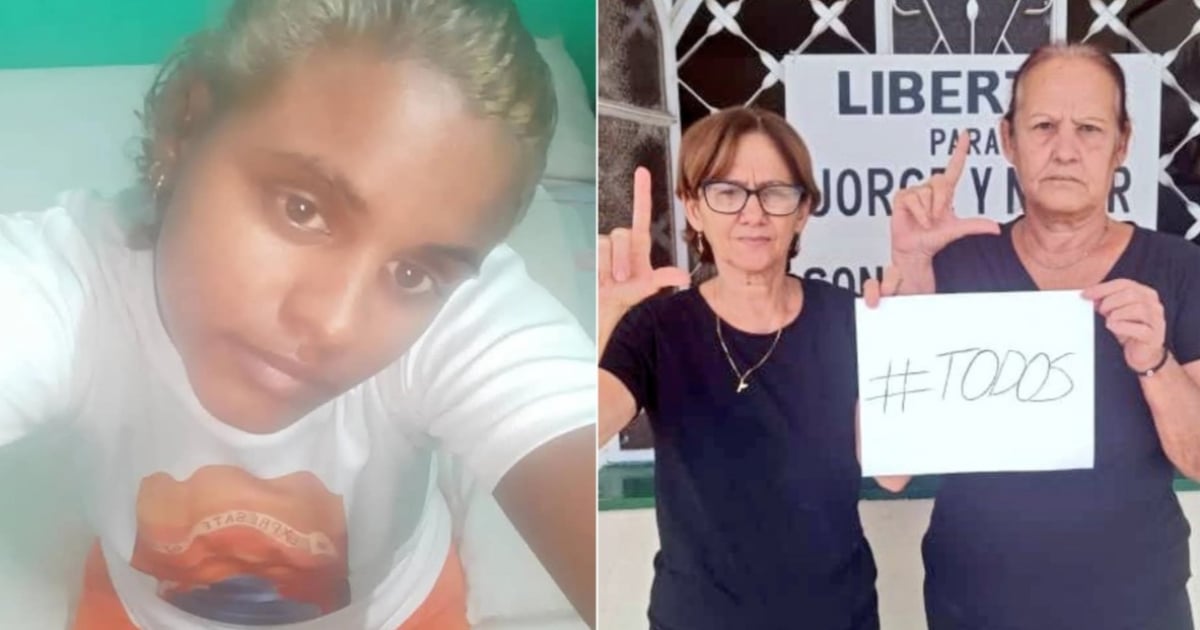
One of those released from prison is Yunaiky de la Caridad Linares Rodríguez, who was serving an eight-year sentence for the alleged crime of sedition.
Justicia 11J highlighted that Linares Rodríguez was released on Friday, February 28, in the context of the Cuban regime's promise to grant release benefits to 553 prisoners with various sentences.
The political prisoner suffered from thyroid problems and reported several times that she did not receive the necessary medication in prison. Additionally, she repeatedly endured punishment cells for demanding respect for her rights. The anguish and desperation even led her to self-harm.
Another of the released prisoners is Andy Alexis Martín Pérez, who regained his freedom on Thursday, February 27. Both are part of a group of political prisoners whose cases have been closely monitored by human rights organizations.
Release under restrictive conditions
The Releases do not imply a total freedom from the sentence. Maricela Sosa Ravelo, Vice President of the Supreme Court of Cuba, stated in January that these measures "are neither an amnesty nor a pardon," but rather prison benefits subject to requirements of "good behavior."
This means that those released could be incarcerated again if the authorities deem it appropriate.
So far, at least six releases have been recorded in the last 48 hours, following the resumption of the process, which had been halted for more than a month. Justicia 11J specified that the release of political prisoners occurs in the context of negotiations with the international community.
Previous releases and political context
The Cuban regime announced in January the release of 553 prisoners convicted of various offenses, although it did not specify how many of them are political prisoners.
However, following Cuba's inclusion on the U.S. list of State Sponsors of Terrorism by the American administration, the release process was halted for several weeks.
In the recent releases, the names of Iván Mauricio Arocha Arocha, Brusnelvis Adrián Cabrera Gutiérrez, Ohaurys Rondón Rivero, and Yaquelin Castillo García also appear, all of whom were detained following the protests of July 11 and are now granted conditional releases.
The Cuban Observatory of Human Rights has warned that these releases "do not represent an improvement in the human rights situation in Cuba," as those released remain under strict state control and surveillance, with the risk of being returned to prison at any moment.
Meanwhile, human rights organizations continue to denounce the existence of hundreds of political prisoners in Cuba and demand their unconditional release.
Frequently asked questions about the release of protesters from July 11 in Cuba
What does the release of the 11J protesters in Cuba mean?
The recent release of some protesters from the 11J demonstrations in Cuba does not imply a complete dismissal of their sentences. The released individuals are under restrictive conditions and could return to prison if the authorities decide so. These releases occur in the context of negotiations with the international community and are not considered an amnesty or an official pardon.
How many 11J protesters have been recently released from prison?
In the last 48 hours, at least six releases of 11J protesters have been recorded. These cases have been closely monitored by human rights organizations such as Justicia 11J and the Cuban Observatory of Human Rights. However, the process of releases had been halted for over a month and has recently resumed.
What are the conditions for releases in Cuba?
The releases of protesters in Cuba are subject to conditions of "good behavior." This means that those released are under surveillance and could be imprisoned again. The Cuban regime has made it clear that these measures are not a pardon, but rather penitentiary benefits granted under certain conditions.
What has been the international community's response to the releases of prisoners in Cuba?
The international community has been involved in the negotiations that have led to the releases in Cuba. Human rights organizations and some governments have pressured the Cuban regime to release political prisoners. However, these releases have been criticized for not representing a significant improvement in the human rights situation in Cuba.
Filed under: