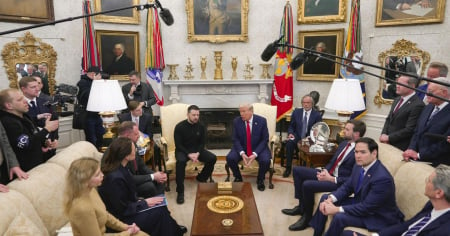
President Donald Trump dismissed concerns about the impact of the tariffs announced against several countries, including China, Canada, and Mexico, on product prices in the United States, claiming it is a "myth."
In response to concerns from Americans about rising prices, Trump stated that "it is a myth spread by foreign countries that really don't like to pay tariffs."
Despite studies and analyses indicating that tariffs are ultimately absorbed by consumers, Trump continued to defend his position, arguing that the imposed tariffs do not have the negative economic effect attributed to them.
This comment comes in the context of increasing international tension due to your administration's trade policy.
In particular, the Chinese government has warned that it will take "all necessary countermeasures" if the United States carries out its threat to increase tariffs by 20%, while Canadian Prime Minister Justin Trudeau vowed an "immediate and strong" response to this measure.
For its part, Europe's reactions have been more cautious, with Italy and France distancing themselves on how to address the trade tensions with the Republican administration.
The new tariffs are set to take effect on March 4. However, the debate surrounding them remains one of the most controversial topics in Trump’s economic policy.
The prices in the markets have skyrocketed, and even though the measure has not yet been implemented, the price of Mexican avocado, just to name one example, has already doubled in the country's supermarkets.
Frequently Asked Questions about Trump's Tariffs and Their Impact
Which countries are affected by Trump's new tariffs?
The countries affected by the new tariffs imposed by Trump are Mexico, Canada, and China. These tariffs are set at 25% for products coming from Mexico and Canada, and 10% for Chinese products. The measure aims to pressure these countries on issues such as fentanyl trafficking and illegal immigration.
What impact will tariffs have on product prices in the U.S.?
Tariffs are likely to increase product prices in the U.S. As imports become more expensive, the final cost for consumers will rise. This could affect everyday consumer goods, from food to vehicle components, leading to increased inflation in the country.
How have Mexico and Canada responded to Trump's tariffs?
Mexico and Canada have announced retaliatory measures in response to Trump’s tariffs. Canada imposed a 25% tariff on U.S. products, while Mexico is assessing its options to protect its economy. Both countries expressed their intention to defend their commercial interests and sovereignty.
What justification has Trump given for imposing these tariffs?
Trump has justified the tariffs as a measure to protect the security and economic interests of the United States. He argues that the tariffs are necessary to combat drug trafficking, especially fentanyl, and to address illegal immigration from Mexico and Canada.
Filed under: