
Related videos:
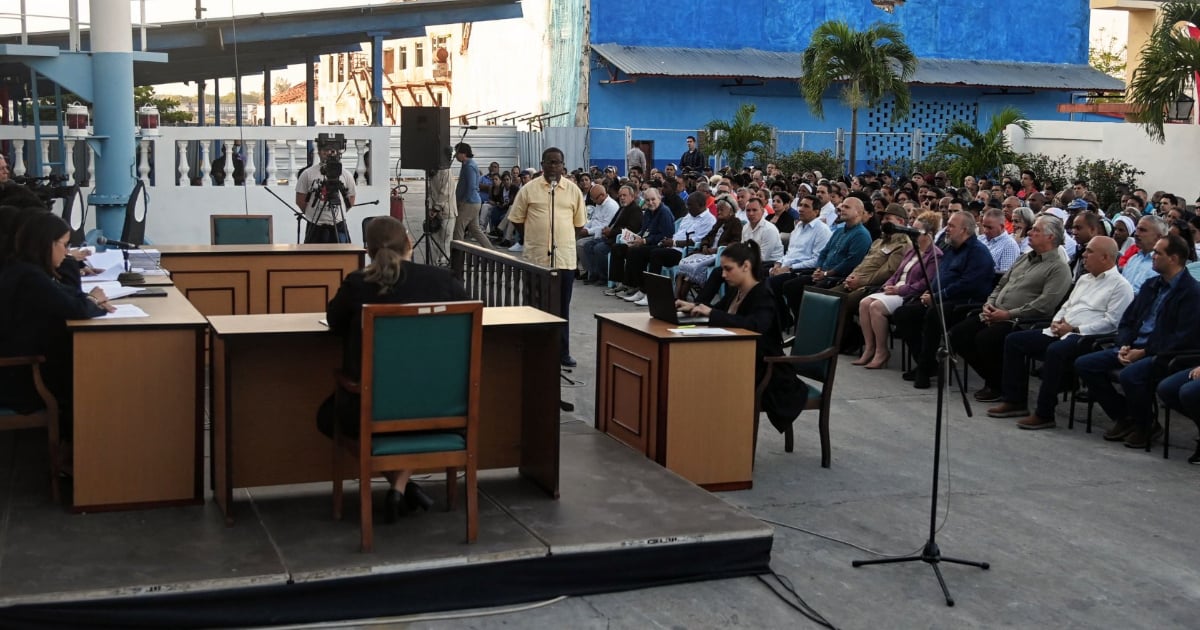
En un nuevo intento por divert attention from the crisis affecting the people, el Cuban regime llevó a cabo este martes un juicio simbólico en el muelle de La Habana, donde found the United States government guilty for the explosion of the steamship La Coubre in 1960.
Presided over by the leader Miguel Díaz-Canel and other communist leaders, this event is part of the official strategy to hold Washington accountable for the misfortunes affecting the island, while the population continues to face a severe shortage of food, medicines, and basic products.
The incident, which claimed the lives of around 100 people and left hundreds injured, was recalled in the "judicial process" through testimonies from witnesses and family members of the victims, according to Cubadebate.
In the trial, a young magistrate described the act as "historic and necessary," emphasizing that the ship's explosion was not accidental but rather the result of a deliberate action attributed to Washington, according to posts published by the official government account on X.
However, these types of propaganda events do not contribute in any way to improving the lives of Cuban families, who face economic hardships and the humanitarian crisis caused by the very ineffectiveness of the communist government on a daily basis.
Before the start of the event, Díaz-Canel, accompanied by Prime Minister Manuel Marrero Cruz and other high-ranking officials, participated in the placement of three floral offerings at the entrance of the La Coubre Dock, dedicated to the victims of the attack, on behalf of Army General Raúl Castro Ruz, the president, and the Cuban people.
Meanwhile, the population continues to struggle with shortages of food, medicine, and basic products, without the government making real efforts to solve the crisis.
It is important to note that the United States keeps Cuba on its list of state sponsors of terrorism, a designation that former president Joe Biden tried to reverse before the end of his term, but Donald Trump restored.
In recent weeks, the Cuban government has intensified its anti-imperialist activities, organizing forums and community debates in which it blames the U.S. for its internal difficulties, rather than taking responsibility for decades of mismanagement and economic decline.
The steamship La Coubre, of French origin, was the victim of sabotage on March 4, 1960, while transporting 76 tons of Belgian ammunition from the port of Antwerp. At 3:10 in the afternoon, a first explosion occurred while the material was being unloaded at the Port of Havana, followed shortly by a second detonation.
This tragic event has been considered a turning point in the escalation of tensions between Cuba and the United States in the early days of the Revolution
However, more than six decades later, the regime continues to use these historical facts to fuel a confrontational rhetoric, instead of focusing on seeking real solutions to the problems faced by the Cuban people, who are increasingly disillusioned with a socialism that few continue to support on the island.
Frequently Asked Questions about the Anti-Imperialist Trial and the Situation in Cuba
Why did the Cuban regime conduct a symbolic trial against the United States?
The Cuban regime held a symbolic trial to declare the United States guilty for the explosion of the steamship La Coubre in 1960. This event is part of a strategy by the Cuban government to divert attention from the internal crisis by blaming Washington for the problems the country faces, rather than taking responsibility for decades of poor economic management.
What consequences did the explosion of the steamship La Coubre have in 1960?
The explosion of the La Coubre steamship in 1960 was a tragic event that claimed the lives of approximately 100 people and left hundreds injured. This incident is regarded as a pivotal moment in the escalation of tensions between Cuba and the United States in the early days of the Revolution. However, more than six decades later, the Cuban government continues to use this event to fuel a rhetoric of confrontation.
What is Cuba's position regarding its inclusion on the list of state sponsors of terrorism?
Cuba has reacted critically and belligerently to its inclusion on the list of state sponsors of terrorism by the United States. The Cuban regime labels this decision as an "imperialist assault" and blames Washington for the island's internal problems, omitting self-criticism regarding its own repressive practices and its historical support for extremist groups.
How does the Cuban regime justify the current economic and social crisis?
The Cuban government justifies the economic and social crisis mainly by the economic embargo imposed by the United States, especially during the administration of Donald Trump. However, critics of the regime argue that poor internal management and the lack of reforms are key factors in the deterioration of the Cuban economy.
Filed under: