
Related videos:
The economic crisis plaguing Cuba has led to a , a phenomenon that the Cuban regime tries to downplay while blaming external factors such as the U.S. embargo and the global economic situation.
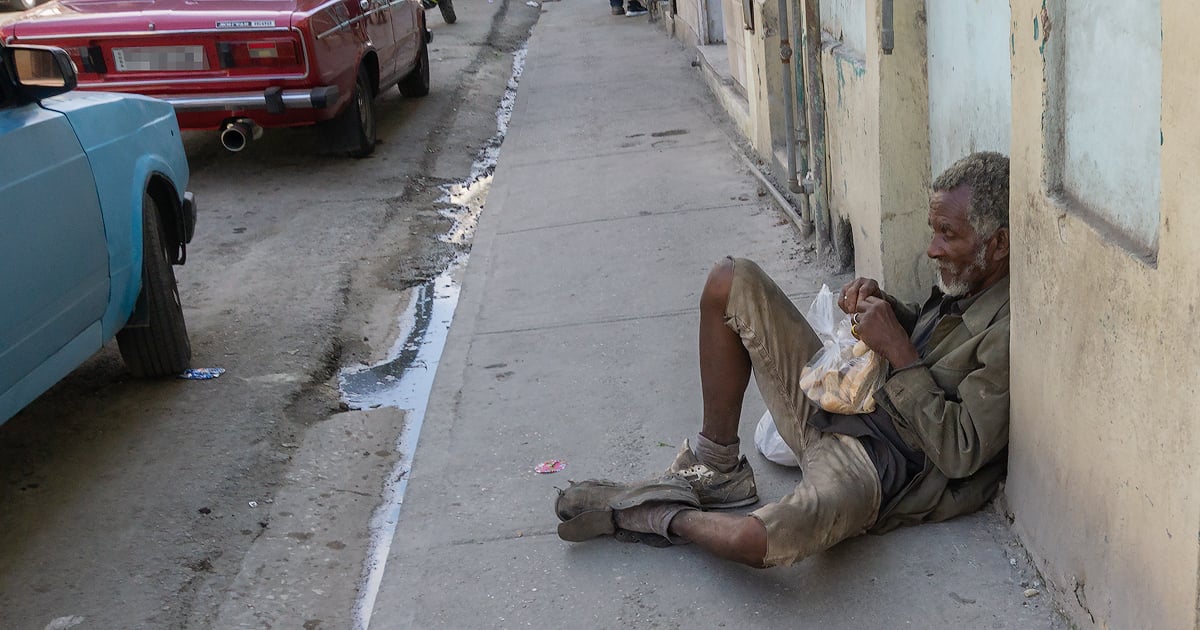
Extreme poverty has become a constant in the country, affecting thousands of citizens who find no support in government policies. Vulnerable individuals lack resources for food, to purchase groceries, or to meet their basic needs, and they take to the streets to beg for money out of charity.
A recent article from Granma acknowledges the increase of individuals resorting to begging. It points out that the phenomenon is exploited by "unscrupulous individuals" and suggests that those who turn to asking for help on the street are being manipulated to profit from their vulnerability.
Poverty is rising in Cuba, and the regime threatens to impose fines
The official article states that begging may constitute a crime according to the Cuban Penal Code. Inducing a minor to beg is considered corruption of minors, with penalties ranging from 2 to 8 years in prison.
Furthermore, the recruitment or exploitation of individuals in vulnerable situations can be classified as human trafficking, with penalties ranging from 7 to 30 years or even life imprisonment.
"Anyone who induces or uses a person under 18 years of age in begging practices may incur in the crime of corruption of minors, regulated by Article 404 of the Penal Code, punishable by sentences ranging from two to five years of imprisonment, or a fine of 500 to 1,000 units, or both," the text states.
They also warn that: "Whoever promotes, organizes, incites, or executes the recruitment, transportation, or reception of individuals using threat, violence, deception, or bribery, taking advantage of the victim's vulnerability or gender condition, with the aim of subjecting them, is committing the criminal offense of human trafficking, regulated in Article 363, sections one and two of the substantive criminal code, which provides for penalties ranging from seven to 15 years of imprisonment, and these can be aggravated from ten to 30 years or even result in life imprisonment."
Instead of addressing the structural causes of poverty, the regime warns that it may choose to criminalize those who are homeless.
They promised to resolve the crisis, but they didn't
In June 2024, the regime announced a plan to remove the homeless from the streets, but nearly a year later, the problem persists and has even worsened.
Galloping inflation and the shortage of basic goods are pushing more and more Cubans into conditions of extreme poverty every day, including the elderly, individuals with disabilities, and those with mental illnesses.
Official data indicates that last year, over 3,700 individuals were served in social protection centers, with insufficient resources. Of these, 87% were men, 30% had some form of disability, 24% presented psychiatric disorders, and 30% had issues related to alcoholism.
Of the total number of registered cases, 38% did not have a home to return to. Despite these figures, the Cuban government insists that its social model is inclusive and protects the most vulnerable. Reality proves otherwise.
The Cuban government is concerned about homelessness in the U.S.
In January 2025, Cuban Foreign Minister Bruno Rodríguez Parrilla published a message on social media denouncing the 18% increase in the number of homeless individuals in the United States. This generated a wave of criticism on social media, where many reminded him that the situation in Cuba is equally or even worse.
Rodríguez focused on how Washington spends billions on wars instead of addressing its social crisis. However, Cubans responded that the regime also squanders resources on political propaganda and the repressive apparatus rather than investing in solving the poverty that affects the majority of the population.
The rise of begging in Cuba reflects the systemic crisis the country is experiencing, exacerbated by the lack of effective economic reforms. While the government continues to blame external factors, Cubans are facing the harsh reality of poverty and uncertainty about their future.
Frequently asked questions about the crisis of begging in Cuba and the impact of the regime
Why has begging increased in Cuba?
The rise in begging in Cuba is due to the deep economic crisis that the country is experiencing, characterized by inflation, scarcity of basic goods, and a lack of job opportunities. Although the Cuban regime blames the U.S. embargo and the global economy, the reality is that poor government management and the absence of significant economic reforms have worsened the situation.
What measures has the Cuban government taken to address the issue of begging?
In June 2024, the Cuban regime announced a plan to remove homeless people from the streets, but this plan has not yielded significant results. Instead of addressing the structural causes of poverty, the government has chosen to criminalize those who are homeless, implementing penalties for anyone who encourages minors or people with disabilities to beg.
How has the Cuban population responded to the government's statements regarding begging?
The Cuban population has responded with criticism to the government's statements, especially after Foreign Minister Bruno Rodríguez Parrilla denounced the increase in homelessness in the United States. Many Cubans have pointed out that the situation on the island is the same or worse, and have criticized the regime for wasting resources on political propaganda instead of investing in solving internal poverty.
Which sectors of the Cuban population are the most affected by the economic crisis?
The sectors most affected by the economic crisis in Cuba are the elderly, people with disabilities, and those with mental illnesses. Official figures indicate that 38% of the homeless have no home to return to, and 30% of them suffer from some form of disability or alcoholism. The lack of resources in the government's social protection programs further exacerbates the situation of these vulnerable individuals.
Filed under: