
Related videos:
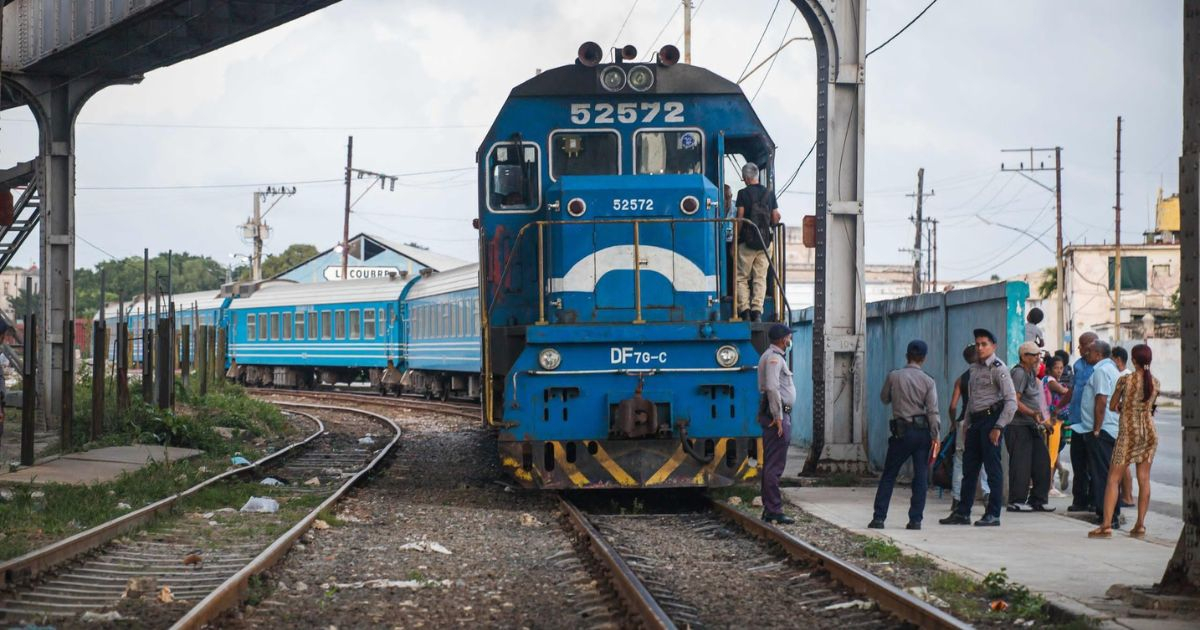
The project to implement Wi-Fi service on Cuba's national trains has successfully passed the technical testing phase, although it still faces key challenges for full execution, as the regime is now seeking funding and defining a business model to make it a reality.
This was confirmed by Robelis Lambert Matos, president of the Integrated Telecommunications Solutions Company S.A. (Solintel), during a meeting with the press organized by the Business Group of Information Technology and Communications (GEIC), as reported by the official newspaper Granma.
According to Lambert Matos, field tests were conducted on both stationary and moving carriages, utilizing equipment specifically acquired for this purpose.
The results presented to the advisory technical committee of the GEIC showed that there are still "silent zones" in the railway network, particularly along the central line of the country, which could hinder the nationwide rollout of the service.
Despite being considered feasible, the installation of Wi-Fi on board faces ongoing technical and financial hurdles.
The project is now in a phase of defining a business model and seeking funding for the acquisition of the necessary equipment.
As part of the immediate steps, Solintel plans to install the connection system in a motor vehicle experimentally on the route between Mariel and Havana.
However, a specific date for the general implementation of the service has not yet been defined.
Among the benefits highlighted by the developers are improved connectivity for passengers and the ability to regulate radio emissions in the railway environment.
However, in a country where access to the internet remains limited and expensive, these types of initiatives, although positive, are still far from meeting the most pressing technological needs of the population.
Since March 2023, the Cuban government announced its intention to install Wi-Fi service on national trains, as part of a project aimed at improving connectivity in the country's rail transport.
At that time, the initiative was introduced as a development within the GEIC, and it was mentioned that it would allow passengers to access email, web browsing, social media, and the corporate intranet.
A year later, in May 2024, Solintel reported that the first field tests of the service have begun, although they did not provide details about the routes involved or the connection costs.
The announcement, made briefly via social media, confirmed that it was a research, development, and innovation (R&D+i) project. However, even then, a delay in the initially proposed timelines was evident, as the entity had promised to end the previous year with active service in certain sections, which did not happen.
Frequently Asked Questions about Wi-Fi on National Trains in Cuba
What is the current status of the Wi-Fi project on national trains in Cuba?
The project has surpassed the technical testing phase, but it faces significant challenges for its full implementation, such as securing funding and defining an appropriate business model.
What are the main obstacles to the implementation of Wi-Fi on trains in Cuba?
The main obstacles are "silent zones" in the railway network, the lack of funding, and the absence of a business model. These factors complicate the deployment of the service on a national scale.
What benefits would the Wi-Fi service offer on Cuba's national trains?
The service would enhance connectivity for passengers and allow for the regulation of radio emissions in the railway environment, providing access to email, web browsing, and social media during travels.
How does internet access in Cuban households compare to the Wi-Fi project on trains?
While the Wi-Fi project on trains progresses, only 7.23% of Cuban households have access to the internet, which highlights a disconnection between connectivity initiatives and the urgent needs of the population.
Filed under: