
Related videos:
To the daily stress faced by Cubans due to blackouts now adds a new factor of uncertainty: the clouds. From now on, “the common people” will not only have to check if there is rice or bread, but also look at the sky to know if rain... and blackouts are expected that day.
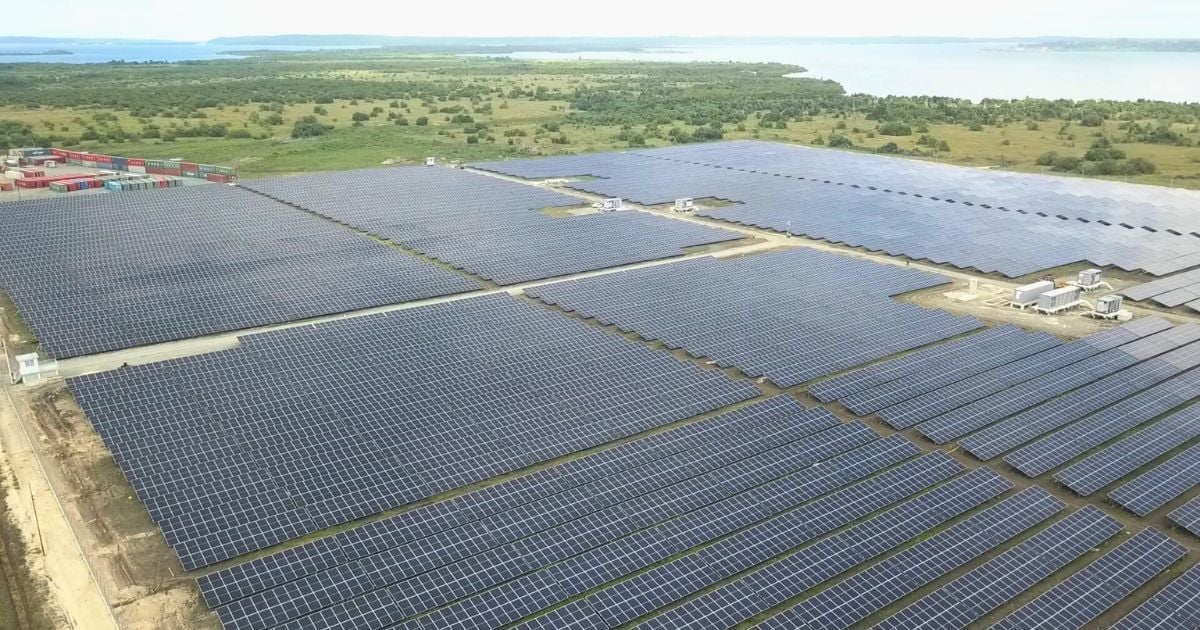
According to the government itself, as reported by the state-run newspaper Trabajadores, cloud cover in the western part of the country impacted solar energy generation, resulting in the photovoltaic parks producing 29 MWh less than planned.
A "discovery" that, for many, seems as surprising as stating that water is wet, and yet, apparently, will be a new variable included in the daily reports.
Additionally, this factor will lead Cubans to pay greater attention to the daily weather reports on the Cuban Television Information System.
The director of Electricity at the Ministry of Energy and Mines, Lázaro Guerra Hernández, reported that the solar installations of the Nursing School in Havana, Mayor Alcalde in Cienfuegos, and La Sabana in Granma generated only 247 MWh due to the low solar radiation.
The Electric Union (UNE) announced that the impact for this Wednesday was 950 MW at noon, partly due to the presence of clouds, and up to 1405 MW during the night peak.
As is customary, several thermal units remain out of service: units 5 and 6 in Mariel, unit 2 in Felton, unit 2 in Santa Cruz, units 3 and 4 in Cienfuegos, and unit 5 in Renté.
Indeed, the Government promises that by the end of April there will be ten solar parks connected, which could contribute energy to the national system on sunny days.
But since that energy cannot be stored, everything depends on whether the sky is clear in the morning… or not.
So now you know: every morning, before making coffee, look at the sky. Because now, the clouds not only signal rain; they can also be a precursor to another day without electricity.
Despite the electricity deficit and cloud cover, the regime did not miss the opportunity to celebrate the connection of six solar parks in March, as highlighted on the social media platform X by Minister Vicente de la O Levy.
Frequently Asked Questions about the Energy Crisis in Cuba and Solar Energy
How do clouds affect solar power generation in Cuba?
Cloud cover affects solar energy generation because it reduces the amount of solar radiation that reaches photovoltaic parks. This results in a production lower than planned, as recently occurred in western Cuba, where solar parks generated 29 MWh less than expected due to the presence of clouds.
What impact do blackouts have on the daily life of Cubans?
The blackouts in Cuba significantly affect the daily lives of citizens, impacting family well-being, production, healthcare services, and education. The constant interruptions of electrical service force Cubans to adapt to a "new normal" of frequent blackouts that complicate their daily activities.
How many solar parks are operational in Cuba?
In Cuba, six solar parks have recently been connected in different provinces, including Granma, Artemisa, Villa Clara, Holguín, Matanzas, and Ciego de Ávila. These parks are part of the government’s efforts to increase renewable energy generation, although their contribution is limited compared to the scale of the current energy crisis.
What measures has the Cuban government taken to address the energy crisis?
The Cuban government has committed to increasing solar energy production as a measure to tackle the energy crisis. However, this initiative comes too late and lacks the support of a comprehensive plan that includes the modernization of the electrical system, diversification of the energy matrix, and operational efficiency, which limits its actual impact on stabilizing the electricity supply.
Filed under: