
Related videos:
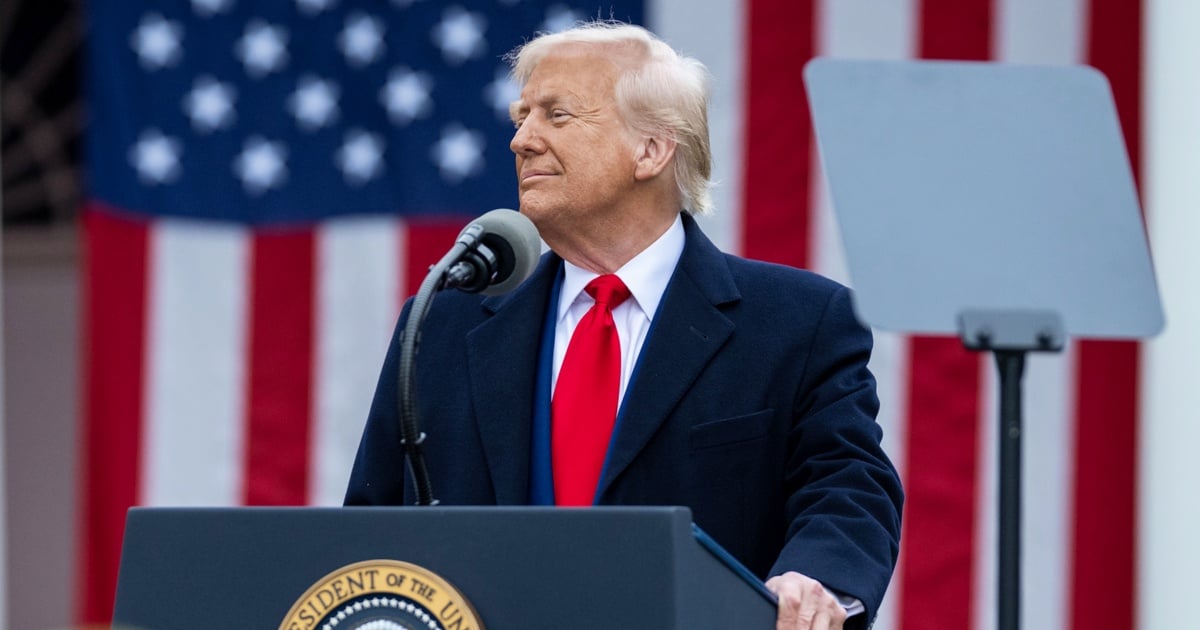
The President of the United States, Donald Trump, announced this Wednesday a new round of global tariffs, but excluded Russia, Cuba, North Korea, and Belarus because severe economic sanctions are already in place against those countries, the White House argued this Wednesday.
In statements to the New York Times, a senior official in the Trump Administration claimed that the mentioned countries “already face extremely high tariffs” that “hinder any significant trade.”
Cuba's Reaction
So far, neither Miguel Díaz-Canel nor Chancellor Bruno Rodríguez Parrilla has commented on social media about the new round of global tariffs from the Trump Administration.
However, the official media Cubadebate published a note this Thursday regarding Cuba's exclusion from the list.
“It is perhaps the only punitive list from the imperial government that does not include Cuba. And what is that miracle? For the simple reason that the economic, financial, and commercial blockade of more than 60 years hinders the sale of Cuban products in the U.S.”, the article sarcastically noted.
The "accumulated damages" of the embargo, according to Cuba
Cubadebate took the opportunity to present in figures the effects of the U.S. embargo.
According to the official media, the accumulated damages over more than six decades of economic blockade amount to 164,141.1 million dollars; that is, more than 1.49 trillion dollars when adjusted to the value of gold in the international market.
Between March 2023 and February 2024, material losses are estimated at 5,056.8 million dollars, which would represent.
An increase of 189.8 million compared to the previous period.
A monthly impact of over 421 million dollars.
More than 13.8 million dollars daily.
Approximately $575,683 per hour.
Cubadebate states that, without the blockade, Cuba's GDP could have grown by 8% in 2023.
The Cuban government estimates that, due to the geographical reallocation of trade, the island has had to bear additional costs amounting to $581.7 million, and for freight, insurance, and the use of intermediaries, another $485.7 million, significantly increasing the cost of acquired goods.
Global commercial escalation
President Trump stated that the reciprocal tariffs introduced on April 2nd "will allow the U.S. to recover its wealth." Tariffs ranging from 10% to 49% were established for dozens of countries with the largest trade deficits with the United States.
Although the White House press secretary, Karoline Leavitt, had indicated that the tariffs would take effect immediately, it was later clarified that the base rate of 10% would be applied starting April 5, with additional tariffs commencing on April 9.
The new round of trade measures marks a new phase in the trade war that the United States is pursuing under the Trump administration.
Filed under: