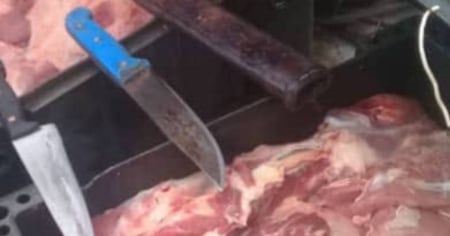
A Cuban farmer, 71 years old, has been forced to sell his livestock out of fear that it will be stolen or illegally slaughtered, as he shared in an interview with the EFE agency, which highlights this issue that severely affects livestock producers.
"They have killed a lot of livestock belonging to many farmers. They started killing my (cows) every two or three days, then every 15 days. They killed even up to eight! And I told my brother: 'Look, I can't go on like this. We need to sell everything because at this rate we'll be left with nothing and we're already old,'" said Julio, a man residing in the village of Vegas, located between Cárdenas and Santa Marta, to EFE.
According to what was stated, that situation added to the stress caused by the inability to deliver the agreed milk quota with the Cuban regime and the lack of resources to pay for a guard for his cows. Additionally, even though a report is filed when the theft or slaughter of cattle occurs, it does not bring back the dead animal.
Another farmer, who preferred to remain anonymous, told EFE that after the coronavirus pandemic, "the mentality of many has been completely misguided" and they target the worker who rises early in the morning to dedicate himself to livestock farming.
"They have wanted to take the easy way out: to go after a farmer, who gets up at 3 in the morning to milk his cow, and when he arrives where she is kept, she appears dismembered,” he stated."
Your case is not isolated. The theft and illegal slaughter of livestock—an act classified as a crime in the country—has been a long-standing issue that resurfaces in the most brutal way whenever a new economic crisis hits.
In recent months, the cases of theft and illegal slaughter of cattle in Cuba have increased significantly, reflecting the crisis in agricultural production and the growing insecurity in rural areas. A farmer in Sancti Spíritus reported the killing of several of his cattle, including two pregnant cows and three young bulls, and demanded concrete measures from the government to curb these crimes.
According to his testimony, the impunity of thieves is one of the main factors affecting livestock farming on the island, leaving producers in a state of total vulnerability.
The offenses related to livestock in Cuba, which the regime claims seriously impact the economy and food security, involved more than 9,000 people in 2024, according to data presented by Colonel Manuel Valdés Brito, head of the Enforcement Body of the Technical Directorate of Investigations (DTI) of the Ministry of the Interior (MININT).
Frequently Asked Questions about the Illegal Theft and Slaughter of Livestock in Cuba
Why are Cuban ranchers selling their cattle?
Cuban ranchers are selling their cattle out of fear of theft and illegal slaughter. The economic crisis in Cuba has led to an increase in cases of cattle theft, putting producers in a vulnerable situation and leaving them without resources to protect their animals.
What are the consequences of illegal livestock slaughter in Cuba?
The illegal sacrifice of livestock severely affects the economy and food security in Cuba. This practice disrupts the supply of meat and related products, leads to significant economic losses, and contributes to insecurity in rural areas.
How are the Cuban authorities responding to the issue of illegal livestock slaughter?
The Cuban government has intensified operations and sanctions against the illegal slaughter of livestock, carrying out arrests and exemplary trials. However, these measures have not succeeded in stopping the problem due to the high demand for meat in the black market and the lack of resources for adequate production.
Why is the black market for meat still thriving in Cuba?
The black market for meat in Cuba thrives due to the scarcity and high prices in official sales points. The lack of access to beef in the formal market forces many people to turn to the black market to meet their basic food needs.
What measures could be taken to improve the situation of livestock farmers in Cuba?
To improve the situation of livestock farmers in Cuba, it would be necessary to implement policies that ensure protection and economic support for producers, facilitate access to supplies and resources, and address the structural causes of the crisis in the livestock sector, such as the lack of economic incentives and infrastructure deficits.
Filed under: