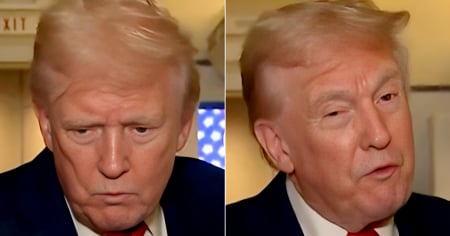
The President of the United States, Donald Trump, welcomed his Salvadoran counterpart, Nayib Bukele, at the White House on Monday in a meeting that solidified a close bilateral alliance in migration and security matters.
The meeting was accompanied by a series of public statements that highlighted the political and rhetorical affinity between both leaders.
Before Bukele's arrival, the White House released an official statement titled "No Safe Harbor for Illegal Immigrant Criminals Under President Trump," highlighting that during the visit, both leaders “will showcase their historic collaboration to build a safer world.”
"Thanks to both leaders, dozens of violent killers of illegal immigrants, rapists, gang members, and other wicked criminals have been swiftly removed from our streets," they stated.
During the meeting in the Oval Office, both leaders exchanged public praises. Trump addressed the Salvadoran people directly with a message in which he complimented Bukele. “You have an amazing president.”
For his part, Bukele responded by highlighting the achievements of his government in terms of security. “In fact, we transformed the 'murder capital of the world' into the safest country in the Western Hemisphere... We liberated millions.”
Additionally, Trump emphasized the importance of El Salvador's support in the fight against transnational crime. “We had a government that allowed people to enter our country freely... from all over... they came from the gangs in Venezuela... what they did is a sin, and you are helping us, and we appreciate it.”
Bukele landed at Joint Base Andrews in Washington DC last Saturday. A day later, Trump, on his platform Truth Social, stated that he was looking forward to seeing him at the White House.
The meeting takes place in a controversial context following the wrongful deportation of Kilmar Abrego García, a legal Salvadoran resident in Maryland who was sent to El Salvador and detained at the Center for the Confinement of Terrorism (CECOT).
Despite the U.S. Supreme Court ordering his return, Bukele and Trump refused to facilitate it, claiming that Abrego is a "terrorist" and that his case falls under Salvadoran justice.
Both countries have signed an agreement that includes the transfer of hundreds of gang members and convicted criminals to Salvadoran prisons, including U.S. citizens.
In return, the Salvadoran government will receive six million dollars. This collaboration has been described by officials as a “unprecedented” agreement.
In this way, Bukele becomes the first Latin American president to be officially received by Trump during his second term. Both share a populist approach, a discourse focused on order and security, and a communication style supported by social media.
Frequently Asked Questions about the Meeting between Trump and Bukele in Washington
What was the main objective of the meeting between Donald Trump and Nayib Bukele?
The main objective of the meeting was to consolidate a close bilateral alliance in migration and security matters. Both leaders discussed their collaboration in the fight against transnational crime and emphasized the importance of maintaining a joint effort to ensure security in their respective countries.
What agreements were reached during the meeting between Trump and Bukele?
During the meeting, both countries signed an agreement that includes the transfer of hundreds of gang members and convicted criminals to Salvadoran prisons, including American citizens. The Salvadoran government will receive six million dollars as part of the agreement, which has been described as "unprecedented."
Why did the deportation of Kilmar Abrego García spark controversy?
The deportation of Kilmar Abrego García caused controversy because it was a mistake to send a legal resident from El Salvador in Maryland back to El Salvador, where he was confined in the Counter-Terrorism Confinement Center (CECOT). Despite the U.S. Supreme Court ordering his return, Trump and Bukele refused to facilitate it, claiming that Abrego is a "terrorist" and that his case falls under Salvadoran jurisdiction.
What impact does the "Safe Third Country" agreement between the U.S. and El Salvador have?
The "Safe Third Country" agreement would allow the United States to deport asylum seekers from third countries, particularly Venezuelans, to El Salvador. This mechanism aims to externalize U.S. immigration policy, making it easier to deport immigrants whose applications are denied, and has been the subject of controversy due to its aggressive approach and economic compensations to the Salvadoran government.
Filed under: