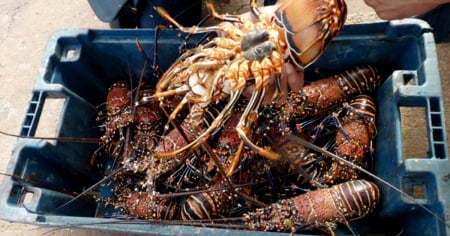
The Cuban regime stated that, along with Vietnam, it is promoting the commercial farming of lobsters in Quemado de Güines, in the province of Villa Clara, to "strengthen food security" and "generate exports."
A report from the official local broadcaster The Radio Queen of the Center indicated that the project has been active since October 2024 and has 1,500 lobsters in cultivation with a survival rate of 100%.
According to Rufino Rodríguez Sarduy, head of fishing operations at the Basic Business Unit (UEB) Cahamar in Quemado de Güines, the preliminary results are "encouraging," as they are already observing an average growth of 120 grams per month.
The Bay of the Philippines was chosen as the location for the development of this commercial initiative by the regime because it is abundant in lobsters.
"Currently, we have six cages with an average of 250 lobsters each, totaling approximately 1,500 lobsters in cultivation. Our goal is to increase the number of cages to expand the project and market these lobsters, which reproduce at 14 months and quickly reach 250 grams, allowing for their commercialization even during the moratorium," said the executive.
Specialists from Cuba traveled to Vietnam to train in breeding and marketing techniques for lobsters in cages in order to kickstart this project and increase production, while also "contributing to food security and generating exports."
However, the export of this animal raises the question of how the "food" security of Cubans will be achieved.
"This project will have a positive impact on the community, because it will allow the export of these cage-raised lobsters and generate foreign currency. Furthermore, being able to market them during the closed season raises their price in the international market," said the Cuban.
In other regions of the country, such as Pinar del Río and Granma, fishing companies also prioritize the export of lobster, while Cubans face difficulties in accessing seafood products.
In 2020, the then Minister of Food Industry, Manuel Sobrino Martínez, justified this policy by stating that the revenues from the exports of products like lobster and shrimp are essential for purchasing basic food items intended for the population.
Despite the increase in exports, the Cuban fishing industry faces significant challenges. In 2023, for example, in the Isle of Youth, the company Pescaisla was unable to meet its annual lobster catching plan, attributing the shortfall to factors such as climate change and the migration of species to deeper waters.
That same year, Episur set a capture plan aimed at reaching a target of 250 tons of lobster. According to reports from the official press, the state-owned company viewed this goal as crucial to strengthen its position as a leader in the national fishing sector.
Meanwhile, the Cuban population continues to face a shortage of fishery products in local markets.
Frequently Asked Questions about the Commercial Cultivation of Lobster in Cuba
What is the purpose of lobster farming in Quemado de Güines?
The goal of lobster farming in Quemado de Güines is to strengthen food security and generate exports. This initiative aims to increase the production of lobsters for both local and international markets, taking advantage of the lobsters' breeding capacity in cages.
How is climate change affecting lobster fishing in Cuba?
Climate change has affected lobster fishing in Cuba, causing a migration of species to deeper waters. This has complicated traditional catching methods and led to the implementation of farming projects as an alternative solution. Water temperature and salinity have increased, negatively impacting natural lobster populations.
Why do Cubans have difficulties accessing seafood products like lobster?
Cubans face difficulties accessing seafood products because production is primarily aimed at export. Fishing companies prioritize international sales due to the need to generate foreign currency, which leaves the local market depleted of products such as lobster. This policy has been justified as necessary to obtain other basic foods for the population.
What challenges does the Cuban fishing industry face today?
The Cuban fishing industry faces challenges such as climate change, species migration, and the lack of adequate infrastructure. These factors have hindered the achievement of catch plans and impacted production capacity, as well as contributing to the shortage of fish products in the domestic market.
Filed under: