In a new display of strength aimed at reinforcing his anti-immigration stance, the President of the United States, Donald Trump, signed an executive order targeting so-called sanctuary jurisdictions (states and cities that limit their cooperation with federal immigration authorities).
The decree signed by Trump instructs the Department of Justice and the Department of Homeland Security to create and keep updated a list of these jurisdictions.
Entities that are included may be subject to the suspension of certain federal funds and could face legal sanctions if they do not comply with the strict enforcement of federal immigration laws.
“Within the next 30 days, a detailed list of states and local governments that obstruct federal efforts on immigration must be published,” the decree states.
The regulation also encourages a more rigorous verification of the eligibility of residents in these areas to access public benefits funded by the federal government.
Direct pressure against the states and a powerful visual message
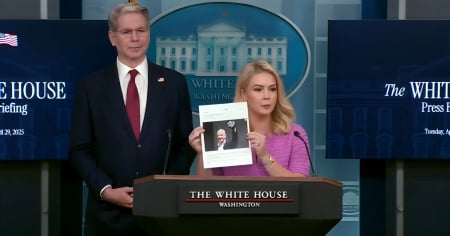
Trump's decision was accompanied by a carefully orchestrated staging aimed at reinforcing the narrative that undocumented immigrants pose a threat to national security.
On Monday, the North Garden of the White House was decorated with large posters displaying mugshot-style photos of individuals allegedly in irregular immigration status, accused of crimes such as murder, rape, and sexual assault against minors, with the word "ARRESTED" in capital letters.
100 days of hardline measures: deportations, arrests, and symbolic actions
The order arrives at a symbolically significant moment for Trump's presidency, as he is about to complete his first 100 days in office during this new term.
Aware of the political significance of this milestone, the president has sought to refocus attention on one of the pillars of his campaign: immigration.
On the same Monday, the administration reported that nearly 800 immigrant arrests were made in a massive raid in Florida over the weekend, as part of its national offensive.
These decisions have reignited the national and international debate on immigrant rights and the humanitarian consequences of restrictive policies.
A new requirement for truck drivers and language as a barrier
Along with the decree against sanctuary cities, Trump signed another executive order that requires that truck drivers operating in the United States demonstrate proficiency in English, in order to ensure -in his words- "road safety and the proper interpretation of signs and regulations."
The administration qualifies this requirement as "non-negotiable" and "vital for the protection of all Americans."
Civil rights groups and migrant worker associations have reported that these types of provisions increase labor barriers and reinforce discrimination against Latino communities and other language minorities.
A path with more repression and less dialogue
The White House is intensifying its pressure on cities whose authorities have adopted more protective policies towards migrant communities, including the refusal to cooperate with detentions requested by ICE (Immigration and Customs Enforcement).
With these executive orders, Trump makes it clear that his administration will continue to use executive power to impose an immigration agenda that punishes state dissent and criminalizes immigrants, even in contexts of legal protection or extended residency.
The measures signed this week not only have an immediate impact on the lives of thousands of people, but also outline the direction of a immigration policy based on confrontation, public image, and strict federal control.
A direction that, according to many experts, could deepen internal divisions in the country and further strain relations between the central government and local governments that choose to resist.
Frequently Asked Questions about Trump’s New Immigration Policies
What does Trump's new immigration decree against sanctuary cities consist of?
The new decree signed by Donald Trump instructs the Department of Justice and the Department of Homeland Security to create and maintain an updated list of sanctuary jurisdictions. These jurisdictions, which are states and cities that limit their cooperation with federal immigration authorities, could face the suspension of certain federal funds and legal penalties if they do not comply with federal immigration laws.
What impact does the decree have on truckers in the United States?
The decree also includes an executive order that requires truck drivers to demonstrate proficiency in English. According to the Trump administration, this requirement is "non-negotiable" and aims to ensure road safety and the proper interpretation of signs and regulations. This measure has been criticized for increasing employment barriers for Latino communities and other linguistic minorities.
What consequences do sanctuary cities face with this new decree?
Sanctuary cities may face the suspension of certain federal funds and legal penalties if they do not comply with the strict enforcement of federal immigration laws. The decree aims to pressure these cities, which have adopted more protective policies toward immigrant communities, to collaborate with federal immigration authorities.
How are the new measures related to Trump's immigration policy?
The new measures are part of a
Filed under: