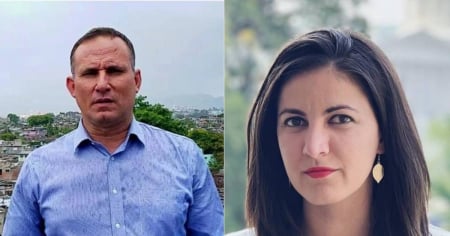
The European Parliament expressed this Wednesday its deep concern over the recent imprisonment of Cuban opponents José Daniel Ferrer and Félix Navarro, both renowned activists for human rights on the island.
The arrest comes just a few weeks after Ferrer provided testimony before the Human Rights Subcommittee of the European Parliament, where he denounced abuses and torture experienced in Cuban prisons.
In a statement issued this Wednesday, the president of that subcommittee, MEP Mounir Satouri (Greens, France), demanded the immediate and unconditional release of both dissidents, as well as guarantees regarding their physical integrity and official confirmation of their whereabouts.
“We reiterate our call to the Cuban authorities to respect fundamental rights and ensure that all citizens can express themselves without fear of reprisals, even when it comes to dissenting opinions,” emphasized Satouri.
The MEP also recalled that Ferrer, leader of the Patriotic Union of Cuba (UNPACU), was unable to intervene live in the parliamentary hearing on April 8 due to a power outage, but managed to send a pre-recorded video in which he detailed the inhuman conditions and torture suffered during his previous incarceration.
Ferrer’s latest arrest occurred this Tuesday following a police raid on his home, which also serves as the headquarters of UNPACU, in the Altamira neighborhood of Santiago de Cuba.
The next day, the regime organized a protest in front of his house, where children dressed in school uniforms participated, accompanied by teachers and State Security agents in civilian clothes.
The minors were chanting slogans such as "Fidel, Fidel!" and "Long live the revolution!" at an event that has been heavily criticized by activists and human rights organizations.
According to a report by the sister of the opposition leader, Ana Belkis Ferrer, schoolchildren were mobilized without the parents' consent, in a practice that has previously been documented as part of the state indoctrination apparatus.
"It is unacceptable to use children as tools of political propaganda. This not only violates their rights but also reflects the degree of moral decay the regime has reached," the activist denounced on social media.
José Daniel Ferrer and Félix Navarro had been released in January of this year thanks to mediation from the Vatican and the government of the United States, after being detained since the protests on July 11, 2021.
However, Cuban authorities recently claimed that the activists had violated the terms of their release, leading them to revoke their parole.
The European Union has warned that it will continue to closely monitor the situation on the island and will use "all available mechanisms" within the framework of the EU-Cuba Political Dialogue and Cooperation Agreement.
"The EU reiterates its solidarity with those who peacefully work for a freer, more democratic, and inclusive Cuba," concluded the official statement from the European Parliament.
Frequently Asked Questions about the Detention of José Daniel Ferrer and Félix Navarro
Why did the European Parliament speak out about the detention of José Daniel Ferrer and Félix Navarro?
The European Parliament expressed its concern over the imprisonment of Cuban opposition figures José Daniel Ferrer and Félix Navarro, who are recognized human rights activists in Cuba. The institution demanded their immediate and unconditional release and emphasized the need for Cuban authorities to respect the fundamental rights of their citizens.
What actions has the United States government taken regarding the detention of these Cuban activists?
The United States government strongly condemned the detention of José Daniel Ferrer and Félix Navarro, as well as the treatment they received during their imprisonment. Additionally, it reaffirmed its support for human rights defenders in Cuba and its commitment to fundamental freedoms on the island.
How has the Cuban regime reacted to international criticism regarding the detention of Ferrer and Navarro?
The Cuban regime has justified the detention of Ferrer and Navarro by claiming that they violated the conditions of their release, which led to the revocation of their parole. Furthermore, the regime has organized acts of repudiation and intensified repression against their supporters and family circle.
What is the impact of José Daniel Ferrer's arrest on the Cuban community and his humanitarian work?
The detention of José Daniel Ferrer impacts both his political activism and his humanitarian work. Ferrer had turned the headquarters of the Patriotic Union of Cuba (UNPACU) into a center for assisting people in extreme poverty. His arrest aims to silence not only his critical voice but also the support he provided to his community.
Filed under: