
Related videos:
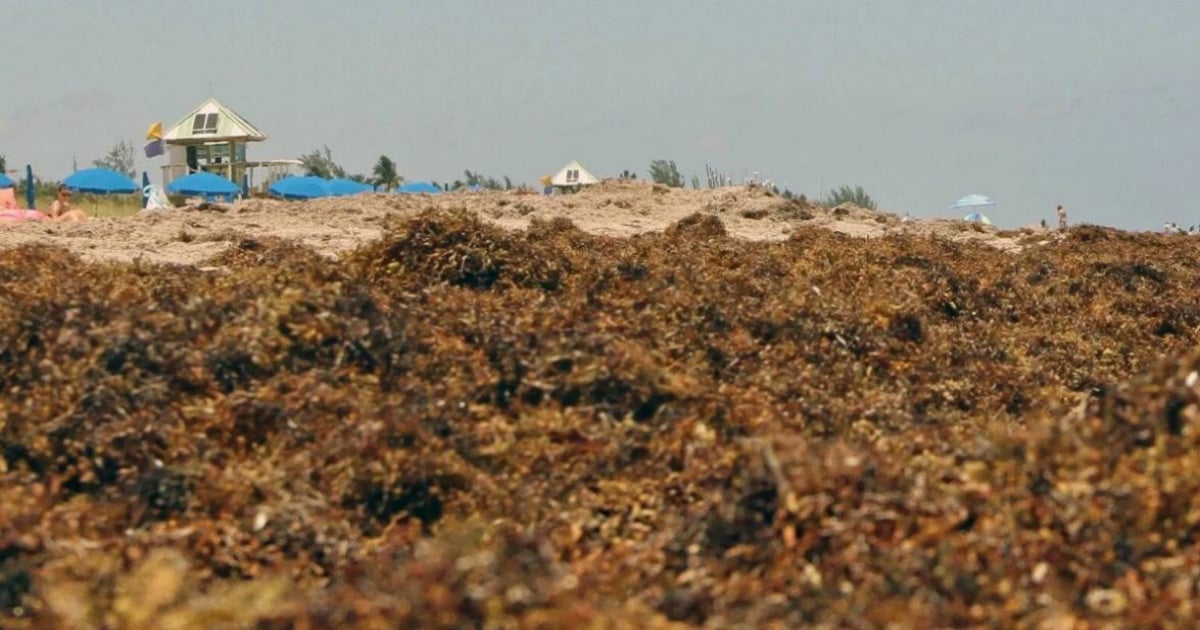
Florida could experience the worst sargassum invasion in its history, with 40% more algae than the previous record season in 2022.
This year, the proliferation began in March, earlier than usual, and reached unprecedented levels by the end of April, according to a report from April 30 by scientists at the Optical Oceanography Laboratory of the University of South Florida (USF), informed El Nuevo Herald.
"It is speculated that this spring, the water temperature will be higher than usual in the western Atlantic and the Caribbean Sea at just the right time. And when it is above normal, plants will be happier," said Chuanmin Hu, a professor at the USF Optical Oceanography Laboratory.
The wind, nutrients, and the increase in temperature due to climate change are listed as the main causes of the phenomenon.
According to the Herald, at South Point Pier last Wednesday, beachgoers had to lift their knees up to their chests to wade through the seaweed that covered the water. Witnesses complain about the foul odor at that beach during the week.
Miami-Dade spent $2.8 million on algae cleaning in 2020 and $3.9 million during the record season of 2022, according to the report.
But many warn that leaving the seaweed in the landfill after cleaning is not the best solution, as it turns into methane, a greenhouse gas that warms the atmosphere.
The Miami-Dade Innovation Authority awarded a grant of $100,000 to four startups aimed at finding solutions for algae waste management, the Herald reports.
The problem of sargassum in Florida dates back to 2019 when authorities in Miami-Dade County began operations to remove sargassum from the beaches of South Florida.
Filed under: