
Related videos:
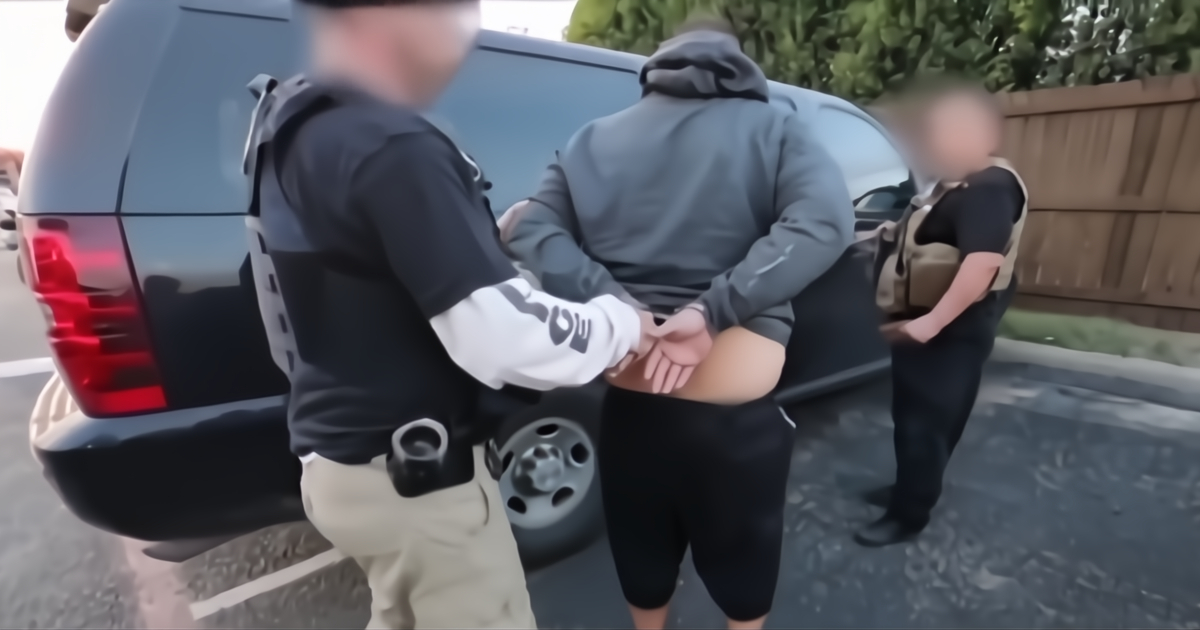
The Florida Highway Patrol will be able to act independently as an immigration force, following the implementation of new measures announced by Governor Ron DeSantis.
From now on, their agents will be able to detain, identify, and deport undocumented immigrants without requiring coordination with the federal government.
According to a report by Telemundo 51, during a press conference held this Monday in Tampa, Governor Ron DeSantis claimed that Florida is the only state in the country where Highway Patrol officers have full immigration authority.
"Now they can operate without depending on Washington," he assured.
More than 100 agents were sworn in last week as special deputy marshals of Florida and the United States, granting them broader powers than the federal 287(g) program, as it allows them to execute federal orders and directly participate in immigration operations.
The governor also highlighted that the 67 sheriffs in the state have signed 287(g) agreements with the Immigration and Customs Enforcement (ICE), establishing Florida as the state with the highest number of agents under that program.
As a summary, DeSantis stated that during the recent “Operation Black Tide”, more than 1,100 undocumented immigrants were detained in less than a week.
During the same appearance, the governor outlined an ambitious plan that, if approved at the federal level, would allow military judges to act as immigration judges, establish temporary detention centers within the state, and provide logistical transportation to expedite deportations.
"It’s easier to relocate someone to South America than to Martha's Vineyard," the governor quipped, alluding to his controversial sending of immigrants on flights to other states in the country.
DeSantis stated that Florida is setting precedents in controlling illegal immigration and in the national implementation of systems like E-Verify, and reiterated that if his plans are applied at the federal level, they will multiply the state's ability to carry out mass deportations.
Frequently Asked Questions about the New Immigration Measures in Florida
What new functions does the Florida Highway Patrol have regarding immigration issues?
The Florida Highway Patrol can now act as an independent immigration enforcement agency, allowing them to stop, identify, and deport undocumented immigrants without needing to coordinate with the federal government. This authority has been granted under the new measures implemented by Governor Ron DeSantis, who aims to strengthen immigration control from the state level.
What is the 287(g) program and how is it applied in Florida?
The 287(g) program is an agreement that allows local law enforcement to act as federal immigration agents. In Florida, all 67 sheriffs in the state have signed 287(g) agreements with the Immigration and Customs Enforcement (ICE), making Florida the state with the highest number of agents under this program. This enables local agents to identify, arrest, and process undocumented immigrants.
What are the implications of the new immigration measures for immigrant communities in Florida?
The new measures have generated fear and uncertainty among immigrant communities, as they face an increase in raids and deportations. Human rights advocacy groups have pointed out the risk of racial discrimination and the erosion of trust between immigrant communities and local authorities. The measures could also negatively impact economic sectors that rely on immigrant labor, such as agriculture and construction.
How will Ron DeSantis's proposal to use military judges in deportation proceedings affect the situation?
The proposal to use military judges in deportation processes aims to expedite legal procedures, allowing for a faster deportation of undocumented immigrants. If approved at the federal level, this measure would enable the establishment of temporary detention centers within the state and provide logistical transportation to expedite deportations, further reinforcing Florida's restrictive immigration policy.
Filed under: