International tourism in Cuba is facing a deep crisis, as reflected in the alarming official data published by the National Office of Statistics and Information (ONEI) for the first quarter of 2025.
According to figures from the official entity, between January and March of this year only 571,772 international visitors arrived in the country, which represents a 29.3% drop compared to the same period in 2024, when 808,941 tourists were recorded.
The decline of one of the most strategic sectors for the Cuban economy is not limited to the influx of visitors. Other key indicators have also decreased significantly: overnight stays dropped from 5,040,451 to 3,601,870, and the hotel occupancy rate fell from 35.6% to 24.1%, according to ONEI itself.
This means that international tourism did not utilize even a quarter of the country's accommodation capacity, precisely during the quarter that has historically been the strongest in terms of traveler arrivals, as highlighted by economist Pedro Monreal on his social media.
Impact on income and foreign hospitality
As expected, the contraction of tourism had a direct impact on the revenues of Cuban tourism entities, which decreased by 21.5% year-on-year, dropping from 44.411 billion Cuban pesos (CUP) to 34.860 billion.
The Spanish hotel chain Meliá, one of the main foreign operators on the island, also confirmed the negative effects of the current context.
In its quarterly report, it noted that its operations in Cuba experienced a decline of 20.8% in revenue per available room (RevPAR), while the average room rate dropped by 8.3%. Occupancy in its hotels stood at a modest 40.5%, even below last year's already low figures.
These results stand in contrast to the performance of the chain in other regions of the world, confirming that the decline is specific to the Cuban market, where the tourism sector remains in the hands of the regime's elite, shared among families of leaders and military personnel from the Business Administration Group S.A. (GAESA), which controls more than 70% of the dollarized economy of the country.
Experts warn about structural deterioration
Pedro Monreal was one of the first to react to the figures from ONEI, pointing out that "international tourism occupied less than a quarter of Cuba's accommodation capacity in the first quarter of 2025."
On that basis, the economist described the outcome as “worse than that of the similar period in 2024,” emphasizing that the situation contradicts the official narrative that insists on projecting a recovery of the sector.
Other analysts agreed that the decline is structural and not just circumstantial. Factors such as the energy crisis, the deterioration of services, the lack of basic supplies in hotels, the perception of insecurity, and limited air connectivity contribute to making Cuba an increasingly less competitive destination compared to other places in the Caribbean.
A setback that moves the official goal further away
The Cuban regime had set a goal for this year of receiving 2.6 million international tourists. However, by the end of the first quarter, only 22% of that target has been met. In 2024, the island also fell short of its targets, and all indications suggest that 2025 will follow the same path.
The decline particularly affects the traditional markets of the island, such as Canada, which has seen a sustained decrease in travelers, and also the Cuban community abroad, which faces bureaucratic obstacles, high prices, and difficulties in traveling to the island.
Criticism of investment in tourism
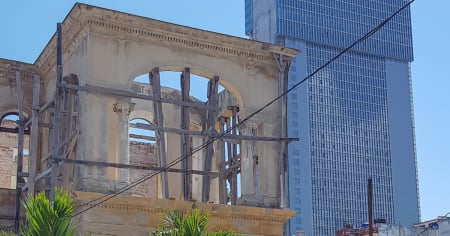
The ongoing deterioration of the sector has sparked debate about the investment priorities of Miguel Díaz-Canel's "continuity" government. Despite the low occupancy levels, the regime continues to allocate significant resources to the construction of new tourism facilities.
In the words of Pedro Monreal, “there is a disconnect between investment in tourism and its actual performance, in a context where other vital sectors, such as agriculture or health, face severe shortages.”
In summary, the Cuban tourism industry is facing one of its most challenging moments in decades. Official data, warnings from experts, and the reality of semi-empty hotels reflect a concerning landscape that demands not only strategic adjustments but also a profound change in how the Cuba destination is managed and promoted.
Filed under: