The head of the U.S. diplomatic mission in Cuba, Mike Hammer, visited a young couple in Mayabeque as part of his initiative to hold face-to-face meetings with Cuban citizens who have reached out to him requesting to speak directly with him.
“A promise is a promise!”, announced the U.S. Embassy on Facebook, where they posted a video of the meeting with the artist Abel Lescay, a protester from the historic demonstrations of July 11 in Cuba, and his partner Katy.
The two young people emailed Hammer to invite him to learn about their daily realities. "We enjoyed sharing with them and listening to their stories, concerns, and dreams," the delegation stated.
In the video, Hammer is seen being welcomed into a humble home and touring a small family artisan workshop. The visit included an informal conversation over coffee prepared with charcoal, during which the diplomat acknowledged the warmth of the Cubans and their desire to explore beyond Havana.
"It's a bit tough... I think there are some who don't really like that I go out there to meet people," commented Hammer, seemingly referring to sectors of the Cuban regime that might view these initiatives with suspicion.
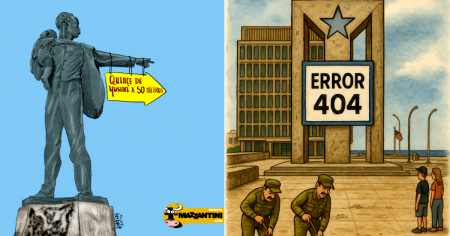
This visit takes place within the context of a series of diplomatic gestures by Hammer, who has recently advocated for the importance of direct diplomacy with the Cuban people, even through spontaneous meetings, like the now-viral game of dominoes on a street in Havana.
The diplomat has insisted that hundreds of Cubans have reached out to the Embassy expressing their interest in speaking with him. Since early May, the diplomatic mission has opened a contact channel via email (havanapublicaffairs@state.gov), inviting citizens to suggest meetings.
Hammer's strategy, unconventional for a mission chief, reflects an attempt to build bridges directly with the Cuban population during a time of increasing disconnection between the regime and a citizenry suffering from the economic and social crisis.
Mayabeque, land of brave youth: From July 11th to Mike Hammer's visit
The province of Mayabeque became one of the epicenters of repression following the peaceful protests of July 11, 2021, in Cuba, with several young people sentenced to harsh prison terms for protesting against the regime.
Among them stands out the musician and university student Abel Lescay, arrested in Bejucal and sentenced to six years in prison for alleged crimes of contempt and public disorder.
Lescay admitted to verbally offending a police officer, but argued that he had already been punished with seven days of detention and that his action was an artistic expression in the form of rap. His case generated a wide campaign of solidarity both inside and outside of Cuba.
Another emblematic figure of repression in Mayabeque is the sisters María Cristina and Angélica Garrido, sentenced to seven and three years in prison respectively for participating in the protests in Quivicán. Both reported physical and psychological mistreatment in prison and join the list of women imprisoned for political reasons on the island.
The brothers Jorge and Nadir Martín Perdomo, from San José de las Lajas, were also sentenced to six and eight years in prison for protesting on July 11. Their mother, Marta Perdomo, has publicly denounced the irregularities of the trial and the inhumane treatment her sons have received, including forced separation in prison and the presentation of witnesses without substantial evidence.
Sentences in Mayabeque have reached up to 20 years in prison, as in the case of Maikel Puig Bergolla, accused of offenses such as public disorder and attempted murder, without substantial evidence according to his family. These sentences have been condemned by human rights organizations and the United States Embassy in Havana as unjust and based on false accusations.
The visit of the head of the U.S. diplomatic mission in Cuba to a young couple in Mayabeque occurs in this context of repression and aims to build bridges directly with the Cuban population.
Filed under: