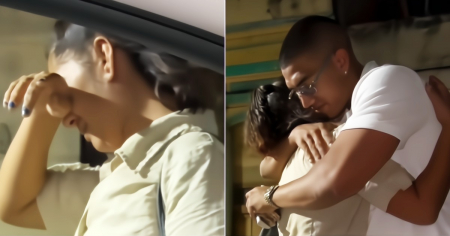
A Cuban with I-220A immigration status in the United States experienced one of the most significant moments of his life when he finally received his permanent residency after four years of waiting.
The emotional moment was captured on video and shared on TikTok by the user @dailubys, who showed how she hands the man an envelope containing his green card. Upon opening it and confirming the good news, the Cuban bursts into tears, clearly moved.
"Four long years, but it was achieved," the woman expressed in the post, celebrating the completion of a long and complex process faced by thousands of Cuban migrants arriving in the United States under the I-220A form, a document that certifies their entry on parole while they resolve their immigration status.
The video, which has quickly gone viral on social media, has generated multiple reactions of support, solidarity, and hope among the Cuban community in exile, many of whom are also undergoing similar processes.
Permanent residency in the U.S. represents a crucial step for those seeking stability, access to full rights, and the opportunity to build a more secure future outside of Cuba.
Frequently Asked Questions about the Residency of Cubans with I-220A Status in the U.S.
What is the I-220A immigration status?
The I-220A status is a document that certifies a migrant's entry on conditional release into the United States while their immigration situation is resolved. Many Cubans have received this status upon being released by immigration authorities, facing years of waiting and legal uncertainty.
How long can a Cuban with I-220A take to receive permanent residency in the U.S.?
The waiting time to receive residency can vary significantly. Many Cubans have reported waiting up to four years or more under the I-220A status to obtain their permanent residency, depending on the legal situation and the administrative process in each case.
Why is it important for Cubans to obtain permanent residency in the United States?
Obtaining permanent residency is crucial for Cuban migrants, as it allows them to access full rights, stability, and the possibility of a more secure future. It also opens up opportunities for employment, education, and eventually applying for U.S. citizenship.
What impact do social media have on the Cuban migrant community in the U.S.?
Social media plays a fundamental role, allowing the sharing of personal experiences and generating community support. Viral videos on platforms like TikTok have touched and motivated thousands of people, offering hope and solidarity among those facing similar migration processes.
How does U.S. immigration policy influence residency processes for Cubans with I-220A?
The immigration policy of the U.S. can significantly impact these processes. Recent government decisions have suspended certain residency and humanitarian parole procedures, creating uncertainty among Cuban migrants. However, success stories continue to inspire those who are still waiting for a resolution.
Filed under: