
Related videos:
The official Cuban press reported this Wednesday on the progress of oil exploration on the island, conducted by the Australian company Melbana Energy, but omitted a key piece of information that completely alters citizens' perception of the positive news.
This company, which is part of the investment group operating on the island since 2015 under a risk exploration contract, has focused its activities in the Martí municipality, in the province of Matanzas.
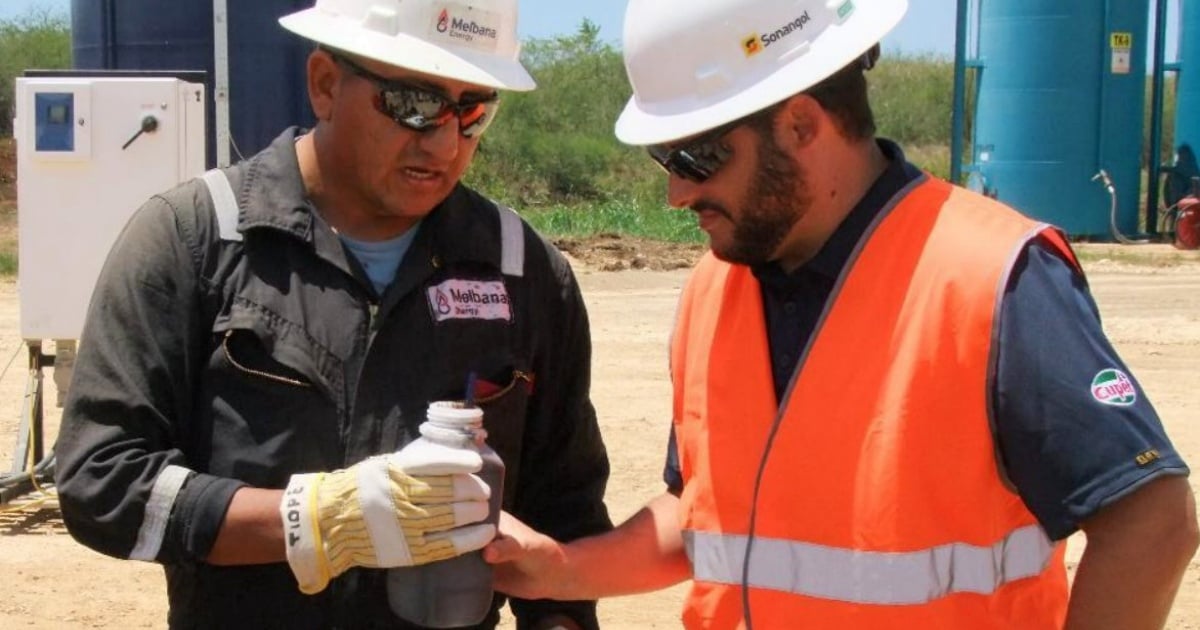
According to the official report, Melbana has so far drilled four wells in the contract area, particularly highlighting the advancements in the Alameda-2 well, whose drilling started in 2023 and is still being evaluated.
A discovery celebrated with great fanfare
During operations at this well, a shallow reservoir with oil of more than 18° API was identified, marking a qualitative leap compared to the heavy crude traditionally extracted in the northern Cuban belt.
At the beginning of 2025, repair work at the same well allowed for an even higher quality of production. Unión Cuba-Petróleo (CUPET) emphasized that this finding "reinforces the potential of the reservoir," although Melbana has decided to extend the evaluation period before making definitive decisions regarding commercialization.
Among the next steps is the drilling of new wells to confirm the extent of the productive layer and assess the gas and oil potential. If the results are validated, the company will present a declaration of commerciality.
Although the current production from Melbana's wells represents only 0.005% of the national total, Cubadebate described the advancements as “encouraging” and emphasized the opportunities that are opening up for the future of the Cuban energy industry.
The key omission: Oil will be exported
However, the optimism of the official discourse contrasts with a notable omission: the fate of that oil.
In a note published on May 14, it was reported that the company Melbana Energy plans to export the crude oil extracted from the Alameda-2 well at the end of June, marking its first international shipment from Cuba.
According to this report, over 15,000 barrels of high-quality crude oil—lighter than that normally found on the island—have already been stored, and the necessary approval for the operation has been received.
"Alameda-2 continues to produce oil at a controlled rate since mid-April," explained Melbana, which also reported on the advanced state of the Amistad-2 well, designed to maximize production in the formation known as Unit 1B.
The executive president of Melbana Energy, Andrew Purcell, noted that "at the current production rate, they will have enough oil for the first test shipment next month."
In addition, he hinted that this exercise, along with the performance of the new well, will bring the company closer to securing a line of financing for an ambitious development plan for the deposit, with a final decision expected by the end of the year.
Cuban production, foreign destination
The technical process for this export involves that the crude undergoes primary separation on-site, and then it is transported by road for approximately 50 kilometers to CUPET facilities for processing and final storage. The entire procedure is carried out with minimal personnel, allowing for low operational costs.
Melbana has not yet revealed the specific buyer of this Cuban crude oil, but it has confirmed that “the interested party is assessing the timing and availability of a suitable coastal tanker or the possibility of combining the shipment with upcoming scheduled exports of larger volumes of crude.”
In parallel, the company plans to open two more wells in the same area, including one 850 meters southwest of Alameda-2. Access works have already been completed, and all necessary materials and permits have been received.
The drilling, which is expected to last less than three weeks, will also focus on the Unit 1B formation, with subsequent testing and evaluation to determine its production potential.
The unresolved contradiction
While official media celebrate what they consider a new horizon for Cuba's energy self-sufficiency, the reality that higher quality crude will be exported has been conveniently silenced in state communication channels.
This omission is particularly significant considering the country's energy context, characterized by frequent blackouts and a strong dependence on imported oil, especially from countries like Russia or Venezuela.
Although foreign investment can be key to the development of the sector, the lack of transparency regarding the allocation of extracted resources raises questions: To what extent will these discoveries directly benefit the Cuban people? What will be the real impact on the national energy crisis if the best results are directed towards external markets?
The case of Melbana Energy and the oil from Alameda-2 highlights a gap between the official narrative and the actual business strategy.
While media outlets like Cubadebate praise technological advancements and the promise of energy self-sufficiency, a crucial fact is overlooked: the immediate benefits of these discoveries will not remain in Cuba.
It serves as a reminder of how information control can shape public perception, even on sensitive topics like energy resources, and the importance of cross-referencing official narratives with other sources to gain a comprehensive understanding of reality.
Frequently Asked Questions about Oil Discoveries in Cuba and Their Exportation
What discoveries has Melbana Energy made in Cuba?
Melbana Energy has identified a shallow reservoir with oil of more than 18° API in the Alameda-2 well, representing a significant advancement over the traditionally extracted heavy crude in Cuba. This discovery strengthens the potential of the field in Matanzas.
Why is the discovery of oil in the Alameda-2 well significant?
The discovery is significant because the oil from the Alameda-2 well is of high quality and lighter than the crude typically found in Cuba. This could open new opportunities for the Cuban energy industry.
What is the destination of the oil extracted by Melbana Energy?
Despite the discoveries, Melbana Energy plans to export high-quality oil extracted from the Alameda-2 well. The first international shipment is expected to take place by the end of June 2025.
How does the export of oil affect the energy crisis in Cuba?
Exporting the higher quality oil without allocating it for domestic consumption creates a contradiction in light of the energy crisis that Cuba is facing, characterized by frequent blackouts and dependence on imported oil.
Filed under: