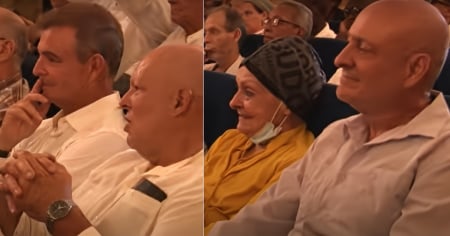
The Cuban leader Miguel Díaz-Canel confirmed this Thursday the passing of Abraham Maciques, former director of the Palco Business Group and one of the most influential figures in the island's economic power for decades.
"The Revolution has lost a loyal soldier and effective businessman. A collaborator of Fidel and Celia, Abraham Maciques was a fighter, diplomat, and founder: in the Ciénaga de Zapata, the Palace of Conventions, Science, Tourism, and Commerce," wrote Díaz-Canel on his X account, where he expressed his condolences to family and friends.
For its part, the Palco Business Group also spoke publicly about the death of its founder.
"Our Business Group deeply regrets the passing of Abraham Maciques Maciques, founder and an indispensable figure in the history of Palco," stated in a brief announcement.
Maciques was for years the public face of Palco, a powerful state entity responsible for managing the Havana International Convention Center and other exclusive services for government officials, foreign delegations, and businesspeople.
His role granted him significant influence in the parallel economic model of Castroism, where commercial, military, and political interests were intertwined.
Born in Matanzas and of Jewish descent, Maciques met Fidel Castro in 1959, when he was the deputy delegate for Tourism in his province. That relationship was crucial for his political and business rise.
Fidel sent him to the Zapata Swamp, where he was caught off guard by the Bay of Pigs invasion, an event that solidified his connection with the revolutionary leadership.
His proximity to Fidel Castro and Celia Sánchez led him to preside over Cubalse and to oversee the construction of the Palace of Conventions. From there, he rose to the presidency of Cubanacán S.A., a key company in the development of Cuban tourism in the 1980s.
However, in 1995 he faced a setback due to his association with the American con artist Robert Vesco and the failed Troxidal vaccine against HIV. He was dismissed, but his relationship with Fidel saved him from more severe consequences, and he returned to the Palacio de Convenciones.
From there, he expanded his network of state businesses, including hotels, restaurants, real estate agencies, and service agencies. Palco became one of the most important cogs in the economic power of the Cuban state, especially after the Soviet collapse, by facilitating operations in foreign currencies.
In June 2021, he was ousted by Prime Minister Manuel Marrero Cruz in a reshuffle that reduced the scope of Palco and transferred part of its operations to the military conglomerate GAESA. His departure was a response to internal pressures and a reorganization of loyalties within the regime.
In recent years, Maciques had disappeared from the public eye, and details about his activities or influence were unknown. His death closes a chapter of the business elite directly linked to Fidel Castro and marks the end of an era within the parallel power structures in Cuba.
Frequently asked questions about Abraham Maciques and his influence on the economic power of Cuba
Who was Abraham Maciques and what was his role in Cuba's economic power?
Abraham Maciques was a key figure in the economic power of Cuba for decades. He served as the former director of the Palco Business Group, a powerful state entity that managed exclusive services for the Cuban government and foreign delegations. His influence extended through an economic model where commercial, military, and political interests intertwined, especially after the Soviet collapse.
How did Abraham Maciques rise in the political and business spheres of Cuba?
Abraham Maciques, born in Matanzas, met Fidel Castro in 1959, which was crucial for his rise in Cuba. His relationship with Castro and Celia Sánchez allowed him to climb the ranks, eventually becoming the president of Cubalse and leading the construction of the Palace of Conventions. Later, he presided over Cubanacán S.A., where he played an important role in the development of Cuban tourism in the 1980s.
What controversies surrounded Abraham Maciques during his career?
In 1995, Abraham Maciques faced a significant setback when he was linked to the American con artist Robert Vesco and a failed vaccine against HIV. Although he was removed from his position, his closeness to Fidel Castro allowed him to avoid greater consequences and return to the Palace of Conventions, from where he continued to expand his influence in the state business sector.
How did the Palco Business Group influence the Cuban economy under the leadership of Abraham Maciques?
The Palco Business Group became one of the most important cogs in the economic power of the Cuban regime under the leadership of Abraham Maciques. The company facilitated operations in foreign currencies, especially after the Soviet collapse, managing services for government officials and foreign delegations, which granted it a crucial role in the parallel economic model of Castroism.
Filed under: