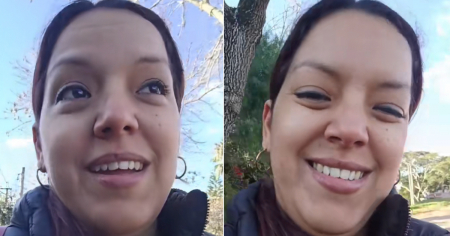
Cuban YouTuber Frank El Makina announced this Thursday through a video on social media that he has successfully completed his legal residency process in Uruguay after finishing all the necessary procedures, including the steps required to convert his Cuban birth certificate to the official Uruguayan format.
"Just today I was able to get the ID that says legal resident, with no observations or anything," celebrated the content creator, highlighting that this document will allow him to start a new chapter in the South American country. He explained that with residency, he can now access the financial system, apply for a credit card, open bank accounts, and even apply for loans to purchase a vehicle. "I'm going to have my first credit card in my life," he said excitedly.
In his video, Frank also reflected on the difficulties faced by Cuban migrants in Uruguay due to negative past experiences. He mentioned that in previous waves of migration, some compatriots requested loans and then left the country without repaying them, which led to more restrictive policies. “Because of those people, nowadays, if you don't have that identification, you can't apply for a loan here in Uruguay,” he warned.
The post sparked a wave of reactions on TikTok, mostly positive. Numerous followers from Uruguay and Cuba congratulated him on this new achievement and wished him success on his journey. "Congratulations on obtaining your residency," "Keep going and move forward," and "Always take care of your credit history," were some of the most repeated messages.
Other users took the opportunity to offer financial advice, warning about the high interest rates on cash loans and the importance of using credit cards responsibly. “Never pay only the minimum on credit; always pay off the total,” advised one commenter. There were also voices that cautioned against the dangers of excessive debt: “If you can avoid having any credit cards or loans, that's better.”
In parallel, some comments ironically questioned the constant mention of credit, although they were a minority within the ongoing debate.
The current achievement of Frank El Makina is part of a migratory process that he has publicly documented since his arrival in Uruguay over two years ago. Last December, he recalled with emotion the night before his departure from Cuba, when he embarked on his journey to Guyana to start the trek south across the continent. “December 12 was a day full of stress,” he said at that time, noting that despite the challenges, his goal has always been to find freedom and dignity.
Since then, he has shared various aspects of his adaptation to life in Uruguay. In February of this year, he referred to the country as a good place to live and highlighted the coverage of basic services, cleanliness, and tranquility as positive aspects. He also described it as one of the safest countries in Latin America and appreciated the accessibility of the process for obtaining residency and citizenship.
An expanding migratory phenomenon
The story of Frank is part of the experiences of other Cubans who have found in Uruguay an opportunity to rebuild their lives. Testimonies such as those of @lachinauruguay and Lisset Catalina, who are also content creators on TikTok, demonstrate how many migrants appreciate the opportunities the country provides, despite the ongoing economic and integration challenges.
While some Cubans achieve stability through informal jobs, entrepreneurial ventures, or digital platforms, others report difficulties in finding employment or accessing credit. However, in most cases, they agree that the opportunity to live with greater security and freedom marks a substantial improvement compared to life in Cuba.
With his legal resident ID in hand, Frank El Makina now looks to the future with new plans and expectations: “The next step is citizenship,” he assured. For now, he celebrates the completion of a key stage in his migration journey and expresses gratitude for the support from the community that has been with him since he left the island.
Frequently asked questions about Frank El Makina's migration to Uruguay
How did Frank El Makina obtain his legal residency in Uruguay?
Frank El Makina successfully completed the process of legal residency in Uruguay, which included converting his Cuban birth certificate to the official Uruguayan format. This achievement now allows him to access the financial system and apply for credit in the country.
What benefits does legal residency bring to Frank El Makina in Uruguay?
With legal residency, Frank El Makina can access the Uruguayan financial system, which includes the ability to apply for credit cards, open bank accounts, and apply for loans to purchase a vehicle, representing a substantial improvement in his quality of life.
Why is Uruguay an attractive destination for Cubans, according to Frank El Makina?
Frank El Makina highlights the economic, political, and social stability of Uruguay, as well as its security, as reasons why many Cubans choose to emigrate to this country. He also mentions that the process for obtaining residency and citizenship is more accessible compared to other countries.
What challenges do Cuban migrants face in Uruguay?
Among the challenges mentioned by Frank El Makina are economic difficulties and issues of integration. Some migrants face obstacles in accessing credit due to negative records from other Cubans who did not repay their debts. However, many appreciate the security and opportunities that the country offers.
Filed under: