
Related videos:
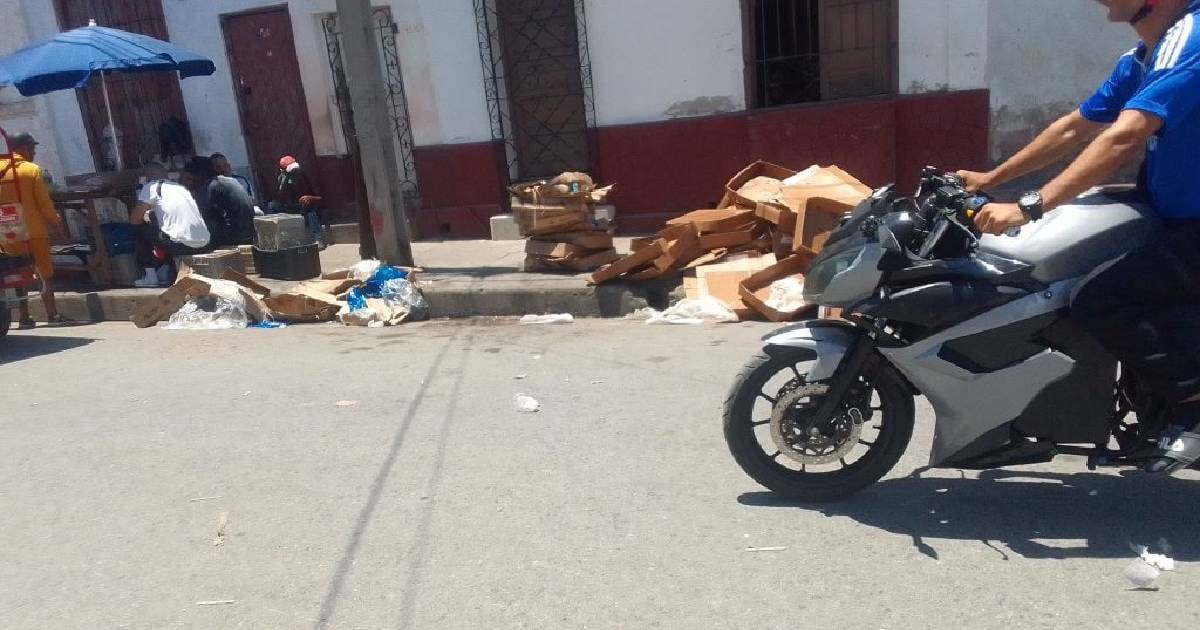
The city of Cienfuegos, considered by many as the cleanest in Cuba, shows a dirty and neglected face every Saturday after the popular Feria de La Calzada, a space for supply and marketing that ends up turning into a hotspot of waste and neglect.
At the fair along Avenue 64 and nearby areas such as Castillo and Medio, a variety of products are sold ranging from food to household items and clothing. It attracts residents from municipalities like Palmira, Rodas, and Cruces, a movement that highlights the scarcity in other areas.
Despite its economic significance, the event leaves a visible environmental mark. By the afternoon, the corners are overflowing with trash, broken containers, and scattered remnants of goods, described a report from the official newspaper 5 de Septiembre of Cienfuegos.
The lack of effective waste collection after the fair not only impacts the immediate sales area. The waste spreads and piles up in every corner: in bins, doorways of residences, and in the middle of the street. These are public spaces where families, children, and elderly people live, who on more than one occasion end up taking responsibility for the cleaning, not out of obligation, but out of necessity, in defense of the right to a healthy environment.
However, far from being limited to Saturday, the problem recurs throughout the week in other areas of the city. A stroll down streets like Prado, San Fernando, Santa Clara, Industrias, Gloria, 57, or 5 de Septiembre Avenue confirms that the accumulation of waste has become a regular part of the landscape, normalized by habit, a reality that many prefer not to confront directly, but which remains there, degrading the quality of the urban environment.
The state-owned company Comunales, responsible for solid waste collection, bears the brunt of the cleaning work. But the question remains: what responsibility do the vendors themselves, including agricultural producers, small and medium-sized enterprises, and intermediaries, assume regarding the waste they generate?
Although the note does not specify whether there is any specific regulation that requires vendors to manage their waste, the impact of this disorganization goes beyond just aesthetics. It directly affects the public health of a city that is already grappling with structural difficulties, such as fuel shortages, a lack of garbage collection vehicles, and insufficient staff in the communal hygiene service.
The official newspaper's critique also points to the inaction or lack of control by the Provincial Center for Hygiene, Epidemiology, and Microbiology (CEPHEM) and the authorities of the government and the Communist Party. The proposal is clear: more than just calls to action, there is an urgent need for the implementation of concrete measures. The media's suggestion is to impose fines "not of a negligible amount that can be paid with a day's work," but rather a penalty that weighs on the wallet, serving as an effective deterrent against negligent behavior.
The demand can be summarized in one urgency: that the order and cleanliness of Cienfuegos do not become a luxury of the past. The Pearl of the South, whose historic center has held the title of UNESCO World Cultural Heritage since 2005, needs shared responsibility to preserve its luster.
In the central province, the issue of garbage has been reported multiple times, both due to the accumulation on streets and beaches and the lack of efficiency in waste collection by Comunales. The situation worsens, especially along the coastline, where waste mixes with decomposing dead animals, creating an unhealthy environment.
In municipalities like Aguada de Pasajeros, the Real Campiña landfill has begun to threaten the health of residents, while Cienfuegos authorities remain indifferent, according to complaints from local residents.
The accumulation of garbage has become a recurring issue in several Cuban cities, with serious implications for public health.
Recent reports from Matanzas have raised concerns about the critical sanitary situation faced by residents of a community, displaying streets filled with trash, overflowing pits, and a collapsed dump right next to a school.
In Santiago de Cuba, the old Hotel Venus has been turned into a dump due to a lack of state management, amid the neglect of architectural heritage. Meanwhile, in Vedado, Havana, residents have reported the proliferation of unsanitary sites even near the Institute of Hematology and Immunology, which has led to rodent infestations and concerns about a possible larger health crisis.
Frequently Asked Questions about the Trash Crisis in Cienfuegos and Cuba
Why does Cienfuegos, known as the cleanest city in Cuba, face garbage problems?
Cienfuegos faces garbage problems due to poor state management and a lack of effective collection after events like the Feria de La Calzada. This situation is worsened by a shortage of resources, a lack of collection vehicles, and insufficient personnel, resulting in a visible accumulation of waste on the streets.
What is the impact of the garbage crisis on public health in Cienfuegos?
The accumulation of garbage in Cienfuegos creates a conducive environment for the proliferation of disease vectors such as rats and mosquitoes, which can impact public health. The lack of hygiene can lead to outbreaks of infectious diseases and compromise the quality of life for residents, especially in areas close to public spaces and homes.
What measures are proposed to address the accumulation of trash in Cienfuegos?
The implementation of concrete measures is proposed, such as significant fines for those who do not properly manage their waste and better coordination between the authorities and vendors. Additionally, it is suggested to improve the efficiency of the state-run Comunales company and apply stricter controls by the Provincial Hygiene Center.
How does the situation in Cienfuegos compare to other Cuban cities in terms of waste management?
The situation in Cienfuegos is similar to that in other Cuban cities such as Havana and Matanzas, where the accumulation of garbage is a common issue due to the inefficiency in state waste management. This problem has its roots in the lack of resources, outdated equipment, and poor management that affect the entire island.
Filed under: