
Related videos:
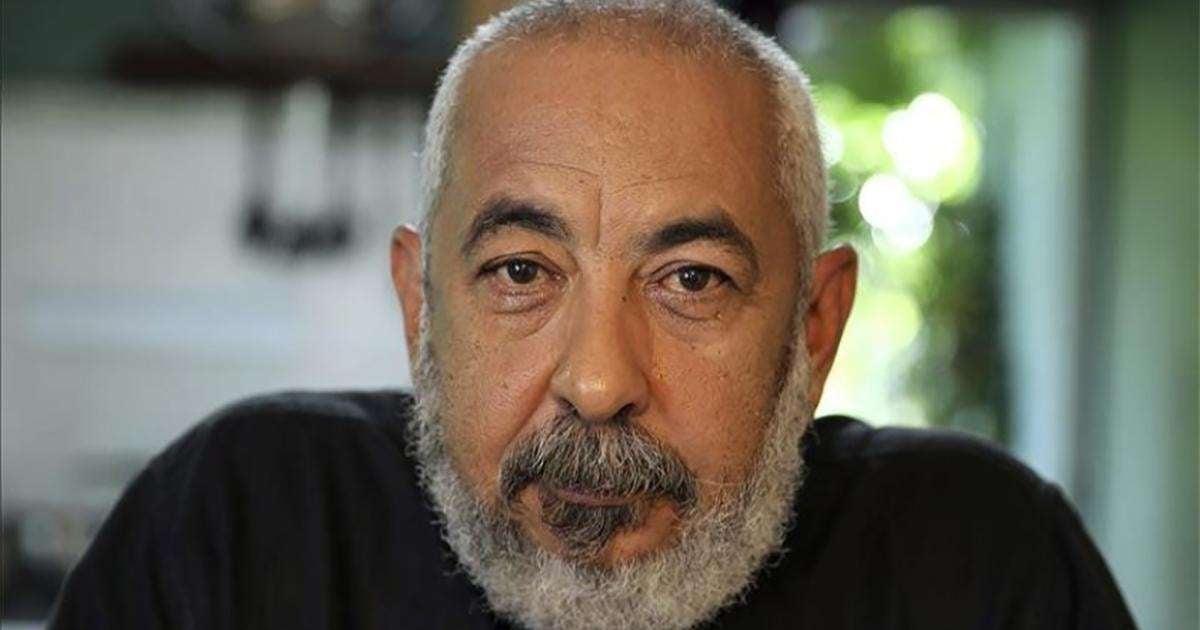
The renowned Cuban writer Leonardo Padura spoke out about the permanent revocation of humanitarian parole by the Trump administration and the repercussions this has on the individuals who arrived in the United States under that program.
In an interview with the agency EFE, Padura denounced the increasing fear among thousands of Cuban immigrants, many of whom, he recalled, "sold everything to be able to emigrate."
The esteemed intellectual lamented the situation faced by his compatriots in the United States, who arrived with visas granted by the government, and now these are being revoked. "Some are very fearful there," he emphasized.
He shared a family anecdote that illustrates how the current U.S. immigration policy has made many Cubans fearful of traveling to the Island.
The writer revealed that his brother, who lives in Miami and is a U.S. citizen, recently stopped going to Cuba because he was afraid he wouldn't be allowed to return.
"My mother's birthday was missed out of fear," he lamented.
For Padura, Trump's arrival at the White House was a catalyst for everything that is happening, although "there are many more difficult processes" in the world.
"What we are experiencing seems like a social dystopia," he emphasized.
Cuba: crisis, blackouts, and exile
Regarding his country, he did not hide his pessimism. "It is a tremendous crisis in every sense," he stated, referring to the deterioration of living conditions, the constant blackouts, and the massive exodus.
"I don't know if I am capable of understanding the current situation in Cuba," he confessed.
Padura criticized the latest U.S. policies towards Cuba, both those of Joe Biden and Donald Trump.
He pointed out that the decision of the latter to reinclude the Island on the list of countries that do not cooperate in the fight against terrorism, along with its respective sanctions, has deeply impacted ordinary citizens.
Finally, he put forth a harsh reflection on the current state of the world, which he compares to a "social dystopia," characterized by global conflicts, extreme digital surveillance, and a regression of fundamental freedoms, especially in the digital realm.
The role of the writer and their upcoming novel
During his stay in the Spanish capital to participate in the Book Fair, Padura discussed his upcoming novel.
"To Die in the Sand," set to be released in September, will address the "complicated fate" of its generation in contemporary Cuba. In the story, one of the characters chooses forgetfulness as a means of emotional survival.
In times of war, vigilance, and exodus, Padura reaffirms his commitment as a writer: to say what others cannot or dare not say.
Although the world seems increasingly like a dystopian novel, its critical voice continues to appeal to memory, dignity, and truth.
Frequently asked questions about the migration situation of Cubans in the United States and the crisis in Cuba
Why was the humanitarian parole for Cubans in the United States revoked?
The Donald Trump administration revoked humanitarian parole as part of a more restrictive immigration policy, arguing that the program did not succeed in curbing irregular migration and overloaded public resources. This decision affects over 530,000 people from Cuba, Haiti, Nicaragua, and Venezuela, leaving thousands at risk of deportation. Humanitarian parole had initially been promoted by the Joe Biden administration to allow temporary entry for humanitarian reasons.
How does the revocation of humanitarian parole affect Cubans in the United States?
The revocation of humanitarian parole has generated fear and uncertainty among Cubans who could be deported, especially those who have not yet met the requirement of one year and one day to apply for the Cuban Adjustment Act. Additionally, those affected lose their work permit and become undocumented, which makes them deportable. Thousands of families who sold everything to emigrate are now facing the possibility of returning to a Cuba plunged into economic and energy crisis.
What are the consequences of the crisis in Cuba according to Leonardo Padura?
Leonardo Padura describes the situation in Cuba as a "tremendous crisis", with a decline in material conditions, constant blackouts, and a massive exodus. The writer points out that marginalization, violence, poverty, and inequality have grown significantly. The lack of investment and willingness from the government has contributed to the deterioration of Havana, a city that, according to Padura, needs a profound transformation to improve the quality of life for its residents.
What are Leonardo Padura's criticisms of the Cuban government and U.S. policies?
Leonardo Padura has been critical of both the Cuban government and U.S. policies towards Cuba. Padura regrets the lack of will to preserve Havana and criticizes the regime's measures that have contributed to the deterioration of the city and the morale of its inhabitants. He also questions Joe Biden's and Donald Trump's policies towards Cuba, particularly the inclusion of the island on the list of countries that do not cooperate in the fight against terrorism, which has negatively impacted ordinary citizens.
Filed under: