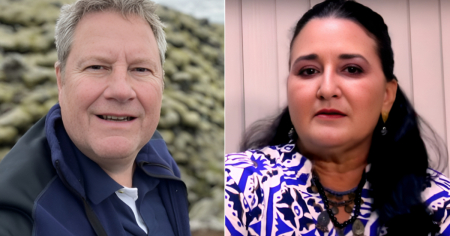
The United States government summoned the Cuban ambassador in Washington, Lianys Torres Rivera, last Friday to express its rejection of the harassment by the Castro regime against the head of the U.S. mission in Havana, Mike Hammer, and other American diplomats.
The meeting, confirmed by Martí Noticias, marks a new chapter in the increasing deterioration of bilateral relations.
According to the mentioned media outlet, the U.S. State Department made it clear that Hammer's actions are within his diplomatic functions protected by the Vienna Convention, and denounced the regime's attempt to portray its contacts with civil society as “improper conduct”.
“We oppose the harassment by the Cuban regime against mission chief Mike Hammer,” stated a spokesperson for the State Department, emphasizing that the Cuban embassy in the U.S. operates freely, even meeting with American opponents, without interference from the American government. “Reciprocity is clear,” he stressed.
Cuba accuses Hammer of "provocative behavior."
On Friday, May 30, the MINREX summoned Hammer in Havana and delivered a Note of Protest, accusing him of "provocative and irresponsible behavior."
According to the official statement, the diplomat allegedly urged Cuban citizens to commit "serious offenses" and to act "against the constitutional order."
The regime also questioned her increasing public visibility on the island, including her meetings with opposition figures, religious leaders, and relatives of political prisoners, as well as her presence at social activities in various provinces. All of this has been described in state media as part of a strategy of "political interference."
Washington: full support for Hammer
According to Martí Noticias, sources close to the case assert that Washington was firm in its defense of the diplomat's work, who has the full institutional support of the U.S. government to continue his mission on the island. "They can travel throughout the country, and our ambassador can as well," was one of the messages conveyed to the Cuban ambassador.
Additionally, during the meeting in Washington, the United States reiterated its demand for the release of Cuban political prisoners, such as José Daniel Ferrer and Félix Navarro, noting that repression and the deterioration of human rights on the island are a top concern.
The State Department also stated that it is not U.S. diplomacy that creates unrest in Cuba, but rather the repressive and corrupt policies of the regime.
A scenario of escalating confrontation
This new episode confirms the growing diplomatic friction between Washington and Havana. For weeks, the Cuban regime has intensified its media attacks against Mike Hammer, whose activities have visibly unsettled the Cuban political apparatus.
Far from yielding, the diplomat has increased his presence and connections with various sectors of Cuban civil society, which has created a climate of high political tension on the island.
Meanwhile, the official narrative in Cuba accuses him of promoting disorder, when in reality his work —according to the United States— responds to the diplomatic mandate of “amplifying the voices of the Cuban people in the face of oppression.”
Frequently Asked Questions about the Diplomatic Tension between the United States and Cuba
Why did the United States summon the Cuban ambassador in Washington?
The United States summoned the Cuban ambassador in Washington to express its disapproval of the Cuban regime's harassment of the American mission chief in Havana, Mike Hammer. The summons was a diplomatic gesture to convey its dissatisfaction with the actions of the Cuban government and to reaffirm that Hammer's activities are protected by the Vienna Convention on Diplomatic Relations.
What is the reason for the Cuban regime's accusations against Mike Hammer?
The Cuban regime accuses Mike Hammer of having a "provocative and irresponsible conduct", claiming that he incites Cuban citizens to commit serious crimes and acts against the constitutional order. Additionally, he is criticized for manipulating the figure of José Martí and for his increasing public visibility on the island, which the Cuban government considers a strategy of political interference.
How has the United States responded to the accusations against Mike Hammer?
The United States has fully supported Mike Hammer, defending his work as part of its diplomatic mission to support the Cuban people and highlight human rights violations on the island. The U.S. government argues that it is not its diplomacy that creates discomfort, but rather the repressive and corrupt policies of the Cuban regime.
What actions has Mike Hammer taken in Cuba that have generated tensions?
Mike Hammer has maintained an active schedule of meetings with opponents, activists, family members of political prisoners, and members of Cuban civil society. He has also visited symbolic places such as the grave of José Martí. These actions have been interpreted by the Cuban regime as provocations and have heightened diplomatic tensions.
Filed under: