
Related videos:
The Cuban Ministry of Foreign Affairs (MINREX) stated that it respects the migration agreements with the United States, despite the deterioration of bilateral relations, and accused the White House of provoking military tension.
Johana Tablada, deputy director for U.S. affairs at the agency, accused the Trump administration of creating a favorable scenario for a "military confrontation," in a maneuver that some interpret as a strategy to reinforce the narrative of siege and divert attention from the multiple internal crisis fronts that Cuba is experiencing.
Cuba presents itself as "the adult in the room."
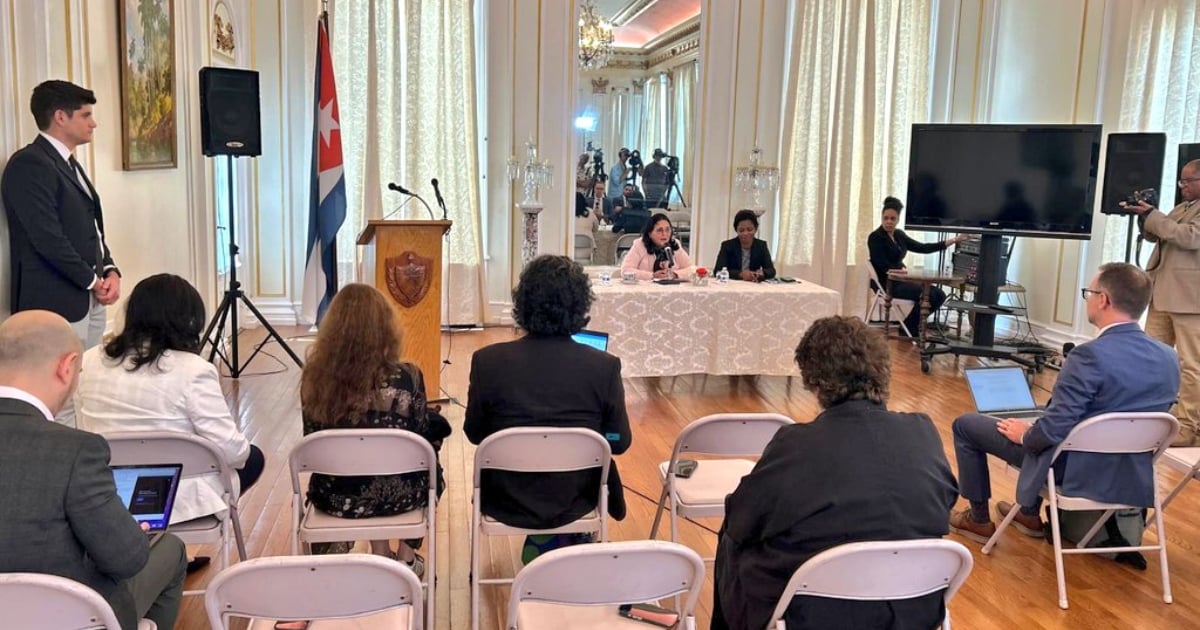
During a press conference at the Cuban embassy in Washington, Tablada railed against the U.S. government's "maximum pressure" policies, stating that they aim to suffocate the Cuban economy, provoke hunger, and trigger a new wave of migration.
"When I say that Cuba is the adult in the room, I don't exaggerate," he stated, in a tone that blended diplomatic arrogance with state victimization.
What the official omits is the devastating impact that the Cuban economic model has had on its population: uncontrolled inflation, plummeting wages, collapsing services, and political repression; all of this has turned migration into the only escape route for hundreds of thousands of citizens.
Accusations without self-criticism
In his statements, Tablada accused Washington of rejecting all of Havana's dialogue proposals and of suspending migration talks.
He maintained that Cuba continues to cooperate by accepting flights with deported citizens—five since Trump returned to power in January—and that it has even approved the overflight of U.S. hurricane-hunter planes.
But while the regime insists on its willingness to engage in dialogue, it continues to blame the United States for all its troubles, from the economic crisis to mass emigration.
Tablada suggested that the increase in the exodus could recur if sanctions against the exportation of Cuban doctors, one of the government’s financial pillars, remain in place, despite multiple international reports of labor rights violations and coercion.
Although the Cuban government claims to continue adhering to the migration agreements of 1984 and is willing to discuss "all topics, including human rights," it has shown no willingness to halt internal repression or allow spaces for critical expression.
Instead of taking responsibility for the largest migration wave since 1959, Havana chooses to blame Washington while threatening regional stability if diplomatic or economic concessions are not granted.
Speech for international consumption
The regime's strategy seems clear: to project an image of "rationality" in the face of a supposed belligerent United States, while concealing the fact that the migratory desperation stems from the structural paralysis of the Cuban model, the widespread deterioration of living conditions, and the repression of any independent civic initiative.
The dictatorship is now accusing diplomat Mike Hammer of "interference" for meeting with the mothers of political prisoners and independent journalists.
The official Cuban discourse is a propaganda operation: Cuba presents itself as a victim of imperialism, while it incarcerates opponents, expels students for protesting, censors the media, and keeps the country under a regime of ideological surveillance.
Accusing the United States of seeking military intervention is nothing more than another distraction maneuver, designed to justify the lack of reforms and tighten internal control.
While the regime calls for dialogue, it denies fundamental rights. While it demands respect, it suppresses dissent. And while it claims to uphold migration agreements, it turns the exodus into a political weapon.
Frequently Asked Questions about Tensions between Cuba and the United States
Is Cuba complying with the immigration agreements with the United States?
The Cuban government assures that it continues to respect the migration agreements with the United States. However, it accuses the U.S. of suspending migration talks and creating a hostile environment that could encourage a new wave of migration. Meanwhile, the internal crisis in Cuba has been the main cause of the massive exodus of its citizens.
Why does the Cuban government accuse the United States of wanting to instigate a military confrontation?
The Cuban regime accuses the United States of creating a favorable scenario for military confrontation, asserting that the "maximum pressure" policies aim to destabilize the country. These statements are part of a strategy to divert attention from the internal crisis and reinforce the narrative of siege by the Cuban government.
What are the reasons behind the massive exodus of Cubans to the United States?
The main reason for the massive exodus of Cubans is the critical internal situation in the country, characterized by uncontrolled inflation, shortages of basic goods, and political repression. Although the Cuban regime blames U.S. sanctions for this phenomenon, the reality is that the structural crisis of the Cuban economic model is the primary factor driving citizens to emigrate.
How has the United States responded to the Cuban regime's accusations of interference and destabilization?
The United States has defended its position by stating that its role is to support the Cuban people and promote human rights. The State Department has responded to accusations from the Cuban regime, asserting that the activities of its diplomats are in accordance with international law and aim to strengthen ties with Cuban civil society.
What is Cuba's stance on the sanctions and measures imposed by the United States?
The Cuban regime believes that the sanctions imposed by the United States are a form of economic coercion that exacerbates the crisis on the island. Furthermore, it accuses Washington of using these measures to try to influence Cuba's internal politics. The official narrative of the Cuban government is that these actions are part of an economic war aimed at destabilizing the country.
Filed under: