
Related videos:
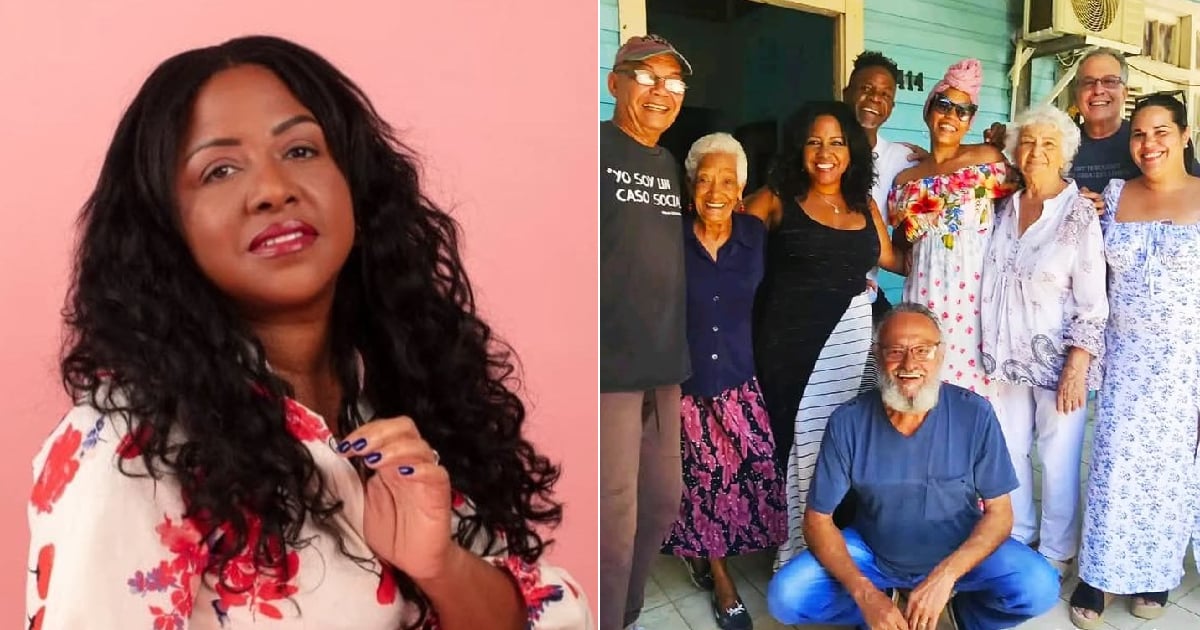
Leading actress, co-director of the telenovela Asuntos pendientes, director of the telefilm A contraluz, winner of the UNEAC Award 2023, and recipient of two Caracol Awards in 2005 and 2006 for two documentaries, having just graduated. In addition, she holds the title of Artist of Merit in Cuban television. What more can we say about Tamara Castellanos, who has just gifted us with one of the most talked-about telenovelas in recent times? Today, CiberCuba proudly presents an exclusive interview with the talented artist.
How did Tamara Castellanos come to direct Sábados de gloria?
I arrive at Sábados de gloria through the proposal of the production company. Coincidentally, I was preparing for a soap opera as an actress when I was called to take on the project.
It was a conflict because acting is my passion, and I had made it clear that, although I was venturing into directing, I didn't want the directors to stop considering me. And look… in this case, directing won! The director of the other project understood, and that's how I began this beautiful adventure of Sábados de gloria.
I pondered a lot before making my decision because I had previously had an experience with Asuntos pendientes as a co-director. The filming processes require time, and it meant once again being away from family and putting aside other projects, but in the end, my determination to take on challenges prevailed, and I went for it.
Initially, the proposal was on a different, very interesting topic about entrepreneurs, but that wasn't possible. The script by Jorge Luis Sánchez for Sábados de gloria was still in development; only 20 episodes had been written and they decided to go with it. When I read it, I found the topic very engaging. I remember once suggesting to my personal friend Freddy Domínguez, who was the screenwriter for La cara oculta de la Luna and Bajo el mismo sol, that he write about this age group. It’s a stage that currently supports a generation—the parents—who are now passing away, a generation from which we inherited all our values, and at the same time, we are witnessing another generation depart, but in a different manner. It is a stage of definitions, analysis, and determination.
Considering the limitations that currently exist in Cuba, how were you able to create a product that captivated the audience so much?
Taking on an audiovisual production in this fluctuating scenario is complex; we are not exempt from the difficulties that we Cubans face daily. However, we have a timeline to adhere to for filming, and we must overcome those obstacles to achieve a worthy presentation. The entire team was focused on that outcome, but it was challenging, for instance, with power outages. We had to keep recording, and of course, the lighting was not the same, so we had to make concessions that compromised the presentation. Like any production, nothing is perfect—there are conflicts, misunderstandings, and disagreements. But I was fortunate to work with a very professional team, both technical and artistic, who worked together to find solutions, alternatives, and turn challenges into achievements.
We were colleagues. I have long-standing relationships with most of them, where respect has played a vital role. When I felt exhausted, I drew strength from all their support, and we shared a common goal: to give our best for the audience.
What do you think about working with Paula Alí and Hedy Villegas, who has sadly passed away?
Paula and Hedy, with 16 and 17 scenes respectively; the dialogues of Rosita and Elenita are extensive, and those ladies filmed their scenes from start to finish, and when we had to repeat, it was due to a technical situation, not because of them. They were perfect! They would arrive ready to film and focused.
Everyone on the team was delighted with them; moreover, both of them have a great sense of humor and… such energy! It was a genuinely enjoyable experience. We were happy, as there was a lot of empathy. It is important to acknowledge the professionalism of both, which set an example for everyone. I am very grateful that they agreed to be in the telenovela.
Speaking of subplots, what can you tell me about the "trio" that I understand is being shown on Cuban television for the first time?
Regarding the triad (not a trio), we knew it would be a very complex subplot, because there are many taboos surrounding the topic and a lack of information.
Due to the controversial nature of the topic, we delved deeper and even met with young people during the pre-shooting phase, where we clarified many aspects. I speak in the plural because I am also referring to the assistant director Alfredo Pérez, who was my right-hand man.
We did thorough work to ensure that the actors were clear about what this trio was, and we succeeded.
Even the scenes were heavily marked by sensuality and truth, always from the central theme of this telenovela, which is love, fidelity, and respect; that was our intention.
Perhaps it's something that many viewers did not perceive in that way, just like in other storylines. Often, we get caught up in superficiality and fail to interpret important messages, such as those involving Karelia's family or the bond between Isis's child and their partner's father, Eladio. It is, simply put, the reunion of a family we have already lost; the inheritance of traditions and values.
Cuba is an inexhaustible source of athletes, but the artists are not far behind. Many have left, yet the level of actors has remained high. Of course, much has to do with the guiding influence. Without compromising ethics, would you lean towards any particular performances?
Regarding the performances, I see a consistent level, and we took this into account from the casting stage. When I read the script, I already envisioned some characters, for example: Néstor Jiménez, Bárbaro Marín, Roque Moreno, Tahimí Alvariño for Omara, Yudexi de la Torre for the character of Karelia; I was missing Rita, who later was played by Yessie Guridi, thanks to Ernesto Fiallo, the co-director of the telenovela, and I knew from the casting that it was her.
I am pleased with the selection and how they responded; very professional from the table work, which is vital for a production.
Are you satisfied with the reception that the novel has received?
I am very satisfied with the reception the novel has received; there have always been negative comments, and those that are made coherently are accepted.
It is for the better and to improve in future deliveries. The audience has been vital. We have received feedback from all over, and I believe what connects us the most is the nostalgia of Cubans for what the telenovela conveys: the longing for our essence, which is love, loyalty, and dedication.
The entire team's gratitude to the followers of Sábados de gloria. We will feel a sense of nostalgia, but everything that begins eventually ends, and like a good conclusion, we have achieved our goal.
Filed under: