
Related videos:
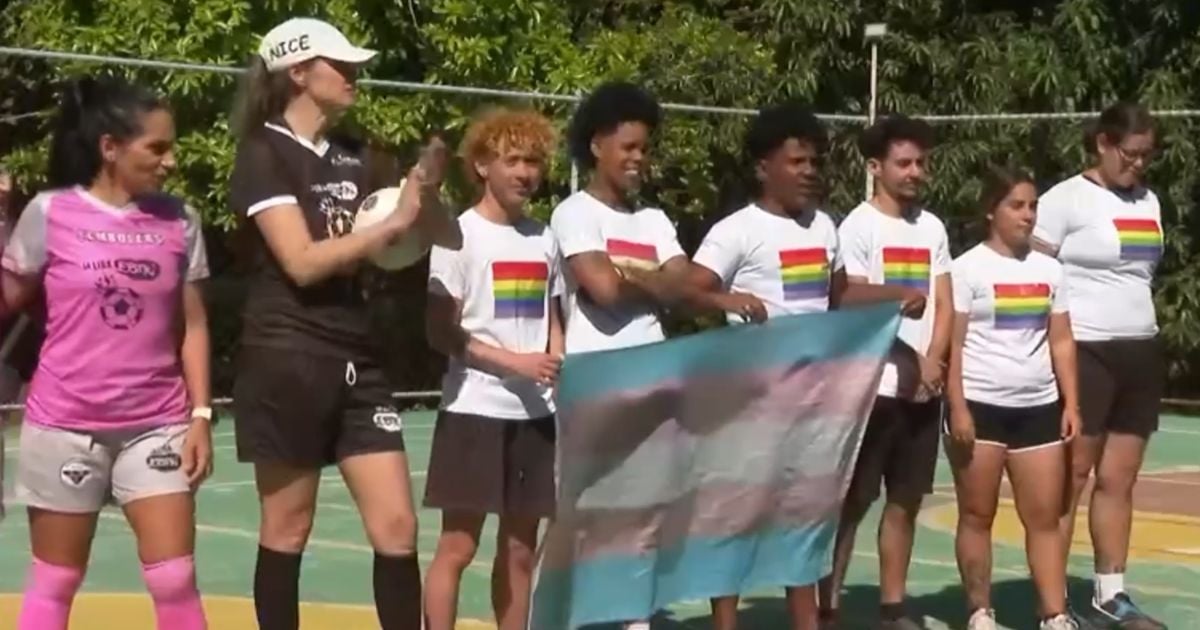
In Cuba, where stigmas and institutional barriers for the trans community still persist, a group of men recently decided to make their identity visible from the playing field, and beyond sports, they raised their voices to demand something fundamental: the right to exist with dignity.
“Society knows nothing about trans men, about our existence or our masculinities,” stated Merle Ramírez, one of the founders of the team “Translúcidos,” who participated in the meeting, in remarks to the agency AP.
The interview, published days after a friendly match held in Havana, reflects the main objective of this group: to make themselves seen and heard.
“We are the first trans masculine team founded in Cuba, and it's a way for us to gain visibility through sports,” added Ramírez, who is also a photographer and showcased an art exhibition as part of the events for trans visibility.
Another of the protagonists, Davon Cornell Suárez, a 21-year-old trans individual and goalkeeper for the team, stated firmly: “Let it be known that we exist, that we are not unicorns, we are not from another planet. We are here.”
Although the sporting event between the "Translúcidos" and the women's club "Fembolers" has already taken place, its impact goes beyond the 60 minutes on the field.
The team also provides support to other trans men, such as a young man who was attacked by his stepfather with a knife after revealing his identity, a case that was reported and highlights the real dangers they face.
Despite some legal advancements such as the Family Code, which allowed same-sex marriage and adoption, transgender individuals in Cuba continue to face restrictions.
The new draft Civil Registry Law, which will be presented in July, proposes allowing the change of sex on the ID card without surgery, but requires a diagnosis of "gender dysphoria" and excludes those who do not identify with the male/female binary, emphasized AP.
The statements made by Ramírez, Suárez, and other members of the "Translúcidos" team not only bring to light an ignored reality but also challenge Cuban society: inclusion begins when it is acknowledged that there are many legitimate ways of being and living.
Numerous cases demonstrate a persistent pattern of structural violence, institutional discrimination, and a lack of effective public policies that continue to impact the trans community in Cuba, beyond the progressive rhetoric and the announced legal reforms.
A young Cuban transgender woman admitted in 2024 that she was engaging in prostitution to raise money to leave the country, pointing out that there is no life for anyone there, but even less for her, who, in addition to the problems everyone faces, suffers from ongoing discrimination.
In another situation, a trans woman was discriminated against when trying to enter a cultural center exclusive to women, where she was denied entry on the grounds that she was not "a real woman."
This transphobic act, which occurred in Guantánamo, highlighted how prejudices continue to permeate even spaces that promote gender inclusion, leaving the trans population in a state of systematic social exclusion.
For her part, actress Kiriam Gutiérrez publicly denounced the legal and social barriers faced by transgender individuals in Cuba, challenging the state narrative of supposed inclusion.
Her intervention, supported by years of activism, emphasized that the existence of official discourses is not enough when real obstacles persist in the full exercise of rights, such as the legal recognition of gender identity.
Frequently Asked Questions about the first men's transgender football team in Cuba and the situation of the trans community
Who are the "Translucents" and what do they represent in Cuba?
The "Translúcidos" team is the first men's football team for trans individuals in Cuba. They represent a way to make the trans community visible through sports, aiming to highlight a reality that has been overlooked in the Cuban context and to claim the right to exist with dignity.
What are the main challenges faced by the trans community in Cuba?
The trans community in Cuba faces stigmas and institutional barriers, despite certain legal advances such as the Family Code. They still face restrictions in legally modifying their identity and suffer discrimination and violence, such as in the case of a young man attacked by his stepfather after revealing his identity.
What changes does the new draft Civil Registry Law propose in Cuba?
The draft Civil Registry Law could allow for sex changes on identity documents without surgery. However, it requires a diagnosis of "gender dysphoria" and excludes non-binary identities, which poses a significant limitation for many transgender individuals.
How has the Cuban government expressed itself regarding the rights of the LGBTIQ+ community?
The Cuban government, through figures such as Mariela Castro and Miguel Díaz-Canel, has promoted narratives supporting LGBTIQ+ rights. However, these statements contrast with a history of repression and legal limitations for the community, highlighting the lack of effective implementation of promised reforms.
Filed under: