
Related videos:
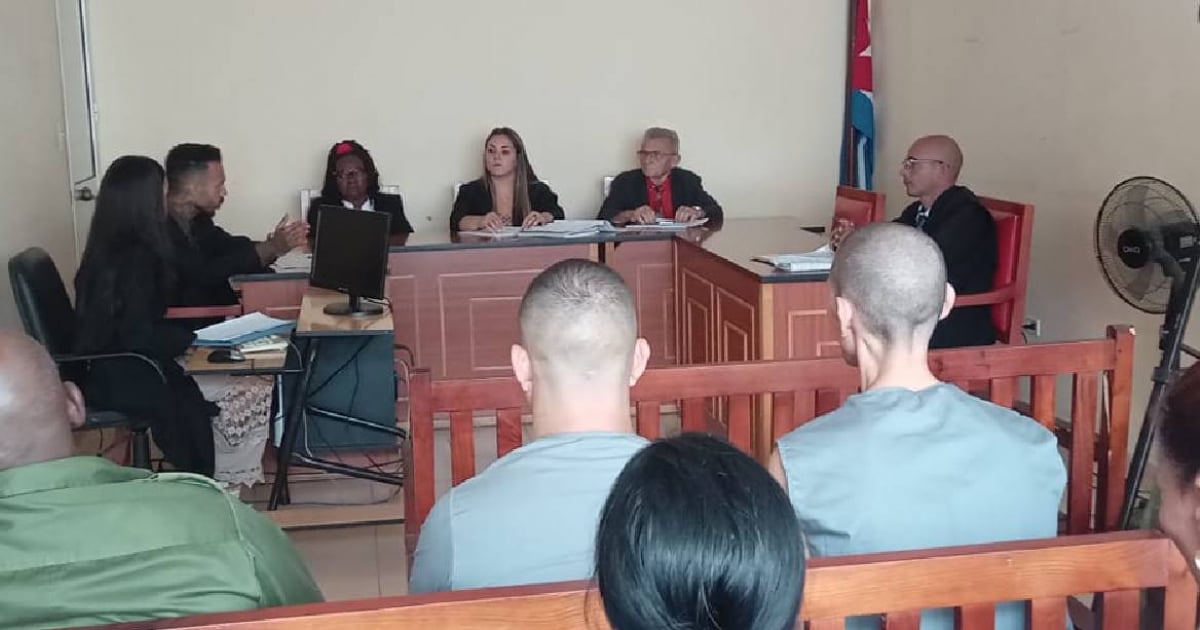
Two citizens were sentenced to prison for the crime of illegal slaughter of cattle and trafficking of its meat, after being caught using a state vehicle for the clandestine transportation of beef in the municipality of Songo-La Maya, in Santiago de Cuba.
The oral trial, public and "exemplary," as defined by the official note published by TV Santiago, was conducted by the Popular Municipal Court of that territory.
The events occurred when the defendants, in a bold act aboard a vehicle belonging to the Water and Sewer Company of Santiago de Cuba, appeared in the area known as Los Reynaldo, where unidentified individuals handed them three bags containing a total of 118 kilograms of beef.
As is often the case, the operation was thwarted thanks to a citizen report, which allowed the Ministry of the Interior to intercept the vehicle on the public road in La Maya during the night.
The meat was seized and both individuals were arrested, emphasized the cited news outlet.
During the judicial process, the court determined that there was sufficient evidence to declare the guilt of both defendants, under article 316.2 of the Penal Code, which outlines penalties ranging from 3 to 8 years of imprisonment for this type of crime.
One of the individuals involved was sentenced to 4 years and 6 months in prison, taking into account his status as a first-time offender and his current employment.
The other individual, deemed a repeat offender, received a sentence of 6 years in prison.
Additionally, they were subjected to accessory sanctions such as the deprivation of rights and a ban on leaving the country, and they were informed of their right to appeal the judgment within the corresponding legal timeframe.
The official statement conveniently failed to mention that this type of crime is common in Cuba due to the widespread difficulties in accessing protein sources, which are sold at prices that are unaffordable for most of the population in stores that operate exclusively in MLC or dollars.
Proof of the constant existence of this underground market is the frequency with which similar events occur across the country, which the regime uses in its propaganda campaign to convey the image that it is fighting against crime, but not against the root of those problems: scarcity.
The illegal slaughter of livestock and the clandestine trafficking of meat have become widespread phenomena in Cuba, driven by chronic food shortages and high prices for meat products.
In December, an was held against butchers involved in the theft and illegal slaughter of cattle, reflecting the regime's interest in harshly punishing these practices, while overlooking their structural causes.
Likewise, in April, a court sentenced a citizen to three years in prison for the theft of horses in Holguín with the intention of illegally selling their meat.
These incidents, far from being isolated, are occurring throughout the country, as evidenced by the more than 7,000 cattle lost in Holguín alone in 2023 due to theft and slaughter.
Recent cases document the frequency of these crimes: just a few days ago, a network of slaughterers was dismantled in Guanabacoa, in Havana, thanks to the cooperation between farmers and authorities.
In many of these cases, as happened in December 2023 in Boyeros, Havana, the locals have even resorted to dismembering dead animals in the middle of the street.
Frequently Asked Questions about the Illegal Beef Traffic in Cuba
Why were two citizens in Santiago de Cuba sentenced for beef trafficking?
The citizens were convicted for the crime of illegal slaughter of large cattle and trafficking in their meat, after being caught using a state vehicle for the clandestine transport of beef. One of the defendants received a sentence of 4 years and 6 months in prison, while the other, deemed a repeat offender, was sentenced to 6 years in jail.
What is the context of the meat shortage in Cuba that leads to illegal trafficking?
In Cuba, the scarcity of food and the economic crisis have led to an increase in illegal cattle slaughter and meat trafficking. State restrictions and high prices in official stores cause many Cubans to turn to the black market to access protein sources.
What penalties do those who commit crimes related to beef trafficking in Cuba face?
In Cuba, crimes related to the trafficking of beef, such as the illegal slaughter of cattle, are punishable by prison sentences that can range from 3 to 8 years. Additionally, accessory penalties such as deprivation of rights and prohibition of leaving the country may be imposed.
What measures has the Cuban regime taken to combat beef trafficking?
The Cuban regime has intensified police operations and penalties to combat the illegal beef trade. However, these actions do not address the root of the problem, which is the scarcity of food and the lack of access to basic products through legal means.
Filed under: