
Related videos:
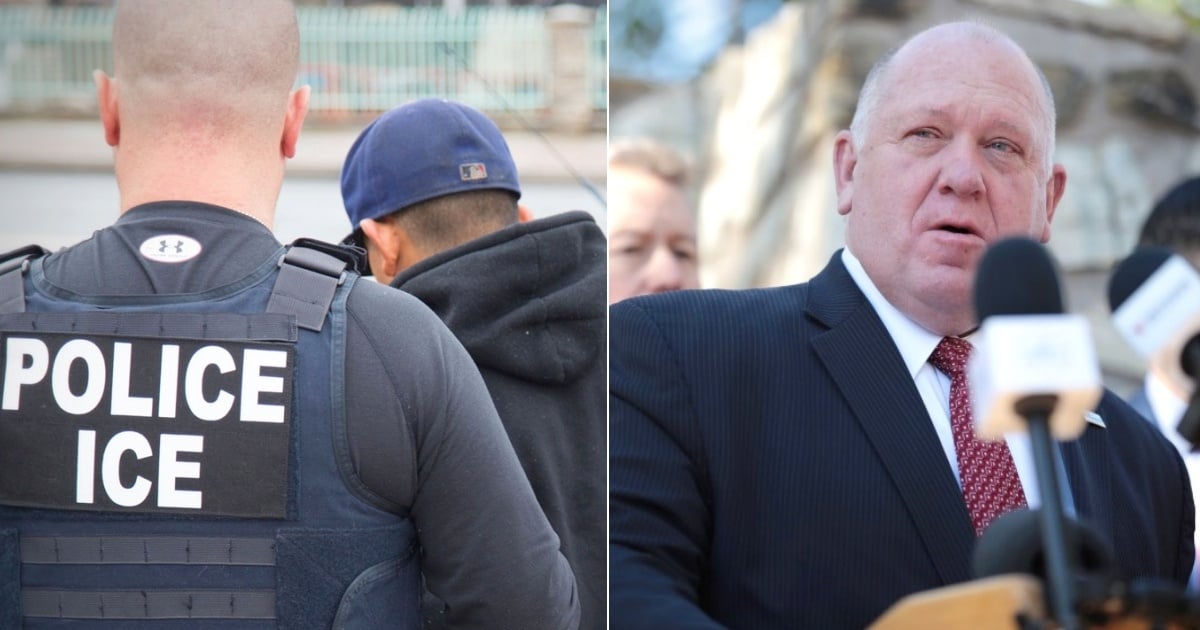
The border czar of the White House, Tom Homan, stated this Thursday that the government of Donald Trump will continue immigration raids in workplaces, including sectors such as agriculture, hospitality, and services, although he clarified that the priority will be immigrants with criminal records.
“The message is now clear: we will continue to carry out immigration control operations in workplaces, including farms and hotels, but based on priorities. Criminals come first,” Homan said to the press.
The clarification comes after the Department of Homeland Security (DHS) decided to revoke a recent directive that had paused this type of operation in workplaces.
According to Homan, these operations are an essential part of the strategy of the Immigration and Customs Enforcement (ICE).
During an interview with Fox Business, Homan explained that many of these actions are driven by criminal investigations related to offenses such as forced labor, human trafficking, tax fraud, and money laundering.
Tension between guidelines and setbacks
Last week, the Department of Homeland Security's National Security Investigations team had temporarily suspended raids at agricultural workplaces—including meatpacking plants, fisheries, restaurants, and hotels—according to an internal memo obtained by NBC News.
However, this Tuesday, the DHS reversed this decision.
The department's spokesperson, Tricia Mclaughlin, was emphatic:
"There will be no safe spaces for industries that harbor violent criminals or deliberately seek to undermine the efforts of ICE."
When asked why ICE had ordered that pause, Homan avoided responding directly, reiterating only that operations in workplaces "are an important part of our work."
Focus on sanctuary cities
Homan also justified the government's approach to so-called sanctuary cities, such as Los Angeles, pointing out that these "knowingly release threats to public safety, undocumented immigrants, to the community every day."
ICE raids in cities like Los Angeles have sparked intense protests.
In response, President Trump has deployed the National Guard and Marine Corps units, which has sparked criticism from the Democratic Party.
On the other hand, it has been reported that Vice President JD Vance is expected to visit Los Angeles this week, although the plans have not yet been confirmed due to the international situation.
A source close to federal police operations indicated that units of the California National Guard, federalized by order of Trump, have participated in the planning of the visit.
Frequently asked questions about immigration raids in the United States under the Trump administration
What is the priority of immigration raids in workplaces?
The priority of immigration raids in workplaces is immigrants with criminal records. According to border czar Tom Homan, the Trump administration will continue these operations, focusing on criminals. This approach aims to ensure that the raids concentrate on individuals who pose a threat to public safety.
Which economic sectors are most affected by ICE raids?
The sectors most affected by ICE raids are agriculture, hospitality, and services. These sectors rely heavily on immigrant labor, and the raids have led to a decrease in the workforce, impacting productivity and resulting in economic losses.
How do Trump's immigration policies impact the economy of the United States?
Trump's immigration policies are depleting essential productive sectors of the American economy. The absence of immigrants in the workforce could reduce the Gross Domestic Product by 4.2%, impacting key industries such as agriculture and construction, which rely on immigrant labor.
What measures has the Trump administration taken to control undocumented immigration?
The Trump administration has implemented mass raids and eliminated exceptions for certain sectors. These measures include the expansion of expedited deportations and the removal of humanitarian parole, with the aim of quickly deporting undocumented immigrants, even in places previously considered "sensitive."
Filed under: