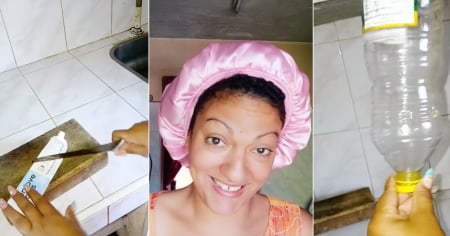
A young Cuban woman has touched thousands on social media by sharing her story of struggle and personal growth as an immigrant in the United States, despite the legal challenges she has faced since her arrival.
“Don’t let being I-220A or not having legal status define your future,” wrote TikTok user @my.hope2023 at the beginning of a video that has quickly gained recognition for its powerful message of hope and resilience.
The young woman recounts that she arrived in the United States almost four years ago with a "suitcase full of dreams," convinced that she would obtain residency in no time, like many others who enter the country under the I-220A form. However, her immigration process has taken much longer than expected.
"It has been almost four years and I am still waiting," she confessed. Despite the uncertainty, the Cuban decided not to give up: she learned English, obtained her license as a dental assistant, and managed to enter the job market. She claims that the most transformative part of her experience has been becoming the mother of a girl, whom she calls her "Princess Hope."
“She has given me the strength I need to not give up and continue forging my path in this country, even as an I-220A,” she expressed in the heartfelt video, which has garnered messages of support and admiration from Cubans and other migrants who identify with her story.
The I-220A form is a document for parole used by the U.S. Immigration Service that does not guarantee legal status or immediate immigration benefits, representing a legal limbo for thousands of Cubans who have arrived in recent years.
With a call to not let oneself be defined by immigration status, the young woman concludes: “Your status does not define your worth, your dreams, or your future. You are the one who does.”
Her story, filled with effort, motherhood, and perseverance, has touched the hearts of many users and adds to the voices calling for visibility and solutions for those seeking answers within the complex U.S. immigration system.
Frequently Asked Questions about I-220A Immigration Status in the United States
What is the I-220A form and what does it imply for Cuban migrants?
The I-220A form is a document of release on parole issued by the immigration authorities of the United States. It allows migrants, including many Cubans, to remain temporarily in the country while their legal situations are resolved. However, it does not guarantee legal status or immediate immigration benefits, leaving many in a prolonged legal limbo.
How long can the immigration process last under the I-220A status?
The waiting time for those with I-220A status can vary significantly. In some cases, migrants have waited several years to receive a resolution regarding their immigration status. This situation creates uncertainty and anxiety among those affected, who continue to await a definitive response from immigration authorities.
How do Cuban migrants confront the legal limbo of the I-220A?
Despite the uncertainty, many Cuban migrants choose not to give up and seek to integrate into American society. They learn English, obtain work licenses, and enter the job market, while awaiting a resolution of their immigration status. Additionally, the emotional support of their families and communities is crucial for maintaining hope and resilience.
What message do Cuban migrants share about their experience with the I-220A?
Many Cuban migrants share messages of hope and resilience through social media, encouraging others not to let their immigration status define them. Their message is clear: "Your status does not define your worth, your dreams, or your future." Testimonials from those who have successfully regularized their situation serve as inspiration for those still awaiting a resolution.
Filed under: