
Related videos:
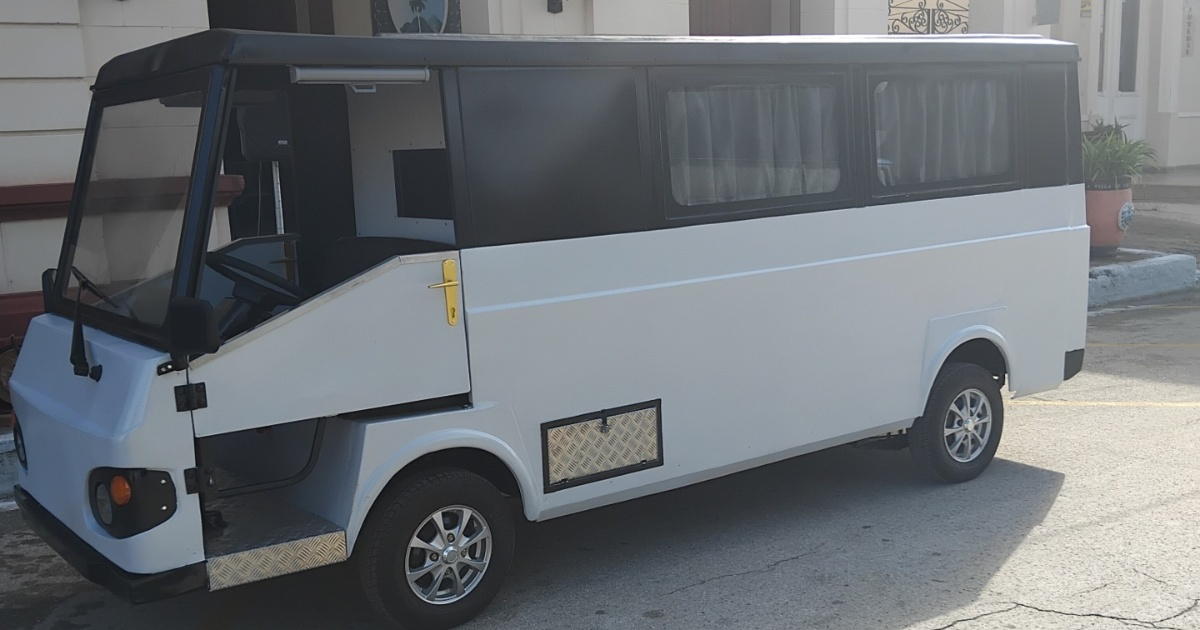
Cuba's Minister of Transport, Eduardo Rodríguez Dávila, confirmed this Sunday that the regime has already started assembling the first batch of electric vehicles intended for funeral transport.
In his Facebook profile, the sector's owner pointed out that this process involves the participation of the Military Industries Union (UIM).
Rodríguez made this statement in a lengthy text where he provided an overview of the transportation situation in Havana after touring all the provinces of the country as part of the National Assembly of People’s Power oversight exercise.
Although he did not provide details on how many electric hearses are in production or the delivery timelines, Rodríguez mentioned that the initiative aims to enhance the services related to the transportation of remains, a sector that, like others within public and state transportation, has experienced significant deterioration in recent years.
The project is part of a series of actions aimed at "halting the deterioration of public transportation services and beginning recovery," according to the minister's statements.
At the same time, efforts are being made to recover buses, deploy electric minibuses, improve railway terminals, and introduce eco-friendly tricycles in municipalities such as Regla.
The participation of the Union of Military Industries in this new front expands the presence of the military sector in functions that have traditionally been civilian, such as the production of medical transport, cargo, and now also funeral services.
The severe fuel shortage has compelled the Cuban regime to seek alternative solutions, such as the use of electric vehicles and the incorporation of renewable technologies in strategic sectors of transportation.
Nonetheless, the visible results remain limited in the face of the widespread collapse of the mobility system in the country.
Rodríguez Dávila announced that, in addition to this funerary assembly, a project is underway to enable the first electric bus terminal powered by renewable sources in the capital, as well as new railway routes and a reorganization of urban traffic in response to the rise of electric motorcycles and scooters.
Recently, an electric hearse was delivered in the municipality of Placetas.
The internet user Kirenia Bermúdez Quesada, an employee of the Municipal Enterprise in Villa Clara, confirmed that officials from the municipality, executives from Sancti Spíritus, and workers from the sector participated in the delivery of the electric car.
Dozens of forum members commented on Facebook that the idea should be replicated in other municipalities where citizens have to improvise means of transport to carry the bodies of their loved ones.
The situation of funeral services in Cuba is critical due to the lack of operational hearses, a shortage of spare parts, and inadequate maintenance.
This problem affects multiple provinces, forcing families to use alternative transports to carry out burials.
Frequently Asked Questions about the Funeral Transportation Crisis in Cuba
Why are electric hearses being assembled in Cuba?
The assembly of electric hearses in Cuba responds to the need to improve funeral services, which have suffered a deep decline due to the lack of operational vehicles, a shortage of spare parts, and poor maintenance. This initiative, supported by the Union of Military Industries (UIM), is part of a broader effort to curb the deterioration of public transportation services in the country.
What is the current situation of funeral services in Cuba?
The situation of funeral services in Cuba is critical. The lack of operational hearses and the scarcity of resources have forced families to improvise alternative means of transportation for burials. This issue affects multiple provinces, and the measures adopted by the government, such as the introduction of electric hearses, have been insufficient to resolve a long-standing structural crisis.
What role does the Union of Military Industries play in the assembly of electric hearses?
The Union of Military Industries (UIM) is involved in the assembly of electric hearses as part of an effort by the Cuban regime to expand the military sector's presence in traditionally civilian roles. This project complements the production of other types of transportation in an attempt to find solutions to the mobility crisis triggered by fuel shortages and the collapse of the transportation system in Cuba.
How are Cuban citizens reacting to the introduction of electric hearse vehicles?
The introduction of electric hearses has generated a mix of reactions among Cuban citizens. While some see the measure as a necessary step, many others have expressed their frustration and skepticism, considering it a temporary and insufficient solution to a deeper problem. Comments on social media reflect widespread dissatisfaction with the state of funeral services and the perception of inequality in access to them.
Filed under: