
Related videos:
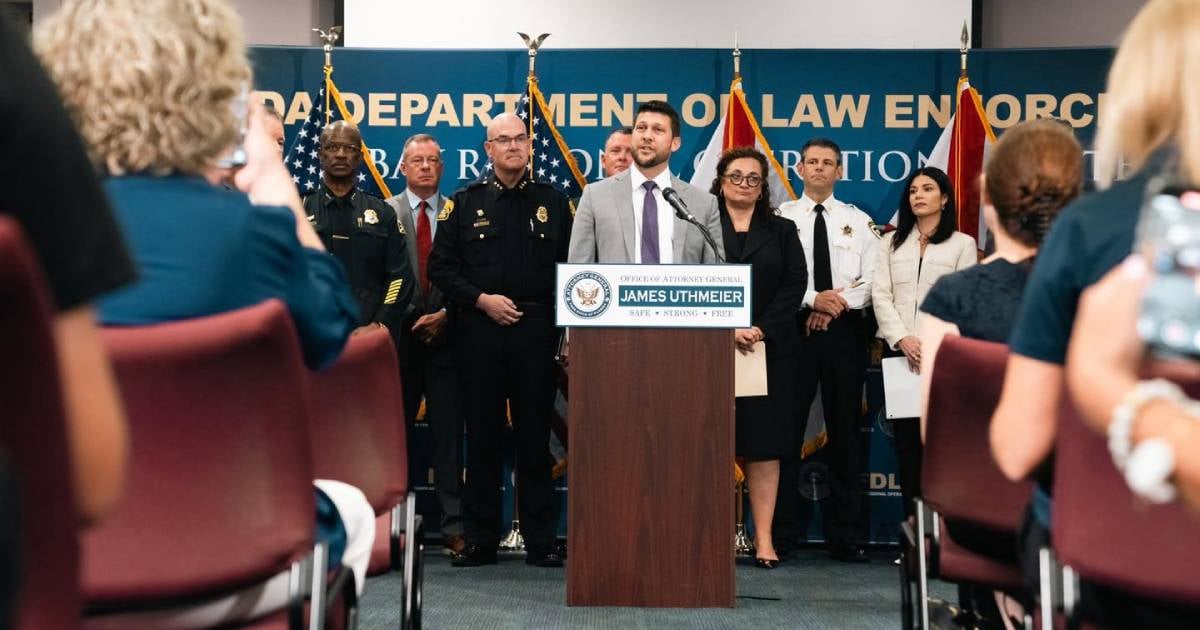
Florida's Attorney General, James Uthmeier, raised his voice this Monday, urging the Supreme Court of the United States to immediately reinstate the state law S.B. 4-C, which makes it a crime for undocumented individuals to be present in the state if they entered the country illegally.
Uthmeier posted a message on social media where he not only defended the constitutionality of the measure but also accused the Biden administration of being "lawless" in immigration matters over the past four years.
“Florida has the right and the duty to protect its sovereignty and its people from the effects of illegal immigration”, Uthmeier wrote on X. “We must prepare Florida for a future lawless administration like the one we experienced over the last four years.”
A speech that raises alarms
The law, currently blocked by a court order, was challenged by organizations that work with migrant communities and undocumented individuals residing in Florida.
If implemented, it would allow the police to arrest those who have entered the country illegally and then travel to Florida, something that could directly impact thousands of newly arrived or in-transit Cubans.
The tone of the attorney general, linking the enforcement of the law to a possible return of more permissive immigration policies, reinforces a climate of uncertainty and fear among migrant communities.
Florida is one of the main destinations for Cubans arriving in the United States in search of refuge, stability, or family reunification.
Although it is currently suspended by the decision of federal judge Kathleen Williams, Uthmeier insists that the Supreme Court should allow its immediate implementation, just as happened with a similar law in Texas.
If the Court approves the Florida rule, it could pave the way for a wave of arrests, trials, and deportations against individuals who, despite having ongoing immigration processes or asylum applications, could be treated as criminals by state authorities.
In the middle of this month, Federal Judge Williams found Uthmeier in civil contempt for violating a court order that temporarily suspended the enforcement of this controversial state law.
Williams ruled that Uthmeier disobeyed his mandate from April 23 by incorrectly informing law enforcement that "there was no court order" preventing the enforcement of that law.
As a corrective measure, the judge ordered Uthmeier to submit biweekly reports detailing whether arrests, detentions, or other police actions have occurred under the suspended law. This oversight will remain in effect as long as the legal proceedings are active.
The judge also denied Uthmeier's request to suspend the order while the case is appealed, stating that it is likely the law will be declared unconstitutional.
This case has become a new focal point of tension between the Florida administration, the federal judiciary, and groups advocating for the rights of migrants, many of whom are of Latin American and Caribbean origin.
Especially since the Attorney General himself has made a proposal that has raised alarms among migrants and advocacy groups, warning that Florida could build the largest immigrant detention center in the state right in the heart of the Everglades, which he has dubbed the “Crocodile Alcatraz” (Alcatraz Alligator).
The facility would be located at the old and "practically abandoned" Collier Training Center, an airport infrastructure covering 39 square miles with a runway that is 10,500 feet long.
Frequently Asked Questions about Immigration Law SB 4-C in Florida
What is Florida's SB 4-C law?
The SB 4-C law seeks to make it a state crime to enter Florida without legal immigration status. This means that if a person deemed an "unauthorized foreigner" enters the state, they could be arrested solely for that action, without having committed any other crime. The regulation has been criticized for its potential unconstitutionality and for encroaching on federal authority.
Why is the SB 4-C law currently blocked?
The SB 4-C law is blocked by a court decision because it is considered likely unconstitutional. The federal appeals court argued that the legislation infringes on the federal power to control immigration and could violate the Supremacy Clause of the U.S. Constitution. This ruling has temporarily halted its implementation while the judicial process continues.
What consequences could the enforcement of law SB 4-C have in Florida?
If the SB 4-C law is enacted, it could pave the way for a wave of arrests, trials, and deportations against individuals who, despite having ongoing immigration processes or asylum applications, could be treated as criminals by state authorities. This would create an atmosphere of uncertainty and fear among migrant communities, especially among Cubans and other Latino and Caribbean groups.
What measures is the Florida Attorney General taking regarding the SB 4-C law?
The Attorney General of Florida, James Uthmeier, has requested that the U.S. Supreme Court reactivate law SB 4-C, arguing that Florida has the right and duty to protect its sovereignty and its people from the effects of illegal immigration. Despite the judicial suspension, Uthmeier continues to push for its immediate implementation.
Filed under: