
Related videos:
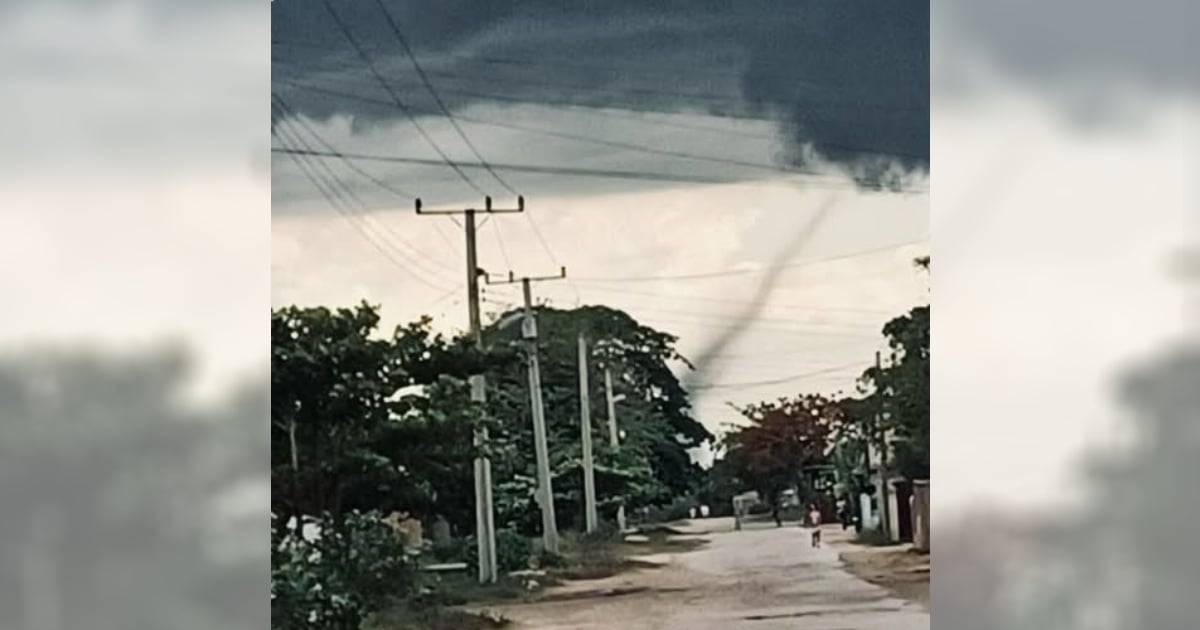
A weak tornado was reported on Wednesday afternoon in the municipality of Urbano Noris, in the eastern province of Holguín.
Preliminary reports of the weather event indicated that it made landfall near the town of San Germán, according to enthusiast Jorge Ignacio García, who captured an image of the phenomenon, which has been shared on several Facebook pages.
So far, no further details have emerged about this tornado.
The storms, high humidity, daytime heating, and the presence of a trough in the mid and lower levels of the atmosphere contribute to the formation of tornadoes.
The meteorologist Raydel Ruisánchez had forecast heavy rain and storms for Wednesday afternoon across much of the Cuban territory.
"The combination of a high-pressure system, the passage of a tropical wave, intense daytime heating, and high humidity levels will contribute to this situation," he explained. "The rains may be intense in some areas, and there is a possibility of severe local storms occurring."
Ruisánchez recommended that the population take precautions, such as avoiding exposure to thunderstorms and not crossing flooded areas.
On the Facebook page “Tiempo a su Favor”, MSc. Álvaro Pérez Senra, a specialist from the Provincial Meteorological Center of Cienfuegos, announced a complex meteorological situation during the afternoon, “due to the combination of a tropical wave, a trough, and a cold low,” stating that the chances of strong storms and severe weather phenomena were high.
According to the models he analyzed, rainfall could exceed 50 to 100 mm in a short period in areas of Pinar del Río, Mayabeque, Matanzas, Cienfuegos, and Camagüey, and he assured that, in general, the rains and storms would be numerous.
It also warned about the increasing "danger of flash floods where water typically drains and there is likely poor drainage quality."
Pérez Senra also urged people not to expose themselves to storms, to avoid unnecessary outings, and to protect themselves from lightning strikes.
The evening before, a severe local storm caused widespread flooding in the city of Bayamo and its surroundings, in Granma province, after nearly two hours of heavy rain that began in the late afternoon and continued into the evening.
In May, a series of tornadoes made landfall in the provinces of Artemisa, Havana, and Camagüey.
Frequently asked questions about tornadoes and storms in Cuba
What weather conditions favor the formation of tornadoes in Cuba?
The formation of tornadoes in Cuba is favored by the combination of an upper-level low, a tropical wave, intense daytime heating, and high humidity content. These factors create atmospheric instability that can lead to tornadoes and severe local storms. The presence of a trough in the middle and lower levels of the atmosphere also contributes to the development of these extreme weather phenomena.
What are the recommendations in the face of the threat of tornadoes and severe storms in Cuba?
It is recommended that the public take precautions such as avoiding exposure to electrical storms and not crossing flooded areas. It is also advisable to stay informed through official channels and to protect oneself from electrical discharges, as lightning can be more dangerous than hurricanes in some areas of Cuba. Additionally, it is important not to go out unnecessarily and to pay attention to local weather alerts.
Why are severe local storms common in Cuba during the rainy season?
Severe local storms are common in Cuba during the rainy season due to the intense atmospheric instability characteristic of this time of year. This instability is caused by the interaction of tropical waves, troughs, and low pressures, along with strong daytime heating and high humidity. These factors create favorable conditions for the formation of heavy rains, strong winds, hail, and electrical discharges.
What impact do storms and tornadoes have on the infrastructure and population of Cuba?
Storms and tornadoes can cause significant damage to infrastructure and pose a risk to the population in Cuba. Strong winds and heavy rainfall can lead to fallen trees, damage to roofs of homes and buildings, and electrical outages. While they do not always result in human casualties, these phenomena require assessment and recovery operations to mitigate their impacts on affected communities.
Filed under: