
Related videos:
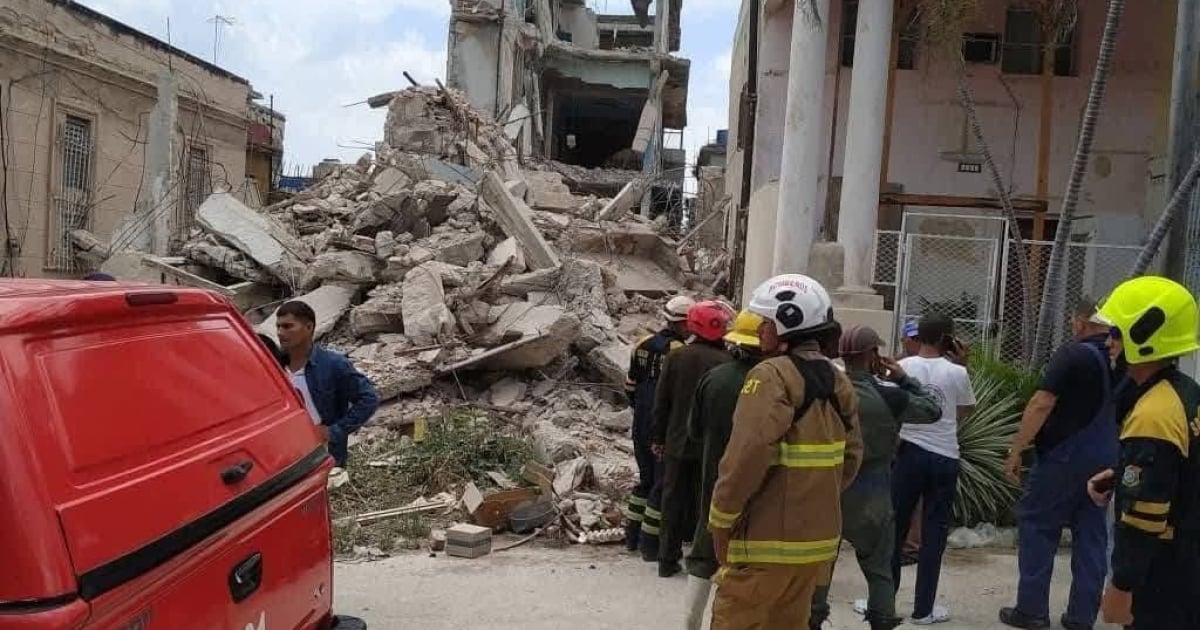
A new partial collapse shook the Santos Suárez neighborhood in the 10 de Octubre municipality on Friday, leaving a building nearly reduced to rubble at the intersection of San Bernardino, Serrano, and Durege.
According to a report by the user La Tijera on Facebook, the central part of the building collapsed almost completely.
The incident has raised concerns among the neighbors, who point to the visible deterioration of the surrounding buildings. "They fear this may not be the last collapse in the area," the report states.
Firefighters and rescuers arrived at the site to conduct search operations for residents.
At the time of writing the report, it was unknown whether there were any victims or people trapped.
This incident is not isolated in the area. On the same block, a similar collapse was reported on February 16, also with no effective response from the authorities.
"How many more lives must be at risk for the regime to take action? This type of tragedy is no longer news... it's routine," questioned the author of the post.
The official media have not yet issued any statement regarding the incident, a common practice that reinforces the perception of institutional neglect in the face of this crisis.
The contrast of a country that builds hotels while its homes are falling apart
This new collapse once again highlights the alarming deterioration of Cuba's housing stock, particularly in Havana.
Thousands of buildings in the capital show severe structural damage, many of which are inhabited by families living with the daily fear of a sudden collapse.
The situation of the housing stock stands in stark contrast to the government's prioritization of hotel investment.
The government is building new tourist complexes or renovating colonial buildings to accommodate foreign visitors, while the homes of Cubans are collapsing without any maintenance.
The growth of the tourism sector—supported by state megaprojects—has not brought visible benefits to the residents, who continue to face critical living conditions, lacking access to structural repairs, building materials, and safe relocation options.
A ticking time bomb that most people live in
Landslides like the one that occurred this Friday are not exceptional cases, but symptoms of a structural crisis that has been building up for decades.
The lack of maintenance, scarcity of resources, government neglect, and inability to provide dignified housing solutions have turned Cuban neighborhoods into a ticking time bomb, where poverty and state abandonment often intertwine with tragedy.
Each new collapse leaves not only rubble but also shattered lives, affected families, and even more fractured communities.
The state, far from addressing the magnitude of the problem with a coherent and transparent plan, remains silent or responds with inadequate support measures, which are insufficient in the face of a critical situation.
This new collapse reflects not only the physical fragility of the buildings but also the fragility of a system that has stopped protecting its people.
Frequently Asked Questions about Collapses in Cuba
Why do so many collapses occur in Cuba, especially in Havana?
The collapses in Cuba result from a serious deterioration of the housing stock, caused by decades of neglect, resource shortages, and government inattention. In Havana, many buildings exhibit severe structural damage, exacerbated by climatic conditions and the age of the properties. Despite residents' continuous warnings, the solutions offered by the regime are insufficient, increasing the risk of these incidents.
How does the Cuban government respond to building collapses?
The Cuban government has faced widespread criticism for its inaction and insufficient responses to the collapses. Authorities frequently provide temporary solutions and aid patches, without addressing the root of the problem. The lack of a coherent and transparent plan to improve the state of housing infrastructure has left many citizens in precarious and dangerous conditions.
What impact does hotel investment have on the housing crisis in Cuba?
The hotel investment in Cuba starkly contrasts with the housing crisis faced by the population. While the government prioritizes the construction of hotels and mega tourist projects, the homes of Cuban citizens are left in a state of neglect. This discrepancy not only reflects the failure of the regime's economic policies but also exacerbates the precariousness of daily life for Cubans, who see no improvements in their housing conditions.
What measures are being taken to prevent further collapses in Cuba?
So far, the measures taken to prevent further collapses have been insufficient and temporary. In some cases, such as in the municipality of Colón, ribbons and barriers have been placed to restrict access to dangerous areas, but these actions do not address the fundamental problem. An integrated and effective plan for the maintenance and repair of urban infrastructure is needed to prevent these tragedies from recurring.
Filed under: